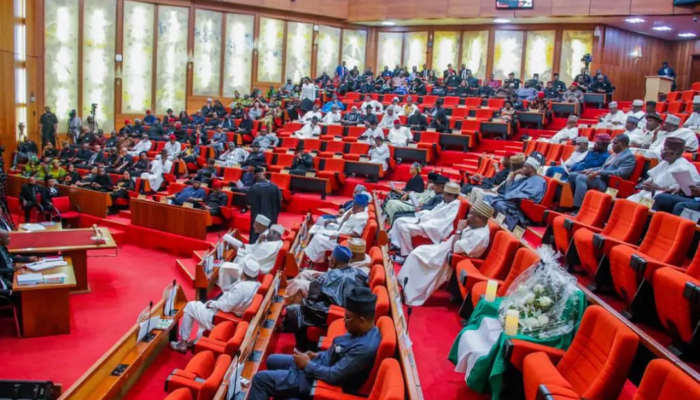
For several members of Nigeria’s House of Representatives, the political battle for 2027 may already have been decided — not at the general election though, but within party structures where internal calculations and emerging primary contests are quietly reshaping the composition of the Green Chamber.
What makes this round different is not just the number of lawmakers affected, but the weight of names involved. Ranking officers, long-serving veterans and familiar voices in plenary are among those who have lost return tickets.
At the very top of the list is Julius Ihonvbere, the House Majority Leader. He is not just any lawmaker. Ihonvbere is one of the most visible figures in the current Assembly, a principal voice of the ruling All Progressives Congress (APC)in the chamber, often at the centre of major debates and legislative coordination. His loss in Edo State is one of the biggest political shocks of the primaries, because it removes a key figure in House leadership.
Read also: 2027: Meet longest-serving Rep members battling for re-election
Then comes Ibrahim Isiaka, the Deputy Chief Whip. Isiaka belongs to the internal discipline structure of the House. As Deputy Chief Whip, his job is to coordinate party loyalty on the floor, manage attendance and help drive voting discipline. In simple terms, he is part of the machinery that keeps the House organised.
Another major casualty is Nicholas Mutu, the veteran of the House. Mutu is not just a lawmaker, he is history in motion. He has been in the House since 1999, making him the longest-serving member in Nigeria’s Green Chamber. His 27-year run made him a symbol of continuity, influence and deep political roots in Delta State. His loss marks the end of an era.
In Imo State, Miriam Onuoha also failed to return. Onuoha is one of the most visible female lawmakers in the current House. Her defeat removes one of the strongest female voices in the APC caucus.
From Edo State, Eseosa Iyawe lost his return bid.
Iyawe’s case is politically interesting because he entered the House on another platform before defecting to APC. That made his loss a reflection of how tough party structures can be, even for incumbents who switched sides.
In Jigawa, Sa’idu Yusuf Miga also failed to secure a return ticket. Miga is among the long-serving northern lawmakers, with close to two decades in the National Assembly. His exit adds to the wave of experienced legislators being pushed out.
Another known figure is Donatus Matthew.
He gained national attention because of his background as a commercial motorcycle rider before becoming a federal lawmaker. His story was often cited as a symbol of political mobility. His loss shows that personal narratives, no matter how inspiring, do not always translate into party survival.
In Benue and Nasarawa, lawmakers like Austin Achado, Jeremiah Umaru, and Abdul-Mumin Muhammad also lost out in tightly contested primaries shaped by zoning and state-level party control.
Across the board, the pattern is the same. Governors, party structures and local alliances carried more weight than incumbency.
In total, reports suggest dozens of APC lawmakers in the House may not be returning to the 11th Assembly, with at least 50 incumbents affected in the wider primaries sweep.

Join BusinessDay whatsapp Channel, to stay up to date
Open In Whatsapp