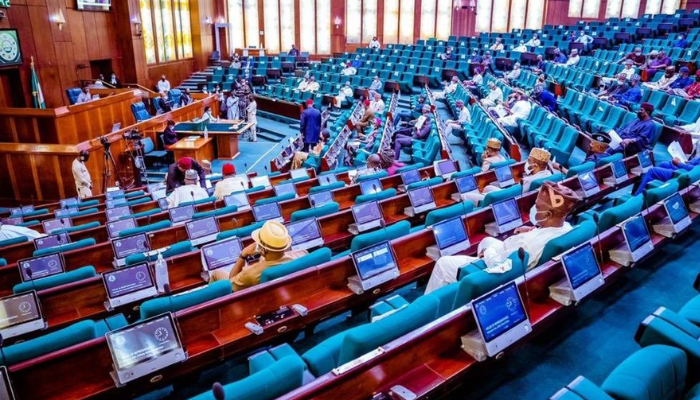
As politicians quietly begin to position themselves for the 2027 elections, some familiar faces in the House of Representatives are once again preparing for another round of political survival.
These are lawmakers Nigerians have seen for years, some for decades. While governors, ministers and even presidents have come and gone, a handful of federal lawmakers have managed to remain firmly seated in the Green Chamber, election after election.
Some entered the National Assembly when Nigeria returned to democratic rule in 1999 and have never really left since then.
Now, with 2027 on the political horizon, attention is turning to whether these long-serving lawmakers can extend their stay once again, or whether voter fatigue, younger challengers and internal party politics may finally catch up with them.
Read also: Election-year inflation threatens Nigeria’s reform push, S&P says after upgrade
At the centre of the conversation is Nicholas Mutu, the lawmaker representing Bomadi/Patani Federal Constituency in Delta State.
Mutu is practically a permanent fixture in the House.
First elected in 1999, he has remained continuously in parliament ever since. With about 27 uninterrupted years in the National Assembly, he remains the only lawmaker to have stayed in the House from the beginning of Nigeria’s current democratic era till date.
That is no small political achievement in a country where political careers can disappear overnight after a bad primary election, party crisis or defection.
Over the years, different Speakers have presided over the House. Governments have changed. Political alliances have collapsed and reappeared. But Mutu has remained.
Also, Khadijat Bukar Abba-Ibrahim, wife of former Yobe State governor Bukar Abba-Ibrahim, has also spent nearly two decades in the House. Representing Damaturu/Gujba/Gulani/Tarmuwa Federal Constituency in Yobe State, she has been there since 2007.
Idris Wase, who represents Wase Federal Constituency of Plateau State, first entered the House in 2007 and has kept returning ever since.
Mukhtar Betara, representing Biu/Bayo/Shani Federal Constituency in Borno State, is another member of that same 2007 class still standing strong in parliament.
Wole Oke, who represents Obokun/Oriade Federal Constituency of Osun State, first entered the House in 2003 on the platform of the People’s Democratic Party and has remained one of the chamber’s most recognisable faces.
Then there is Abbas Tajudeen, the current Speaker of the House of Representatives. Representing Zaria Federal Constituency in Kaduna State, Abbas first entered the House in 2011 and has steadily risen through the ranks.
James Abiodun Faleke, representing Ikeja Federal Constituency of Lagos State, has also remained in the House since 2011.
Kingsley Chinda, a lawyer representing Obio/Akpor Federal Constituency of Rivers State, is another experienced member of the 2011 set.
Together, these lawmakers represent a powerful class of serial returnees in Nigerian politics.
While some political observers say there is nothing wrong with serving for a very long period, others disagree. Supporters argue that experienced lawmakers understand parliamentary procedures better, know how committees work and are usually more effective when it comes to negotiations and policy discussions.
In many countries, long-serving legislators are seen as valuable because of the institutional memory they bring.
However, critics argue that many lawmakers have stayed too long without showing enough impact in debates, lawmaking or oversight.
Some also believe the continued dominance of older political figures makes it difficult for younger politicians and fresh voices to emerge.
One political observer, Adepoju Tejumaiye, believes the trend is unhealthy for Nigeria’s democracy.
According to him, while experience is important in parliament, long years in office have not necessarily translated into stronger legislative performance in Nigeria.
“If you look at democracy and governance generally, people spend long years because experience matters in lawmaking. The number of years you spend in the legislative assembly will give avenue to be able to make meaningful contribution to policies”, he said.
“In Nigeria, the reverse is the case; the more lawmakers stay in office, the more docile they become. They contribute less to debates and lawmaking processes,” he added.
Tejumaiye said that although long-serving lawmakers have played useful roles in some developed democracies, Nigeria has not really seen the same results.
Already, political calculations are quietly beginning in several constituencies.
Some younger politicians are expected to challenge lawmakers who have held seats for years. In some places, zoning conversations are starting to emerge.
There is also the issue of public frustration.
With rising economic hardship and growing anger over the cost of living, some voters may decide they want change, even at constituency level.
But, most of them have built strong political structures over the years. Many of them are also experienced campaigners who know how to survive politically. In the coming months, many of them will once again test whether experience, name recognition and political structure are enough to keep them in the Green Chamber for another four years.

Join BusinessDay whatsapp Channel, to stay up to date
Open In Whatsapp