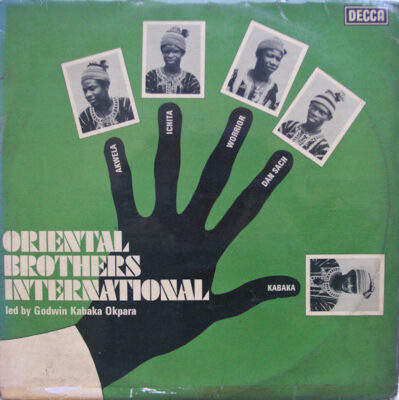
The Oriental Brothers’ Five Fingers is more than an album title. It is a philosophy, an image, and a mission statement. The phrase suggests separate parts working in harmony, each finger distinct yet inseparable from the hand that gives them purpose. That metaphor perfectly captures the spirit of the group at its creative peak. This is not just a collection of songs. It is the sound of a band presenting itself as a complete musical organism, disciplined in structure, rich in feeling, and united by a deep cultural intelligence.
To fully appreciate Five Fingers, one must place it within the emotional and historical world that shaped the Oriental Brothers. The group rose to prominence in the years after the Nigerian Civil War, when Igbo society was rebuilding not only its economy and public life, but also its confidence, memory, and cultural voice. Highlife became one of the great vehicles for that recovery. In the hands of the Oriental Brothers, it became both medicine and mirror: music that helped people dance again, but also music that reflected their anxieties, values, losses, hopes, and enduring social codes.
A Band Built on Collective Identity
The Oriental Brothers were never compelling simply because they were popular. They mattered because they represented a rare kind of musical fellowship. With figures such as Dr Sir Warrior and his fellow bandmates shaping the group’s identity, the band projected a sense of collective purpose that few ensembles could match. That spirit is embedded in Five Fingers. The album feels communal rather than individualistic. Even when one guitar line rises above the arrangement or one voice takes emotional command, the larger feeling is always that of a shared musical conversation.
Guitars That Sing, Argue and Remember
One of the album’s most dazzling qualities is its guitar work. On Five Fingers, the guitars do not merely provide melody or accompaniment; they behave almost like characters inside the songs. The lead guitar can sound lyrical, teasing, mournful, sly or triumphant within the space of a few phrases. The rhythm guitar, meanwhile, gives the music its shape and tension, holding the groove together with grace and restraint. The result is a layered, conversational sound in which the instruments seem to speak to one another, echoing the call-and-response dynamics so central to African musical traditions.
The Rhythm Section’s Quiet Authority
If the guitars provide the sparkle, the rhythm section provides the album’s spine. The basslines on Five Fingers are patient and assured, never showy, yet absolutely central to the music’s forward motion. They do not just support the songs; they guide them. The percussion, too, is measured rather than excessive. It gives the tracks a grounded pulse, the feeling of bodies moving together in shared space. This sense of rhythmic control is one reason the album endures. It understands that groove is not speed or noise, but balance, confidence, and timing.
Vocals Rooted in Wisdom Rather Than Display
The singing on Five Fingers is another major source of its lasting power. The Oriental Brothers do not approach the voice as a site of theatrical excess. Their vocals are expressive without becoming self-indulgent, intimate without losing authority. There is a warmth in the delivery that makes the songs feel addressed to ordinary people living ordinary lives. Yet there is also gravity. These are not songs tossed into the air and forgotten. They arrive with purpose, as if carrying counsel from elders, observations from the street, and lessons drawn from collective experience.
Highlife as Social Philosophy
What distinguishes Five Fingers from more disposable dance records is its moral and philosophical depth. Oriental Brothers understood that highlife could be pleasurable without being shallow. Their music often explores themes such as loyalty, greed, pride, perseverance, betrayal, kinship, social ambition and spiritual accountability. Even when the melodies are light and inviting, the ideas beneath them carry weight. The songs frequently sound like proverbs extended into rhythm. They entertain, but they also instruct. They draw listeners closer, only to remind them that joy and responsibility belong in the same room.
Songs That Carry the Village Square Into the Studio
Listening to Five Fingers, one hears not only a band, but a social world. The album has the texture of communal life: gossip, warning, celebration, teasing, praise, reflection. It feels close to the village square, the family compound, the beer parlour, the wedding dancefloor, the long conversation under evening light. This is one of the Oriental Brothers’ great strengths. They made recorded music that never lost touch with lived experience. Their songs do not float in abstraction. They come from somewhere recognizable, and they speak in a language of shared human situations.
The Elegance of Restraint
Another reason Five Fingers stands out is its refusal to overreach. The album is confident enough to let the music breathe. It does not rush its ideas or force its emotions. The arrangements open gradually, allowing guitar figures to settle, rhythms to deepen, and vocal lines to find their full expressive shape. This patience is part of the album’s sophistication. In an age when many recordings aim to overwhelm the listener instantly, Five Fingers reminds us that musical power can also come from space, poise and careful unfolding.
A Deeply Igbo Record With Universal Reach
Though rooted unmistakably in Igbo musical tradition, Five Fingers never feels narrow or inaccessible. Its local grounding is precisely what gives it universal force. The album’s melodic patterns, linguistic textures, social references and emotional codes are steeped in a specific culture, yet the core human concerns it addresses are broad and enduring. Family, pride, cooperation, disappointment, resilience, success, conflict and reconciliation are not exclusively Igbo subjects. What the Oriental Brothers do so brilliantly is express them through a sound world that remains proudly, unmistakably their own.
The Meaning Behind the Title
The title Five Fingers deserves closer attention because it encapsulates the album’s emotional architecture. A hand is strongest when all five fingers work together; remove one, and the hand loses balance and force. That image mirrors the band’s musical method. Each element matters: voice, guitar, bass, rhythm, message. No part is ornamental. Every part serves the whole. The title also carries social meaning. It suggests interdependence, a principle central not only to ensemble playing but to communal African life itself. In that sense, the album becomes a meditation on cooperation, whether among musicians, families or societies.
Why the Album Still Matters
The enduring appeal of Five Fingers lies in how fully it inhabits its own world. It does not sound manufactured for quick consumption. It sounds lived in. Its rhythms come from a social history. Its melodies carry memory. Its lyrics emerge from an ethical imagination. Its performances are polished, but never sterile. That is why the album continues to matter. It offers listeners more than nostalgia for a golden era. It offers evidence of what highlife could be at its peak: elegant, intelligent, danceable, emotionally nuanced and culturally grounded.
The Oriental Brothers at Their Most Complete
There are albums that showcase talent, and there are albums that reveal an artistic worldview. Five Fingers does both. It confirms the Oriental Brothers as masters of ensemble discipline, melodic invention and narrative feeling. More importantly, it reveals a band that understood music as a social act: something meant to gather people, teach them, move them, and remind them who they are. In that sense, Five Fingers is not just one more strong entry in the Oriental Brothers catalogue. It is one of the clearest expressions of their artistic identity.
Final Verdict
Five Fingers is a triumph of Igbo highlife craftsmanship. It is graceful without becoming fragile, serious without becoming heavy, and accessible without surrendering depth. The album stands as a vivid demonstration of the Oriental Brothers’ unique gift: turning communal values and everyday truths into music of elegance, rhythm and emotional resonance. It is a record of brotherhood, of memory, of social intelligence, and of musical conversation at the highest level. Above all, it is a reminder that the best highlife does not merely ask people to dance. It asks them to listen, reflect, remember and belong.

Join BusinessDay whatsapp Channel, to stay up to date
Open In Whatsapp