As conversations around energy access and sustainable development grow, the need to include girls and young women in shaping the sector has become increasingly urgent.
The Girls in Energy (GiE) Project, an initiative of DoTheDream Youth Development Initiative, is working to close this gap by building pathways from awareness to careers and enterprise.
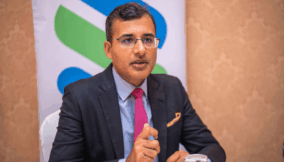
Omopeju Afanu, co-chair of the Global Working Group for the Girls in Energy Project and chair of the CSW70 Planning Committee in this exclusive interview with INIOBONG IWOK, shares insights on the project’s progress, its focus on measurable impact, and how it aims to drive community transformation through inclusive energy solutions.
What measurable impact has GiE had on girls and communities so far?
Girls in Energy has so far made important progress in building visibility, shaping thenarrative, and mobilizing partnerships around the need to intentionally include girls and young women in energy access, innovation, and community transformation.
At this stage,our most visible impact has been in awareness creation, stakeholder engagement, and ecosystem building through the Conference pillar. This phase is laying the foundation for deeper implementation by connecting the project to partners, institutions, and supporters needed for scale.
As implementation progresses through the GiE Village model,measurable impact will be tracked through a MEAL Framework, with a focus on outcome such as livelihoods, access to opportunities, and the economic prosperity of communities.GiE was unveiled and launched on the 11th of October 2023 by the leadership of the DoTheDream YDI.
It evolved from the Girls Are Asset Project of the DoTheDream YDI to close the gender gap in the Energy sector encouraging rural industrialisation, job creation and powering progress through local action.
Can you share success stories of beneficiaries who have transitioned into careers enterprises in the energy or other sectors?
Because the project is currently at the visibility and partnership-building stage, our strongest outcomes so far are in ecosystem activation rather than large-scale beneficiary transition data.
However, what we are intentionally building is a pathway that will move girls from awareness and inspiration into skills, mentorship, leadership, careers, and enterprise opportunities.
As the Careers, Competition, Camping, and Community Development pillars advance, we expect to document stronger beneficiary stories around transition into energy, innovation, entrepreneurship, and community-based leadership.
The First Cohort of the GIE started in November 2025 with 40 young girls building interestin Energy sector linearly.
The non-linear aspect of the career is having 15 women at its first cohort with lessons kicking off in July 2026.The GIE has had two local conferences in Lagos Nigeria and two international conferences:Annual World Bank IMF Civil Society Policy Forum 2025 with some key stakeholders from Google, Vint Cerf (internet evangelist); Maria Dimitrioau, WorldBank Representative to the UN; Claudia Segre, President Global Thinking foundation; Adebusuyi Olutayo Olumadewa- Lead Stategist GIE; Blessing Ayemhere – CEO EVAAC Energy; Ola Oluyinka Co Founder of Girls in EnergyCatalyzing Energy Justice: Energizing Communities through Girls/Women and sports held on the margins of CSW70 at Nigeria House in New York.
How do you track long-term outcomes beyond participation, like employment and entrepreneurship?
Long-term tracking is central to our model. GiE is being structured so that success is not measured by attendance alone, but by sustained progression.
Through our Meal framework, we intend to track outcomes such as skills acquisition, continued participation,transitions into employment, enterprise creation, leadership engagement, and community-level improvements.
Our approach is designed to ensure that we are not simply ticking boxes, but generating measurable and lasting results linked to real opportunity and economic outcomes.
How is the project adapted to local contexts, especially in countries like Nigeria?
GiE is designed to be locally responsive, not generic. In countries like Nigeria,we recognize that energy access challenges are closely tied to education gaps, healthcare limitations, poverty, digital exclusion, and limited economic opportunities for girls and women.
That is why our implementation model, particularly through the GiE Village, starts with a baseline needs assessment to understand the actual priorities of each community.Rather than imposing fragmented interventions, we are building a framework for consolidated, context-sensitive solutions that respond to the realities on the ground.
What specific energy challenges are you addressing in underserved communities?
We are addressing the broader development consequences of energy poverty. This includes limited or unreliable power for schools, healthcare centers, productive enterprises, and households; inadequate access to clean and sustainable energy solutions; weak infrastructure that limits digital inclusion and learning; and the exclusion of girls and women from the opportunities emerging within the energy transition.
Our work recognizes that energy is not a standalone issue. It is a foundation for education, health,productivity, innovation, and economic growth.
What are the core components of your intervention training, mentorship,funding, or policy advocacy—and how do you ensure continuity for participants after initial engagement?
The project is built around five pillars: Conference, Camping, Competition, Careers, and community Development.
Together, these pillars create a pipeline rather than a one-off intervention. Conference drives visibility and partnerships. Camping and Competition create exposure, innovation, and engagement opportunities. Careers focus on pathways to employment, leadership, and enterprise.
Community Development anchors the work in practical, localized transformation. Continuity is ensured by connecting participants to a wider ecosystem of learning, mentorship, opportunity, implementation support, and institutional partnerships over time.
How is the project funded, and what are your plans for sustainability?
GiE is currently mobilizing US$20 million in catalytic support through grants, partnerships,investments, sponsorships, and in-kind contributions. Our view is that sustainability must be multi-layered. First, we are building a diversified funding base.
Second, we are positioning the project around partnerships that bring not only money, but technical expertise, policy support, implementation capacity, and institutional legitimacy.
Third, by grounding implementation in local needs and measurable results, we are creating a model that can attract continued investment and scale over time.
How has participation in global platforms influenced your work on the ground?Are there policy changes or advocacy wins linked to your engagements?
Participation in global platforms has been very important in strengthening visibility,credibility, and strategic positioning for the project.
It has enabled us to engage broader conversations on energy justice, sustainable development, innovation, and gender inclusion while also opening doors for collaboration and resource mobilization.
These platforms have helped shape the Conference pillar as a strategic entry point for awareness and partnership building.
The value is that global engagement is not being treated as symbolic participation, but as a tool to unlock implementation opportunities on the ground.
Do you support participants in launching energy-related startups innovations? Is there access to funding, incubation, or technical support for these ideas?
Yes. That ambition is embedded within the Competition, Careers, and Community Development pillars. We want girls and young women to see themselves not only as beneficiaries, but as innovators, builders, entrepreneurs, and change-makers within the energy ecosystem and beyond.
As the project evolves, support will include path ways to mentorship, exposure, partnership networks, exchange programmes, energy industry leadership per cause, technical guidance, and access to funding or incubation opportunities through strategic collaborators.
What are your expansion plans for the next 3–5 years? Are there opportunities for collaboration with local institutions, researchers, or media?
Over the next three to five years, the priority is to move from visibility and ecosystem building into structured implementation through the GiE Village model.
This will include baseline assessments, localized intervention design, stronger monitoring systems, deeper community engagement, and measurable development outcomes.
There is significant room for collaboration with government, private sector actors, researchers, local institutions, media platforms, and development partners.
GiE is intentionally being built asa collaborative platform because the scale of transformation we seek requires coordinated,not fragmented action.

Join BusinessDay whatsapp Channel, to stay up to date
Open In Whatsapp