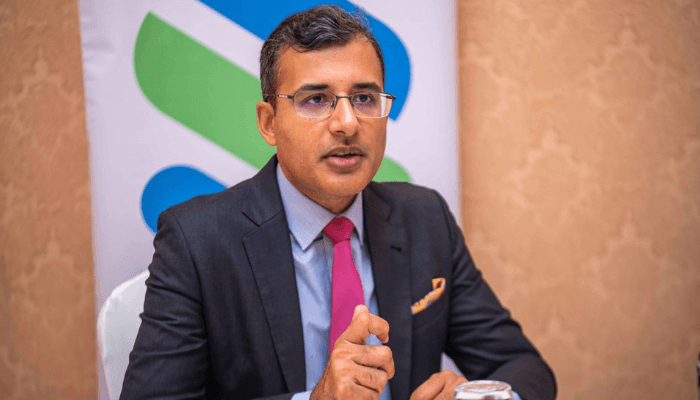
A weaker U.S. dollar in the second half of 2026 could improve capital flows into emerging markets, support currencies such as the naira and ease imported inflation, according to Standard Chartered. In this interview with Hope Moses-Ashike, Manpreet Gill, chief investment officer for Africa, Middle East and Europe (AMEE), said investors should remain focused on global equities, African Eurobonds and gold despite lingering geopolitical risks.
Looking back at the first half of 2026, what have been the biggest investment lessons for investors?
The first half of the year was a powerful reminder of why the core principles of investing matter. We often talk about diversification, resilience and staying invested during periods of volatility, and this year demonstrated exactly why those principles are so important. Despite heightened geopolitical tensions in the Middle East and a sharp spike in oil prices, global equities recovered quickly and delivered strong returns, with both global and Asian equities gaining around 10 percent during the first half.
For investors, the biggest takeaway is that reacting emotionally to short-term market events rarely produces the best outcomes. Those who remained diversified and stayed invested were ultimately rewarded.
What are Standard Chartered’s key investment themes for the second half of 2026?
There are three key themes guiding our outlook.
First, we continue to favour global equities because corporate earnings growth remains resilient, not just within the technology sector but across major global markets. While we may experience seasonal bouts of volatility during the latter part of the year, we see any market pullbacks as opportunities to add exposure rather than reasons to exit.
Second, we continue to find attractive opportunities for income generation through corporate bonds and emerging market dollar bonds, particularly African Eurobonds. Compared with developed market government bonds, we believe investors are being well compensated for the level of risk they are taking.
Finally, diversification remains critical. We continue to maintain an overweight position in gold and other alternative assets as effective portfolio diversifiers.
Which equity markets offer the strongest opportunities over the remainder of the year?
Our preferred equity markets remain the United States and Asia.
The US continues to benefit from strong earnings momentum, particularly as growth broadens beyond the semiconductor sector into the wider economy. In Asia, although recent gains have been concentrated in Korea and Taiwan, we believe the opportunity is beginning to broaden across the region, including Japan and other emerging Asian markets.
We therefore expect broader participation in the equity rally during the second half of the year.
Despite recent strength in the US dollar, why do you still expect it to weaken over time?
The recent appreciation in the US dollar has largely been driven by short-term factors, particularly geopolitical uncertainty and expectations around US monetary policy.
Our view is that both of those factors should gradually fade. Assuming inflation continues to moderate and there are no significant new shocks, we expect US bond yields to ease over time, reducing support for the dollar.
Historically, a weaker US dollar has created a more favourable environment for emerging markets by encouraging capital flows and improving investor sentiment. We believe those conditions are likely to re-emerge during the second half of the year.
You noted that the dollar is strengthening. How sustainable is this rally, and what are the likely implications for emerging markets like Nigeria, particularly for the naira, capital flows and inflation?
While the US dollar has strengthened recently on the back of geopolitical uncertainty and expectations that US interest rates could remain higher for longer, we do not expect this strength to become a long-term trend. As inflation continues to moderate and monetary conditions gradually normalise, many of the factors that have supported the dollar are likely to ease.
For emerging markets, including Nigeria, a prolonged period of dollar strength can put pressure on local currencies, dampen capital inflows and contribute to higher imported inflation. On the other hand, a weaker or more stable US dollar would provide a more supportive environment for the naira, improve investor appetite for emerging market assets and help ease inflationary pressures by reducing the cost of imports.
Ultimately, Nigeria’s outlook will depend on both the evolution of global market conditions and the continued implementation of domestic economic reforms. A supportive external environment, combined with credible policy execution at home, should help strengthen investor confidence and improve capital flows into the economy.
What does this outlook mean specifically for investors in Africa?
A weaker US dollar generally creates a much more supportive environment for emerging market assets. For African investors, we see particular value in emerging market dollar bonds, including African Eurobonds, where yields remain attractive relative to the underlying risks.
Many African asset classes have already performed strongly this year, so investors should become increasingly selective. At current valuations, we believe emerging market dollar bonds offer one of the most compelling risk-reward opportunities available.
Geopolitical tensions have remained elevated throughout the year. How have markets demonstrated resilience despite these events?
One of the biggest surprises has been how resilient markets have been in the face of geopolitical shocks. Traditionally, a sharp increase in oil prices would have placed much greater pressure on economic growth and equity markets.
Instead, global equities proved remarkably resilient, and volatility remained relatively contained. With oil prices now largely returning to pre-conflict levels, one of the biggest risks to global growth has eased considerably, allowing the broader economic expansion to continue.
Gold has underperformed expectations this year. Why do you continue to maintain an overweight position?
Gold has certainly been the one asset where our expectations have taken longer to play out. We anticipated a relatively shallow correction after its strong rally, but investor positioning remained elevated for longer than expected.
However, our conviction remains unchanged. Central Banks, particularly across emerging markets, continue to accumulate gold, providing strong structural demand. That reinforces our view that gold continues to play an important role in portfolio diversification, particularly during periods of geopolitical and market uncertainty.
Has the first half of the year changed your investment outlook in any meaningful way?
Broadly speaking, the first half reinforced rather than changed our investment thesis. The resilience of global equities exceeded expectations, particularly given the geopolitical backdrop, while economic growth also proved more durable than many anticipated despite significantly higher energy prices.
Where we have refined our positioning is in becoming more selective after strong market gains. We continue to favour equities and emerging market bonds but are increasingly focused on identifying the best risk-adjusted opportunities.
What are the biggest risks investors should monitor during the second half of 2026?
The most important variable remains the US labour market.
At present, employment conditions are healthy. They are neither overheating nor deteriorating materially, which supports our expectation that the Federal Reserve can maintain a relatively stable policy stance.
However, if the labour market were to strengthen unexpectedly, inflationary pressures could re-emerge, forcing interest rates to remain higher for longer. That would likely strengthen the US dollar and create a more challenging backdrop for emerging market assets, including those across Africa.
What is your overall message to investors as they position their portfolios for the remainder of 2026?
Our message is simple: remain diversified, stay invested and focus on long-term fundamentals rather than short-term headlines.
The first half of the year demonstrated that markets can be remarkably resilient, even in the face of geopolitical uncertainty. We continue to see attractive opportunities across global equities, emerging market dollar bonds and portfolio diversifiers such as gold. While periods of volatility are inevitable, investors who remain disciplined and maintain well-diversified portfolios are likely to be best positioned to benefit from opportunities as they emerge.
For investors, particularly in emerging markets, the second half of 2026 presents an opportunity to look beyond short-term market noise and position portfolios to benefit from improving global conditions while remaining selective and focused on quality assets.

Join BusinessDay whatsapp Channel, to stay up to date
Open In Whatsapp