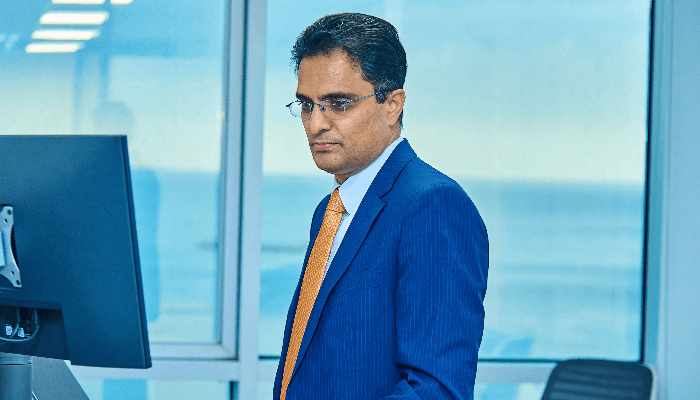
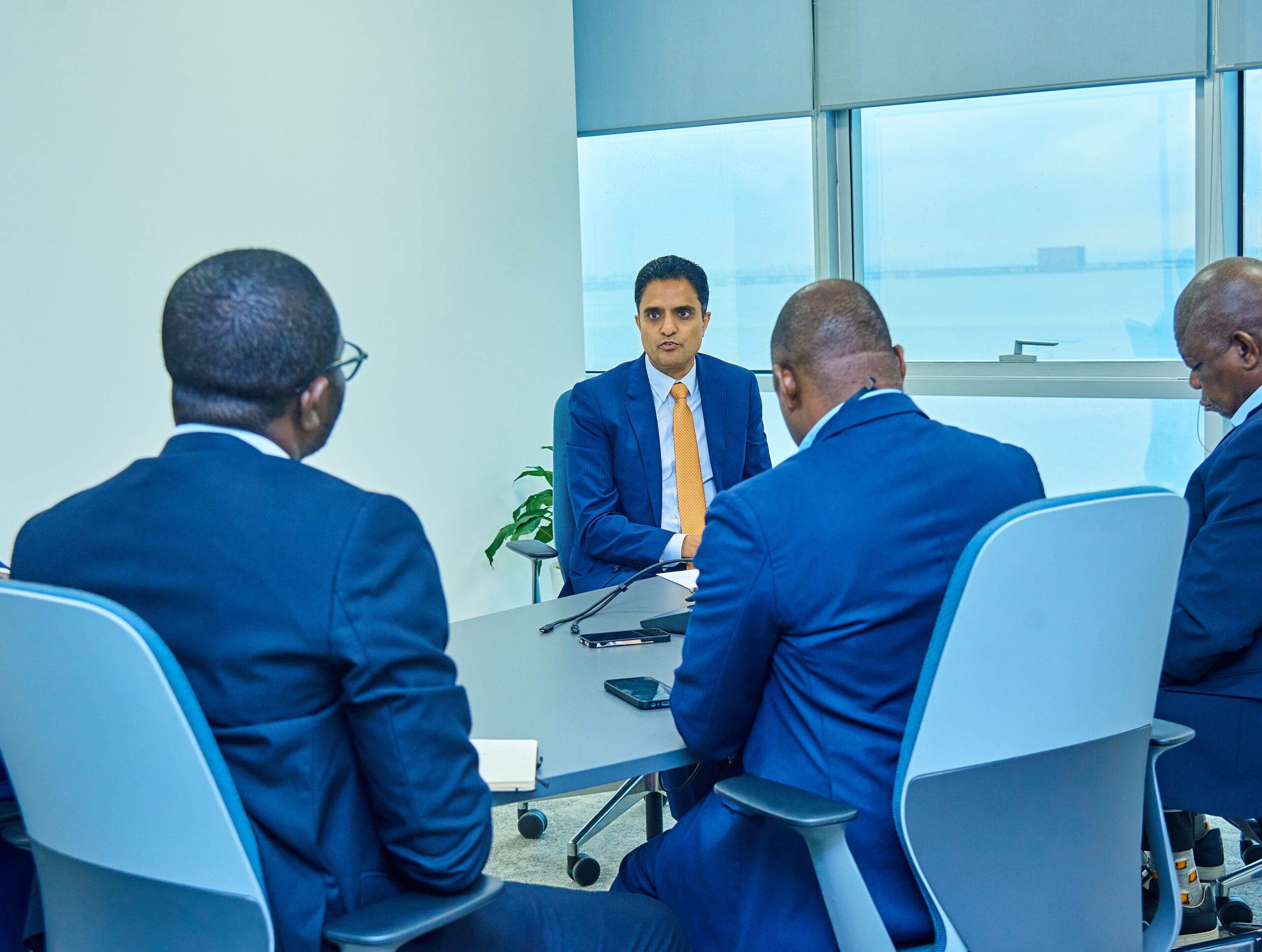
Jagir Baxi, chairman and managing director of Esso Exploration and Production Nigeria Limited, an affiliate of ExxonMobil, sat down with BusinessDay to discuss the company’s 20-year journey at Erha, the path toward final investment decisions on some of West Africa’s most complex offshore developments, why Nigeria still matters for oil investors and why speed, not announcements, is what Nigeria’s oil industry needs most right now. Dipo Oladehinde brings excerpt:
You recently marked 20 years of production at the Erha deepwater asset. How do you measure what that milestone means?
Twenty years is a meaningful milestone for any deepwater development, but what makes Erha special is that the story isn’t finished. Since first oil on March 27, 2006, we have lifted more than 800 cargoes and produced north of 800 million barrels.
Those are the numbers you can put in a table. What is harder to quantify, but every stakeholder in this industry feels, is what that investment has built in terms of people, careers, institutional knowledge, and infrastructure.
The capacity and capability that came together at Erha have proven themselves over a twenty-year horizon, and we believe there is at least another decade of meaningful contribution ahead. So, we celebrate, yes, but we celebrate forward-looking.
Let us talk about what comes next. You have a drilling campaign anchored at Usan that the market has been watching. What exactly are you committing to there?
What we are working toward at Usan, at OML 138, is an infill development program built on new seismic data we acquired across the entire block a couple of years ago. After more than a decade of production, the seismic has clearly shown where additional resources lie within the existing Usan reservoir. This is not a satellite discovery. It is not a separate field. It is the original Usan reservoir, and these wells have always been part of what that resource contains. What the new data has done is give us the precision to go after it efficiently.
What makes this development compelling is that it leverages infrastructure that already exists. The Usan FPSO is there. It has capacity. And by using it, we avoid the capital burden of a greenfield FPSO, which means the return profile is more attractive for every stakeholder, the investing partners, and the government that shares in production. We have already committed roughly 30 percent of the total program cost through early work, long-lead equipment and foundational contracts. The total investment runs to approximately one billion dollars. We are closing in on the point where we will declare it formally investment-ready.
And in production terms, what uplift does Usan infill represent?
We expect the Usan infill to unlock up to 40,000 barrels per day of additional flowing capacity. When you put that alongside Erha infill, which we estimate at around 20,000 barrels per day, and stack that against our current combined operated production of just over 100,000 barrels, you start to see what the near-term picture looks like. That is approaching a doubling of current operating capacity, before you even factor in what the Owowo field could bring. These are material numbers.
You keep a drilling rig active across multiple campaigns, Usan first, then Erha. Is that an efficiency strategy or a necessity?
Both, frankly. When you mobilise a deepwater drilling rig, the economy only works when that rig is kept busy. The cost-per-well falls when you spread the fixed costs over a longer, continuous campaign. But there is another dimension that people underestimate, which is crew performance. Think of a deepwater drilling crew the way you would think of a Formula One pit crew. The more they drill, on the same rig, with the same technology stack and the same team, the faster and safer they become. That performance improvement is documented globally, and we see it in our own history here.
So, our strategy is to string together a multi-year campaign, Usan infill as the anchor, Erha infill behind it, and keep that momentum alive. The rig schedule already reflects that intent, even before every investment decision has been formally sanctioned.
The asset that everyone is watching is Owowo. You described it as the tip of the spear in your deepwater portfolio. What does that phrase mean to you in practical terms?
Owowo is the first true greenfield development in the sequence we are building toward. Usan infill and Bonga North are tiebacks, with known geology, existing infrastructure, and lower step-out distances. Owowo is categorically different. We are talking about a subsea tie-back of more than 30 kilometers to the Usan FPSO. By comparison, the Erha and Bonga tiebacks that came before it were single-digit kilometers. The well count at full development is 20 to 40 wells. The resource size is at least 50 percent larger than either of the previous tie-back developments. This sits at the outer edge of global industry experience for deepwater subsea engineering. That is why it is the spear tip, not because it is the easiest, but because it pierces the next horizon.
You mentioned $7 to $8 billion as the cost envelope for Owowo. That is a significant capital commitment. What justifies it?
The resource justifies it. At peak production, Owowo can deliver over 100,000 barrels per day. That is transformational for our operated production base and meaningful to the country’s output ambitions. But I want to say something about how we think about capital efficiency, because I think this point often gets lost. We are pursuing a tie-back concept for Owowo, not a new FPSO. That is a deliberate choice. A new FPSO brings more capital expenditure upfront.
Under a production sharing contract, that capital gets recovered by the investors before the government’s full share kicks in. So, higher capex is not neutral; it actually reduces the proportion of barrels available to create broader value for Nigeria. A tie-back, using the existing Usan FPSO, means a lower capital basis. More barrels go to profit-sharing from an earlier point. That is competitive deepwater development. It is not a shortcut. It is the right structure.
Critics would say Owowo has been in development discussion for years. What has taken so long?
I will not pretend the timeline has been short, because it has not. But I would ask people to understand what maturing an $8 billion investment actually requires. We reprocessed all the exploration and appraisal data in 2021 and 2022, using the most modern seismic interpretation capability that exists in the industry. That work underpinned a field development plan update that was submitted to the regulator and approved. From there, the work has been about translating the government’s enabling directives from 2024, specifically Directives 40, 41 and 42, covering incentives, national content and contracting, into project-specific outcomes. That sounds administrative. It is anything but. It means defining an Owowo-specific national content strategy. An Owowo-specific contracting approach. An Owowo-specific incentive analysis. Each of those has to be worked through with partners who share the block and with government stakeholders.
We are also the same partners in Owowo as in Usan, which creates a natural alignment of interest, but alignment still takes work. We have been on that journey for about 15 to 16 months since our deepwater separation from shallow water operations was completed. The work is in flight.
The 2024 presidential directives you mentioned, have they genuinely changed the investment calculus?
They have. And I will be honest about why, because I do not want to give a diplomatic answer and leave the substance on the table. The incentive structure that has been codified has made Owowo more globally competitive as an investment destination. But here is what I want to be equally clear about: ExxonMobil is not here for handouts. I mean that seriously. What we want is to bring our best, which is world-class cost discipline and schedule execution, into a fiscal and regulatory environment that rewards that discipline.
The directives do that. They bring an additional dimension of investability. But it takes all three levers working together, cost and schedule performance from us, a national content strategy that is practically executable, and the incentive layer. Pull any one of those away, and the investment case weakens. We are determined to mature all three.
And what is the honest state of Bonga Southwest? There is a persistent narrative that ExxonMobil has been an obstacle.
I understand that narrative exists, and I want to address it directly rather than deflect. The perception of blocking comes, I think, from our consistent expression of the view that Bonga Southwest needed more work before it was ready for a final investment decision. That is not blocking. That is doing the job of a responsible investor. An FID that is announced before a project is truly capital-competitive creates a problem that is worse than delay. Under a production sharing contract, high capex gets recovered by the investors before the government’s full entitlement is realised. So, if we rush to a poorly optimised FID on a project the size of Bonga Southwest, we produce barrels, we recover our capital, and the share that could have gone to national benefit is diminished. That is not a good outcome for Nigeria.
Our position has been: let us do the work to make this project as capitally efficient as possible, so that when it goes, it goes well. The most recent government support for Bonga Southwest represents exactly the kind of enabling environment that makes that journey possible. We are fully committed to supporting the operator. But I cannot give you a specific FID date today. What I can tell you is that the conditions are better now than they have been at any point in that project’s history.
What about Bosi? That name does not come up as often.
Bosi is the most complex of the three large developments in our portfolio, and the complexity is specific. It is not primarily an oil development. It is an oil and gas development, and the gas component requires infrastructure and a value chain that has not previously existed at scale in Nigerian deepwater. A gas pipeline to shore. Fiscal treatment for gas that actually works. Top-tier global contractors willing to engage with that scope. Historically, one or more of those conditions was missing.
today, the incentive structure explicitly addresses gas, which it did not before. The contracting environment is more receptive. But Bosi is larger than Owowo, with more reservoirs and more geological complexity. Its technical maturity is not where Owowo or Bonga Southwest are today. We are investing to mature it as fast as we can. But I will not manufacture a timeline that I cannot defend.
Nigeria’s government has production targets of 2 to 3 million barrels per day. How realistic is that from where the industry sits today?
I want to reframe how we think about those targets, because I think the public conversation often misses a crucial point. Every day that this industry produces reliably is a day where we are fighting against natural decline. To get from current production levels to 1.8 million, which is the government’s fiscal budget basis, I have to add new capacity and simultaneously offset the decline from existing production. To get to two million, the challenge is greater. To get to three million, the arithmetic becomes very demanding. The only way those targets are achievable is if two things happen in parallel: existing production is protected, optimised and kept flowing reliably, and new capacity comes on with speed. Speed is the variable I would emphasise most. FID announcements that come slowly translate into capacity that arrives too late to offset decline curves that are moving against us every single day.
This administration has created genuine momentum for speed, through the directives, through visible support for specific projects, through the tenor of engagement. Our obligation is to match that momentum. Protect what we have today. Bring the new capacity with urgency. If either of those slips, the headline production targets become a story of adding capacity to offset decline rather than a story of genuine growth. That is the honest framing.

Join BusinessDay whatsapp Channel, to stay up to date
Open In Whatsapp