For seven years and running, African hospitality stakeholders have been gathering in states across Nigeria for the annual Hotel Managers Conference Africa (HMCA). The impact of the gathering is evident with the improvements hotel managers and owners have recorded across board from attendees.
This year, the 8th edition of the conference is expected to draw attendees from across the country and 13 African countries.
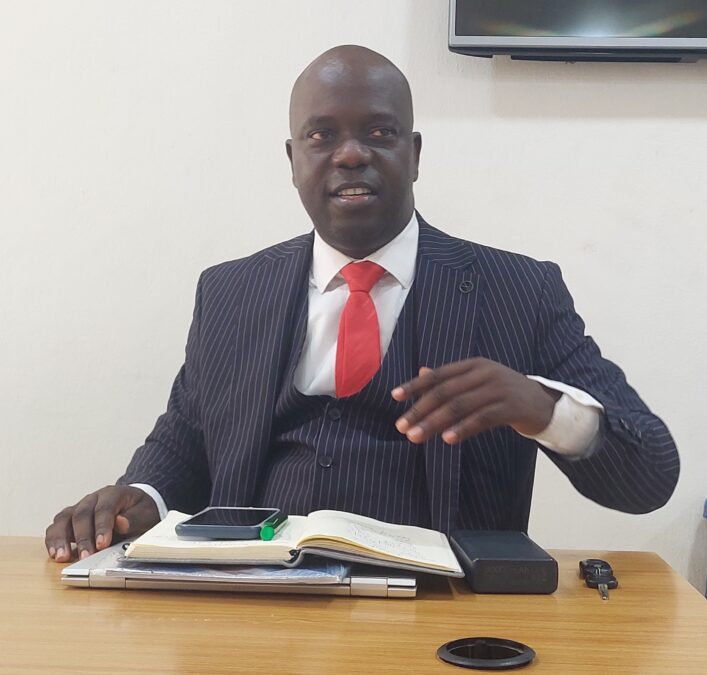
In this interview, Olugbenga Omotayo Sunday, CEO, Tojum Hospitality and convener of HMCA, shares with Obinna Emelike, preparations for this year’s edition, expectations, focus, top highlights, support, among related issues. Excerpt:
What has been the journey of HMCA since inception?
We started this conference in 2016 in Uyo, Akwa Ibom State. This year is the 8th edition. We did the first three editions in Akwa Ibom and moved to Port Harcourt, Rivers State for the fourth edition in 2022.
Sadly, we lost some years to the pandemic. We moved the fifth edition to Owerri, in the South-East because we rotate the hosting of the conference and want every region in Nigeria to have a taste of it.
From Imo State, we moved the conference to Lagos State for the sixth edition and the first time in the South-West.
The Lagos edition was held at Lagos Continental Hotel in Victoria Island. We went back to Lagos and also Lagos Continental Hotel for the seventh edition and we are going back there this year again for the eighth edition of the conference. So, over the years, the conference has grown to become one of the major conferences we have today in the African hospitality landscape.
We have been able to attract participants from different regions in Africa starting from the fifth edition. In Nigeria, we have been able to grow the conference to attract participants from all the six geopolitical zones.
There was an edition where we had participants from 27 states present in our conference. Then for the international participation, we had people coming from West Africa, Central Africa, majorly from Cameroon, from East Africa; Uganda, Rwanda, Kenya, and Botswana from Southern Africa.
What are the preparations and expectations for the 8th edition?
We are set for the eighth edition, which is just next weekend; July 11-12, 2026. It will hold on the theme: “Raising the Bar, Sales, Service, and Standards for a Competitive Africa”. We have been able to push the conference to where it is today because we run it through sponsorship.
This year, our headline sponsor is Opay. I am sure everybody here has an Opay account. I am not marketing Opay, though. I know that either you have an Opay account or you have transferred money from or to Opay in the last two days because of their seamless, fast and secured transactions.
Huawei is one of our key sponsors. They have been in Nigeria for a long time and have done well when it comes to digital, electronics and internet solutions and services.
We also have other big brands supporting us. One of them is Lagos Continental Hotel, our host for three consecutive years now.
We are using the Grand African Ballroom of the hotel. The likes of Radisson Blu, Sheraton Lagos Hotel, Marriott Ikeja Hotel, Ikogosi Warm Spring Resort, among others are supporting the conference. Also are the likes of Eko Hotel and Suites, EbonyLife.
How many participants, states and countries are you expecting?
We will have rich participation from stakeholders and hospitality businesses across all the states in the country.
On the continent level, we have confirmed 13 countries across Africa, including Uganda and Ghana.
What are the key highlights of the conference this year?
This year, and as usual, we will have panel discussions, guest speaking opportunities, keynotes and paper presentations.
We will have B2B, B2C, we will have mentoring sessions, masterclasses and time to network. We will focus more on capacity building in this edition because it will offer opportunities for some of the managers to be exposed and cross-breed knowledge within their peers. Beyond Nigeria, we have hospitality experts and participation from East Africa, West and Central African. They will all come together to dialogue, exchange knowledge, form partnerships, among other benefits.
Another highlight is the opportunity for solutions. We have a lot of tech solutions and lots of innovations going on that support our system. So, it is a big ecosystem coming for the conference.
We believe that beyond learning, capacity building and strong panel discussions, we should have time to find new solutions.
We saw the gap between the local brands and the internationally branded hotels. We saw that gap over the years because the same people working in these local brands are also the same set working in these international brands. So, the vision of the conference is to bridge that gap.
But they are not behaving the same way. For instance, now you tell a porter in Marriott to stand here for six hours, he will do so. If you tell that same porter to stand at XYZ Hotel, he will not.
These are the issues amid gaps in processes, procedures, standard, and consistency. Over the years, the conference has drawn all the leading expatriates; from the likes of Raza Ahmed of Radisson Blu Anchorage, Danny Kioupouroglou of Eko Hotel and Suites, Dr. Michael Pinder, George, to many other resource persons who have seen the need for us to come together and network.
By and large, we are bridging that gap. Now, you will see a local brand offering a four to five-star service. We see that testimony coming even from the owners and from the users of these hospitality outfits.
Another thing is that we are bringing the government in. Last year, Lagos State attended. Hopefully this year, we should have them better, not just attendance.
Toke Benson-Awoyinka, Commissioner for Tourism, Arts and Culture, Lagos State, was with us last year, and she promised to be our chief host again this year. She has been identifying with us and doing everything possible to support what we are doing.
This year’s conference also has the endorsement of the Ghana Tourism Authority (GTA). The CEO will be in Lagos as one of our guests of honor and through that, we see a future partnership with GTA, which is also interested in hosting this event. They have positioned Ghana as the next country that will host it and we hope to make progress with that discussion.
We also have a couple of dignitaries that we are expecting such as the wife of Nigeria’s Defense Minister, she was with us last year. We have Chike Ogeah, managing director of MacFolly Hospitality, the owners of Marriott Ikeja Hotel. We also have a couple of people from the public and private sectors, who are coming to grace the occasion.
We will spice the conference with the graduation of our students. We have a hotel management school and we are graduating the Cohort 3 and Cohort 4 intakes.
Last year, we graduated about 80 students that have completed their course in Hotel Management and Operations. This time around, we are graduating almost 90 students. We also have an award session. On the second and final day we are going to finish with an award night, where we recognize excellence.
We are going to give awards to some hotels and individuals that have done well within the sector.
Do you think you have succeeded in your efforts at bridging the gaps in the industry in the last eight years?
Yes. Over the years, the conference has attracted more people, more stakeholders, thought leaders, hotel general managers, and consultants. Some owners have also joined us because the conference is for everyone that is involved in the management of a hotel.
You agree with me that some of the owners are fully involved in the management of the hotel. So, over the years, the number one thing we have been able to do with that project is exposure.
A lot of general managers are meeting each other for the first time; networking is such a high-profile platform and being further exposed.
Another thing we have been able to do is that we get to know ourselves more now, and in the course of it, the partnership and collaborations formed are helping us, because we are robbing each other, exchanging ideas and improving along the line. I found out that the conference has given opportunity for people to now have mentors. Some of them only hear the likes of Professor Wasiu Babalola, Adedayo Adesugba, Iyadunni Gbadebo of Eko Hotel and Suites and lots of other heavyweights probably on paper, when the media write about them. At the conference, they have the opportunity to interact with them.
So, that has really helped, and sometimes I found out that people that attend the conference go back to their respective hotels fired up and change one or two things. They want to implement what they have learned within the two days of the conference because it is always back-to-back, and we hear those testimonies. We see lots of managers now having cleaner hotels, well-structured and better operation modules. Some also have better SOPs, and now understand the need for regular training of staff members because that is what we preach and emphasize at every edition of the conference.
And above all, I am beginning to see proper grooming. Before we started the conference, if you go to some hotels, you cannot even identify the general manager. Now, they are beginning to look better, and they know what to wear, all because of the orientation at the conference.
I have seen a lot of improvement in what we are doing, and we want to do more because we know we are not there yet.
How do you handle complaints of multiple taxation by attendees?
Sometimes in our conferences, we bring it up. Yes, we have a conference platform, but we still have associations and institutions like Hotel Owners Forum, ITPN, HATMA, among others.
So, most times in our conference, when issues like multiple taxation, billing and overbilling come up, we have responses from our leaders, and they tell us what they are doing about it. But sometimes they give us instructions on what to do. For instance, now we are still looking at the issue of the National Institute for Hospitality and Tourism (NIHOTOUR), there have been directives from the Federation of Tourism Associations of Nigeria (FTAN), and directives from other relevant bodies. So, those are how we handle it. But I will tell you, every chance that we have to speak to the government about double taxation, we do not keep quiet.
How are you handling capacity building?
In the issue of capacity, we found out that within our sector, one important thing is the people because it is all about service and handling our guests.
So, capacity is key to the success of our business, from the people manning the gates, to porters, to receptionists, to housekeepers, because everything we are doing is directly affecting the service we are offering our guests.
But most of these things require skills. Just setting a table for dinner involves a lot of skills.
We do not joke with skills because it is people driven, and when we invest in their capacity, they will deliver better.
Considering how technology is revolutionizing businesses today, are there such solutions in the hospitality sector?
Of course, the world is fast evolving, and so also technology. Before we were doing analogue, but now it is a smart world and the smart world has really helped hotel operations. It makes everything easy. From payment, check-in and check-out, to the billing system, digital has really helped the overall guest experience of our guests across the board. So, we are embracing anything digital because it makes us smart, and makes our operation very easy. We give it to Opay for the fintech part of the smart operations of our system.
What is the level of acceptance of the conference in the last eight years among hotel managers and groups?
Yes, the acceptance has been good. I must be very honest. Despite that it is a paid event, I would say that acceptance has been beyond our expectation. When you see over 700 people gathered from different states, aside from foreigners, that is fulfilling for us. So, this project is very unique and direct, and people have really accepted it.
The conference has been taken to different regions, and the acceptance has been from the entire six geopolitical sources in Nigeria. Even beyond Nigeria, you can imagine. Today, the team from Ghana are arranging a coaster bus for their trip to Nigeria for the conference.
Is there respite for hotels considering the high cost of operation today?
Today, 40 percent of hotel income goes into power generation, including sourcing stable and cheaper alternatives. This is something we are supposed to enjoy and need to run our business smoothly. Security is important.
Stable electricity supply, supporting infrastructure, and security are all important. But the government needs to pay attention to our sector because we need support from them.
What role do you think the government should play in the sector in Nigeria?
I would say policy. Policy making is key, and most times I see how they play down on policies that affect us as a sector. For instance, we talk about taxation now, it is a policy issue. We talk about monitoring, quality assurance, quality control and others, they are all about policy, and supportive one for that matter.
The policies are there, but they are often not implemented. Before you can even open a hotel, you are supposed to have those policies in place and work accordingly. Apart from that, we are supposed to have controls and regulations. So, the government needs to do more with regulations.
Sometimes you see some places and wonder if they are hotels and who approved them. By all standards those properties should not be hotels, but today they are hotels. Some of them are located in wrong places, some, the facility is not enough, some, no space and no standard.
If the government had done their job, such spaces and properties would not have been approved as hotels.
So, policy implementation is necessary, while the government needs to offer an enabling environment because the lack of steady power supply, good roads, and other challenges negatively impact the sector from fully contributing its quota to national development and economic growth.
Good roads, void of flooding during the rainy season is part of the enabling environment because there are some hotels that have shut down completely today in Lagos because of heavy flooding.

Join BusinessDay whatsapp Channel, to stay up to date
Open In Whatsapp