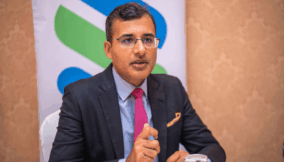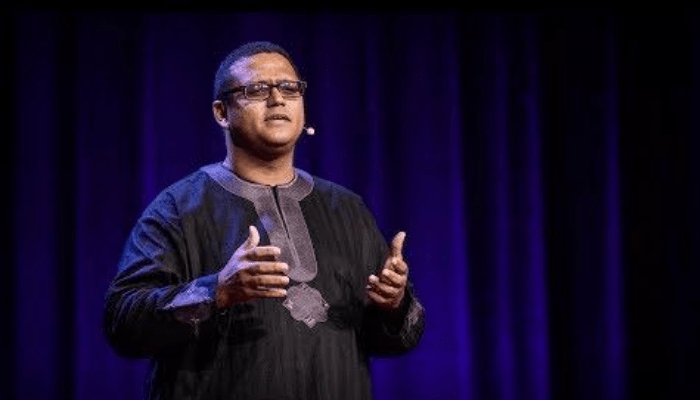
Kola Masha is the MD and co-founder of Babban Gona, a social enterprise that serves a network of smallholder farmers in Nigeria with a model created to attract youth. He is also the founder of GiveFood.ng, an emergency food relief coalition platform that is aiming to provide one million meals for vulnerable Nigerians every week. Masha holds an MBA from Harvard and Master’s in Mechanical Engineering from the Massachusetts Institute of Technology. In this interview, he explains how GiveFood platform tracks and moves food to people at the bottom of the socioeconomic pyramid. Excerpt:
What’s the detailed practicality of your service and what was the motivation for wanting to support COVID-19 relief efforts?
Babban Gona has always focused on creating scalable and financially sustainable solutions that can rapidly impact those in need. We began with the singular goal of providing for about 10 million young people, predominantly at the bottom of the socioeconomic pyramid, with a viable economic opportunity by 2030. A few weeks after COVID-19 emerged, we recognized that there was an issue around access to food for millions of Nigerians who earn a daily wage. Therefore, we worked on solving this problem and within about 72 hours, we were able to go from a concept to the fully-functioning platform called GiveFood. They basically track and moves food to people at the bottom of the socioeconomic pyramid. We had an incredible group of partners that came on board right away to build a robust coalition and create an infrastructure that could move a million meals per week to thousands of individuals.
What is the scope of your overall solution?
We needed a solution that could operate at scale quickly in a financially sustainable manner using existing supply chains, and to have a large group of supporters financially chip in just a little bit but adding up to a significant amount. We also wanted a solution that would respect social distancing and ensure that both giving and receiving individuals, could do so safely and conveniently. We worked to create a system that is more efficient than cash, to ensure that givers could send money and recipients would receive the exact amount but would get more than the value in products.
Through Givefood.ng, you can easily log on and transfer money unto the account. The money is credited as weeks of food packs and the giver can distribute the food packs safely and conveniently to those in need. The recipient can redeem the food packs, which are provided using a token number, by validating the token instantaneously at a supermarket or provision shop and collect the pre-packaged packs. If you don’t have any beneficiaries to give to directly, you can give to various volunteer organisations by selecting a specific community that you care about or you can select a particular volunteer organisation you want to support. In our first 24 hours, we donated food of about 10,000 meals, in our first week over 100,000 meals, and we are on track to getting to about one million meals per week.
Read also: Covid Hero interview with DJ Cuppy
How do you reach individuals living in very low-income, high-density communities and how do they learn more about GiveFood?
We cover about 80percent of all local governments in Lagos and well over 95% of the population, so we are in many of these communities that are struggling the most. We have a dedicated team of volunteers that go out, identify and screen these individuals and bring them on to the platform. We have a network of about 150 supermarket partners that continues to grow. Our end goal is to have thousands of supermarkets as we expand across the country. We are also operating in small provision shops, which is how we expect to cover thousands of these places where there is a very high density of shops where people can go and redeem these tokens. According to our data, the vast majority of food that has been redistributed has been in these communities that are most at risk.
Are your efforts scalable and replicable?
Yes, they are. One of our coalition partners that work globally has expressed interest in scaling this across Africa. We have offered to open-source all the technology that we use, our systems and structures, how we built the coalition etc., and we would be more than happy to support a GiveFood in Ghana, Kenya, Uganda etc., and enable similar coalitions to do good in their respective contexts. There is a tremendous amount of need on the continent and this model is exceptionally scalable.
Who are your key collaborators and how do they fit into your network and goals?
All our collaborators play an exceptionally critical role. We have media partners that are dedicating a tremendous amount of time and resources to promote GiveFood. Our food company partners are opening up their entire digital communication and marketing infrastructure to promote GiveFood. They are committed to not only helping us build up the supply chain but ensure that the supply chain is protected if there is a shock in the supply of products. Our financial institution partners have opened up their customer books and have gone out to reach supermarkets across the country to enable us to build a network as far as we have. Our supermarket donors are investing in training their team to implement this initiative. Our generous supermarket partners have rolled out this initiative across every single supermarket they have in Lagos and are putting in more than the value of the package, so we have been able to create exceptional value. It has been a commitment of a robust coalition of partners that grows every single day.
What kind of support do you need for your efforts?
We created a unique model where the everyday Nigerian can donate to somebody in a way that is more efficient than cash. The two biggest kinds of support we need and are receiving are building awareness and sponsorship. Our coalition partners come and assist with building awareness. For them it is a non-financial commitment; they are bringing their talent, resources, and digital media and marketing assets to drive awareness and traffic to Givefood.ng. We have built up a great group of sponsors such as innovative microfinance banks like FCMB, Stanbic IBTC and GB Foods. These sponsors bring financial and other resources to help create an incentive system for people to give on GiveFood. If you go online to GiveFood and donate N10,000, they will match your donation and give an extra 2,000 naira to your cause. It has been an exceptionally rewarding experience because it is one of the most efficient ways to give in this crisis.
Once the pandemic gets better and hopefully comes to an end, do you plan on using GiveFood as a permanent coalition?
We built this platform as an emergency food relief system so it will be interesting to see how things evolve, but I do think that there is an opportunity. If there is one good thing about the coronavirus, it will be the recognition that people see the importance of their role in their community and supporting others in their community. On the back of that, there is tremendous opportunity to continue to scale the work of this great coalition.

Join BusinessDay whatsapp Channel, to stay up to date
Open In Whatsapp