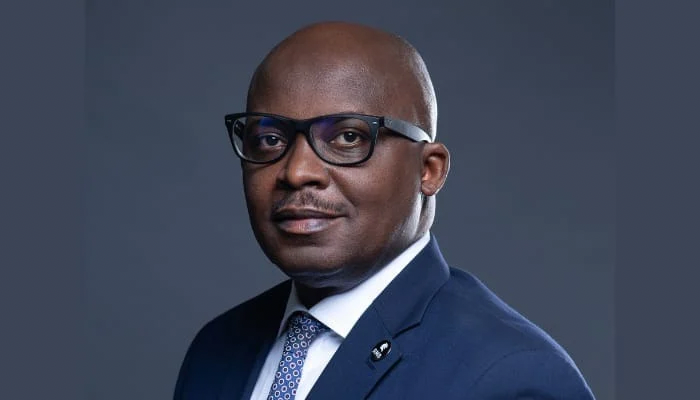
In his first two years as chief executive of Rand Merchant Bank Nigeria, Bayo Ajayi has had little room for a gentle learning curve. He stepped into the role at a moment of leadership transition and into an economy defined by volatility, tight liquidity, elevated interest rates and constant pressure on businesses to adapt.
Yet rather than retreat into caution, Ajayi has used the moment to sharpen execution, reinforce internal discipline and push the bank toward a more integrated, client-focused model.
Under his leadership, RMB Nigeria has combined commercial ambition with strategic clarity, deepening its role in complex transactions across key growth sectors while expanding its capabilities in sustainable finance, risk management and capital structuring. Just as notably, Ajayi has sought to position the bank not only as a financial institution, but as a platform for insight, policy engagement and long-term value creation.
In this interview, he reflects on the realities of leading through uncertainty, the discipline required to balance growth with risk, and why he believes banks must play a more active role in shaping Nigeria’s economic transformation.
What significant achievements are you most proud of during your first two years as CEO of RMB Nigeria?
My first two years as CEO were focused on stabilising the organisation, building resilience, and delivering performance in a very challenging operating environment. I assumed the role following an unplanned leadership transition, so ensuring continuity, and maintaining strong client engagement were immediate priorities
Working closely with a highly experienced leadership team, we moved quickly from uncertainty to disciplined execution. What I am most proud of is that we did not retreat into caution, we stayed close to our clients, and we continued to perform in an environment defined by tight monetary conditions and macroeconomic volatility. That says a great deal about the strength of the franchise and the quality of the team.
We also made meaningful strategic progress. We pushed harder on our “One RMB” model so clients could access the full strength of our advisory, funding, markets, and risk capabilities in a more integrated way. We elevated the Bank’s visibility through platforms like the RMB Think Summit and the RMB Economic Forum, and we were honoured with the BusinessDay BAFI Award for Best Merchant Bank of the Year.
Just as importantly, being recognised as a top employer during that same period was deeply significant to me. It showed that performance and culture can, and should, move together.
How have you adapted your leadership style to meet the evolving needs of the bank and its clients?
Transitioning from being the CFO to the CEO changes your field of vision. As CFO, you are naturally focused on precision, control, and financial stewardship. As CEO, you still need those instincts, but you also have to lead across the whole institution — strategy, culture, execution, and market positioning.
That shift has made me more collaborative and more deliberate about alignment. In a banking environment like Nigeria’s, especially during a period of recapitalisation and regulatory adjustment, people need clarity. They need to understand where the organisation is heading, why it matters, and what their role is in getting us there.
My leadership style has become more enterprise-wide in outlook. I spend a lot of time making sure priorities are understood, decisions are connected, and execution remains consistent. In times of uncertainty, providing clarity is key for leadership.
What key challenges did you face during your first year, and how did you overcome them?
At the time, we were operating in a market shaped by tight liquidity, elevated interest rates, and significant uncertainty, and in that kind of environment, it becomes very easy for institutions to become reactive.
What mattered was staying anchored. We focused on fundamentals, stayed disciplined in our decision-making, and avoided the temptation to chase short-term wins at the expense of long-term strength. I also drew from the depth of experience of the leadership team, whose support was invaluable in the early phase.
I was able to navigate that period through disciplined execution, setting clear priorities, and the confidence to make measured decisions in a tough macro-economic environment.
What innovative financial solutions has RMB Nigeria introduced under your leadership?
At RMB Nigeria, innovation is about solving real problems in ways that are relevant, scalable, and commercially sound.
We have led some landmark transactions across key sectors. In agriculture, for example, we acted as Lead Issuing House on the largest non-financial public equity raise in Nigeria, for the largest Series 1 bond raised by an agro-industrial firm. In energy, we served as Global Debt Coordinator and Mandated Lead Arranger on a major transaction supporting Nigeria’s gas transition and energy security.
We also repositioned our Global Markets business from event-driven trading to a more consistent, flow-based execution model. At the same time, we strengthened our transaction banking and capital structuring capabilities so we can help clients navigate volatility, manage risk more intelligently, and optimise their balance sheets. For us, the real test of innovation is whether it delivers value to our clients.
How do you see RMB Nigeria’s role in driving economic development and sustainability evolving?
RMB Nigeria is positioned as a transition enabler. We are intentional about how capital is structured, where it flows, and what kind of economic future it helps to build.
That means mobilising transition finance in a practical way — through blended finance, sustainability-linked structures, and financing solutions that support infrastructure, manufacturing, energy security, and cleaner growth pathways. We are especially focused on helping clients navigate the space between today’s economic realities and tomorrow’s sustainability expectations.
For us at RMB Nigeria, We are moving beyond ESG as a compliance exercise and embedding Shared Prosperity as a balance‑sheet strategy, ensuring that every fund we deploy contributes to productive capacity. It should build industries, improve competitiveness, expand opportunity, and support a more resilient economy. That is the lens through which we approach it.
What strategies have you implemented to enhance competitiveness and growth?
Our competitiveness comes from being client-centric and being able to combine insight, structuring capability, and disciplined execution in a way that clients genuinely value. In our segment of the market, you do not win by being generic. You win by being relevant, by understanding complexity, and by delivering value.
We have focused on deepening our sector expertise, strengthening our structuring capabilities, and staying highly selective about the opportunities we pursue. That discipline matters. Growth is not just about volume; it is about quality, resilience, and the ability to support transactions that are commercially meaningful.
Meeting the CBN recapitalisation threshold ahead of schedule was also an important milestone. It positions us to support larger balance sheet requirements while maintaining strong risk standards. At the same time, our presence in major economic forums allows us to contribute to policy conversations that shape the broader investment climate. So competitiveness, for us, is both transactional and institutional. It is about value delivery.
How do you prioritise strong client relationships?
At RMB Nigeria, the priority is to stay close enough to our clients to understand not just what they need today, but what is changing in their business and what they are likely to need next. We are focused on long-term value creation for our clients rather than just transactions.
That means regular engagement, honest conversations, and a willingness to think with clients rather than simply sell to them. We want our relationships to be strategic, not transactional. The more deeply you understand a client’s operating reality, the better you can co-create solutions with them.
What new services or products has the bank introduced?
We have broadened our offering in ways that reflect current market realities and what our clients require. One major area has been sustainable finance. We now offer a more comprehensive suite that includes ESG advisory, sustainability-linked, transition loans and bonds, and blended finance structuring.
In Global Markets, we are scaling higher-value FX and hedging solutions and expanding structured products that better align with client risk-return objectives.
In addition, we have enhanced documentary trade processing and compliance support to help clients manage supply chain disruption and cross-border complexity more effectively. The common thread across all of this is simple: our product evolution must be tailored to address our clients’ needs.
How does RMB Nigeria ensure personalised client solutions?
Personalisation begins with how we organise around the client. We bring together sector bankers, product specialists, and risk experts to build solutions collaboratively, rather than offering a generic solution.
The result is a coverage model that is high-touch, insight-led, and execution-focused. In other words, we try to ensure that every solution feels considered, not manufactured.
That matters because most sophisticated clients are not dealing with isolated problems. Their financing needs are shaped by sector dynamics, macroeconomic conditions, regulatory developments, and long-term strategy.
How do you foster a culture of excellence?
At RMB Nigeria, we run an owner-manager culture, we encourage employee-led innovation by creating room for ideas, experimentation, and continuous improvement. Culture is however, not only about inspiration — it is also about standards. We set clear expectations, maintain strong governance, and we expect leadership to model the behavi we want to see across the organization.
What matters to me is that excellence should be practical, not ceremonial. It should show up in how people think, how they collaborate, how they take ownership, and how they execute.
How do you prioritise talent development and retention?
Talent is a long-term differentiator for us in RMB Nigeria. Strategy can be copied, products can be replicated, but a strong institutional culture embedded in the organisation’s fabric is much harder to imitate.
We invest consistently in capability building, leadership development, and meaningful work that stretches our people and prepares them for the future. We also think carefully about the overall employee experience — performance-based rewards, growth opportunities, inclusion, wellbeing, and the quality of the working environment
Retention, in my view, is not just about keeping people. It is about creating a place where high performers genuinely believe they can thrive. We are intentional about creating that environment where our people can thrive.
What role does RMB Nigeria play in promoting financial literacy?
We see financial literacy as both a responsibility and an investment in the country’s long-term resilience. A more financially informed society is better positioned to save, invest, plan, and make sound economic decisions.
That is why we actively support programmes such as World Savings Day and Global Money Week, where we engage secondary school students on basic financial skills — saving, goal-setting, investing, and money management. Those early lessons can have a lasting effect.
At the institutional level, we also contribute through thought leadership by helping businesses and policymakers make sense of macroeconomic developments.
How has risk management been strengthened?
Risk management has been strengthened through greater discipline, sharper controls, and a clear commitment to staying aligned with our risk appetite in a very dynamic environment.
For us, risk management is not a back-office exercise. It is a core part of how the institution thinks, decides, and executes. We have ensured that our frameworks remain robust, relevant, and responsive to changing regulatory and macro-economic conditions.
We also maintain zero tolerance for regulatory and operational lapses. That requires clear processes, strong internal controls, and consistency in how standards are applied across the Bank.
How does the bank ensure regulatory compliance?
At RMB Nigeria, we maintain a very strong compliance culture and set the right tone at the top. Our approach to compliance is proactive, not reactive. In an evolving regulatory environment like Nigeria’s, that means continuous engagement with regulators, close monitoring of new requirements, and ensuring the organisation is ready to respond early.
We also collaborate with industry peers and use tools such as our Regulatory Universe and Compliance Monitoring systems to identify regulatory changes and assess their operational implications. That gives us a more structured and forward-looking compliance posture.
How do you balance risk with growth?
For us, we follow an Enterprise Risk Management approach which ensures alignment between business strategy and risk management practices. Roles and responsibilities are well defined, and the risk management function is empowered to operate independently. Our performance management process is structured to recognise our people for being responsive and balanced in business decisions.
Our culture plays a key role in this, as we strategically position ourselves to engage only in scalable and sustainable business practices. Every business initiative is underpinned by the necessary risk assessment, and our reward system not only recognises what you deliver, but places greater significance on how it is delivered.
What sustainability initiatives has RMB Nigeria implemented?
Our sustainability agenda is deliberately practical. We want it to be visible in real actions and measurable outcomes, not just in statements of intent.
For example, we have established recycling hubs and solar systems in communities, and we have significantly reduced single-use plastics across our offices. Since March 2024, that effort has prevented roughly 30,000 bottles — about 800 kilograms of plastic — from entering the waste stream and has saved more than 2,000 litres of water.
Beyond our internal footprint, we have also strengthened our ESG and transition advisory capabilities to support corporates in building ESG frameworks, designing transition plans, and accessing sustainability-linked funding. This advisory role is becoming increasingly important as companies try to translate ambition into implementable strategy.
How does RMB Nigeria contribute to the UN SDGs?
Our contribution to the UN Sustainable Development Goals is embedded in our Shared Prosperity framework and how we allocate capital, support clients, and run the institution. It is not something we treat as separate from the business.
Through structured financing, advisory, and trade solutions, we support sectors that are essential to Nigeria’s development — infrastructure, energy, manufacturing, agribusiness, transport, and services. By mobilising capital and enabling private-sector activity in those areas, we contribute directly to SDG 8 on Decent Work and Economic Growth and SDG 9 on Industry, Innovation and Infrastructure.
We are also intentional about SDG 5 on Gender Equality. We have exceeded the CBN’s recommended female representation across our Board, senior management, and broader workforce.
What role can businesses play in Nigeria’s economic transformation?
Businesses have to do more than participate in the economy; they have to help shape it. The private sector is central to Nigeria’s development because it mobilises capital, drives innovation, creates jobs, and expands productive capacity.
At RMB Nigeria, we see our role as helping unlock both domestic and international capital and directing it toward sectors that matter most to long-term growth. This includes supporting industries that are economically vital but also under pressure to adapt, such as oil and gas, manufacturing, transport, and cement.
The real opportunity for businesses in Nigeria is to combine commercial ambition with developmental relevance. If we can help structure capital more intelligently, support transition in a practical way, and back sectors that expand the real economy, then we are not just financing activity — we are helping to build the future. Our recognition as Best Bank in Sustainable Financing at the 2025 BusinessDay BAFI Awards reflects this broader commitment.

Join BusinessDay whatsapp Channel, to stay up to date
Open In Whatsapp