Nigeria, Africa’s biggest oil producer, has been admitted as an associate member of the International Energy Agency (IEA) after its governing board unanimously approved the application, just months after Nigeria’s government submitted its bid in May.
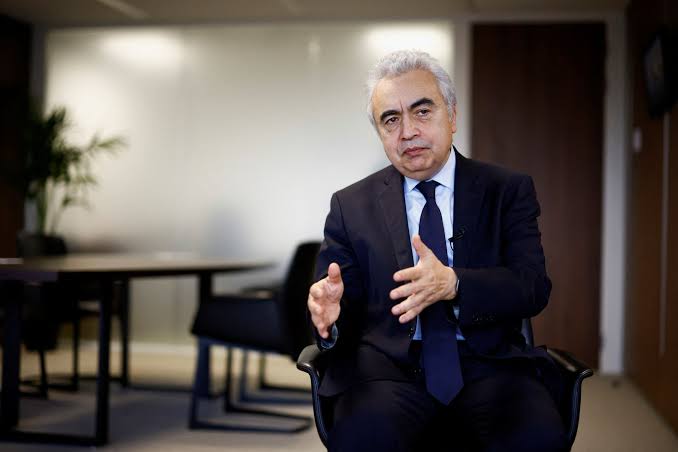
In an exclusive interview with BusinessDay’s Lolade Akinmurele & Dipo Oladehinde, Fatih Birol, the agency’s executive director, who has spent 32 years at the Paris-based agency and previously worked at the Organisation of the Petroleum Exporting Countries (OPEC), discussed why Nigeria’s membership matters, what benefits it unlocks, and how he squares Nigeria’s dual role in both the IEA and OPEC.
Tell us about the IEA and what this membership means?
We are 52 years old as an organisation. We are the global energy authority, and we cover all energy sources: oil, gas, electricity, nuclear power, climate change, investment, and all technologies, from electric cars to hydrogen and nuclear power.
We have 53 member governments in the International Energy Agency family, and we shape the global energy agenda, whether that is energy security, energy crises, climate change, or energy access for developing countries.
How did Nigeria’s application process unfold?
To become a member of the IEA is not an easy task, to be honest. Countries go through different procedures, and there are a lot of factors that member countries weigh before accepting a new country into the IEA family. In some cases, it takes years, sometimes even longer. The Nigerian government applied to join the IEA family in May, just a few months ago.
In a short period of time, we explained to our member governments what an important country Nigeria is for energy, for the economy, and for the IEA’s ambition to be an inclusive organisation. There were many discussions across different committees. I personally spoke with all the governments to accelerate and facilitate Nigeria’s accession.
After all the committee deliberations, our governing board of member governments met last week and discussed, among other things, Nigeria’s application, which I had received from the government through Minister [Ekperikpe] Ekpo himself. After those discussions, I was very happy that our governments unanimously accepted Nigeria as a new member of the International Energy Agency family.
I have been with the IEA for 32 years, and I have followed this kind of process for a long time. This was the fastest accession process we have ever had for any applicant country. It made me very happy. I shared the news with Minister Ekpo yesterday, and this morning I spoke with Ambassador Ayodele Oke, Nigeria’s Ambassador to France. I also sent an official letter announcing the decision, along with my thanks to President Tinubu, who was very supportive of this step.
Read also: Nigeria vaults into energy big league with historic IEA membership
In my view, this is a major development in global energy governance, and it made me personally very happy, as someone who has been a friend of Nigeria for years and who knows both Nigeria’s potential and its challenges in energy. As of tomorrow, Nigeria will be at the table where global energy issues are discussed and decided.
What does this membership mean for Nigeria in practical terms, what are the benefits?
First, Nigeria will have access to the best energy data in the world, updated continuously, on oil markets, gas markets, new technologies, and where investments are flowing. This gives the Nigerian government exclusive information, the same we provide to other member countries in real time, and it will support the right decisions at the right time with the right information.
Second, we discuss global energy markets regularly with our member countries, from the United States to Japan, Canada to Australia, Germany to Italy, Brazil to India, and Nigeria will now be at that table, able to voice its position in key international discussions.
Third, we will be able to advise the Nigerian government and industry on whatever they need, whether a trade partner is reliable, whether a technology is mature enough, or how much investment the refining sector in Europe requires, for example.
We also provide training for government officials in oil markets, refining, LNG markets, the transport sector, new technologies, and nuclear power where relevant. Altogether, this gives the Nigerian industry the best available information in the world, without cost and without hassle.
Is Nigeria joining as a full member or an associate member?
To be a full member, a country currently also needs to be a member of the Organisation for Economic Co-operation and Development (OECD). Nigeria is not an OECD member, so we bypassed that condition and brought Nigeria in directly.
Two other countries, India and Brazil, have applied for full or associate membership without OECD membership, and we are discussing their applications too. For now, Nigeria joins as an associate member, but it receives all the benefits I have described.
What factors made it easy for the IEA to approve Nigeria’s application so quickly?
First, Nigeria is a major oil and gas country, which matters greatly for global energy security. I have told our member countries, Europeans, for instance, that without Nigerian refining capacity from the Dangote refinery, many Europeans would struggle to travel this summer for their holidays. Nigeria is important from that perspective.
Second, for 25 years I have pioneered work around the world on energy access in developing countries, access to electricity, but also access to clean cooking, and I know this is an issue for Nigeria. I will see President Bola Tinubu in September and will raise this as a major area to work on together, much as I have worked with Prime Minister Modi on this issue in India.
Third, Africa matters greatly to me. If we call ourselves the International Energy Agency, we need to deserve that word, and Africa should be fully part of the IEA. We currently have South Africa, Senegal, Egypt and Kenya, among others, in our family, but Nigeria is the continent’s biggest country, and its accession makes me very happy. As I told the Nigerian Minister, this was one of the happiest moments of my professional life.
Before the IEA, I worked at OPEC, and my boss there was Nigerian; I am still in touch with him. And, as a footnote, I am a big Galatasaray football fan, and I love Victor Osimhen, I suppose I owe something to him too.
Nigeria will now hold both IEA and OPEC membership, two institutions that sometimes take opposing positions on production and climate policy. How will you manage that dynamic?
We work closely with the OPEC Secretariat. Sometimes we have different views, but that doesn’t change the fact that Nigeria today produces about 1.7 million barrels per day, and the Dangote refinery alone processes about 700,000 barrels per day, both of which contribute to energy security around the world. I am sure our OPEC colleagues would agree that Nigeria makes a strong contribution to global energy security.
So I don’t see a problem with Nigeria engaging on both sides. As I said, one of my main goals in working with Nigeria, beyond maximising the potential of oil and gas, is to address energy access, especially clean cooking. We are making major efforts on this front.
Two years ago, in May 2024, I convened a large meeting in Paris with several heads of state, where we raised $2.2 billion to support countries on this issue. We will hold a similar event this year with President Ruto of Kenya and the Prime Minister of Norway, and we very much hope President Tinubu will attend. Energy access and clean cooking are areas we have pioneered, and I believe Nigeria’s membership will help accelerate clean cooking penetration for Nigerians, particularly through LPG and other sources.

Join BusinessDay whatsapp Channel, to stay up to date
Open In Whatsapp