The Federal Government is set to open a N729 billion Series II bond offer on August 3, 2026, under its Presidential Power Sector Debt Reduction Program, as part of a renewed push to settle verified legacy debts owed to electricity Generation Companies (GenCos) and restore liquidity across the Nigerian Electricity Supply Industry (NESI).
The fresh capital follows the government’s initial fund at N501 billion raised in the first series rollout and payment of the first coupon of about N63.5 billion on schedule.
According to the issuance timeline presented by CardinalStone Partners, Lead Financial Adviser, the bond offer is expected to open on August 3 and runs for 10 business days, closing on August 14, with transaction funding targeted for August 24, pending regulatory approvals.
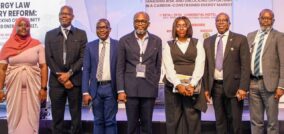
Taiwo Oyedele, Nigeria’s minister of Finance and Coordinating Minister of the Economy, who spoke at the NBET Finance Company Plc Series II Bond Investors’ Forum in Abuja on Tuesday, disclosed that the government was returning to the capital market only after demonstrating its commitment to honouring financial obligations.
According to Oyedele, the long-standing underinvestment in Nigeria’s electricity industry stems from severe liquidity bottlenecks, cost-reflective tariff gaps, accumulating liabilities to power producers, and eroded market confidence.
These issues, he said could not be solved by budgetary allocation alone, but requires structural, market-based solutions.
He said, “For more than a decade, the Nigerian Electricity Supply Industry struggled under persistent tariff shortfalls, settlement gaps within the bulk electricity trading framework, accumulated debts to generation companies and their suppliers, and grid instability, constraining investment and weakening sector performance. These problems could not be solved by budgetary allocation alone. They require structural, market-based solutions.”
Single-day $1.5bn FX transaction lifts naira as market turnover surges
He further explained that in a bid to resolve these issues, President Tinubu in July 2024 authorised a comprehensive review of the power sector’s liabilities and the Presidential Power Sector Debt Reduction Committee to establish the verified composition of sector liabilities, restore counterparty trust through coordinated settlement and design a sustainable market-based resolution framework.
The minister also disclosed that although the Federal Executive Council approved a settlement ceiling of N4 trillion a detailed verification exercise significantly reduced the amount eligible for settlement.
He said, “Following Federal Executive Council approval in August 2025, a N4 trillion Power Sector Debt Reduction Initiative was authorised as the settlement ceiling. Liability claims were then subjected to line-by-line verification against actual service delivery rather than accepted at face value, reducing the gross claim figure to a verified agreed settlement amount of approximately N3.3 trillion.”
The minister described the maiden bond issuance as proof that the Federal Government was committed to fulfilling its promises to investors.
He said, “In January 2026, the first series of lease-based issuance closed, raising N501bn, with N300bn issued to the market and N201bn issued directly to generation companies and their gas suppliers. All eight generation companies comprising 17 power plants that participated in the first issuance have since been paid in full in line with their settlement agreements. On July 14, the first scheduled payment on this seven-year bond was made in full and on time.”
According to him, the timely repayment was a defining moment for Nigeria’s reform agenda.
“That repayment was more than a cash transaction. It was a statement that the Federal Government keeps its commitments. Capital is neither emotional nor patriotic. It does not respond to speeches. It responds to credibility. Investors do not reward intentions. They reward execution.”
Oyedele said the government was now returning to investors to complete the first phase of the debt resolution programme.
He stated, “Today, we bring the second tranche of the Power Sector Bond Programme to the market, targeting approximately N729bn, completing the first phase approved under the programme. This tranche extends the settlement of verified legacy liabilities to a wider set of generation companies and, by extension, to gas suppliers and service providers across the value chain. It will further stabilise plant availability and reduce the frequency and severity of system disturbances.
“The instruments issued under this series will enjoy all the Federal Government-backed enhancements of the programme.”
The finance minister said the bond programme was part of President Tinubu’s broader economic reforms aimed at restoring macroeconomic stability and creating investment opportunities for private capital.
He added, “Funding resources alone will never be sufficient to meet the scale of infrastructure investment Nigeria requires. Private capital must play a larger role, and our responsibility as government is to create investable opportunities supported by sound policy, credible institutions and appropriate risk allocation.”
During a presentation on the structure of the transaction, CardinalStone Partners disclosed that the Series II issuance would seek to raise about N729bn, with approximately N400bn to be raised from investors through a book-building process while the balance (N329bn) would be issued as non-cash instruments to eligible beneficiaries.
The firm said the offer would open on August 3, close on August 14 after 10 working days and achieve funding on August 24, subject to regulatory approvals and market conditions.
CardinalStone further revealed that pension fund administrators accounted for about 50 per cent of the cash subscriptions under Series I, while commercial banks contributed about 41.5 per cent, reflecting strong institutional investor confidence in the programme.
Olu Verheijen, Special Adviser to the President on energy stated this at the Nigerian Bulk Electricity Trading Finance Company Plc Series II Bond Issue Investors’ Forum held in Abuja on Tuesday.
According to her, President Bola Tinubu’s administration has demonstrated its commitment to making a clean break from the fiscal dysfunction that once defined Nigeria’s power sector, adding that through bold policy decisions and disciplined execution, the government is converting an unsustainable liability into a bankable, well-governed investment opportunity that the market can trust.
“We are converting yesterday’s liabilities into today’s liquidity and tomorrow’s investment capacity. That liquidity, if sustained, will strengthen the entire electricity value chain, improve operational performance, and restore confidence across the sector. That is precisely what the Presidential Power Sector Financial Reforms Program was established to achieve under the renewed hope agenda.
“Markets do not reward promises, they reward performance and that is why we deliberately chose execution before expansion. Series 1 delivered on its promise, in February 2026, the federal government deployed approximately N501 billion, N300 billion in cash and N201 billion through non-cash-bond instruments, addressing approximately 22 per cent of the settlement obligations under executed settlement agreements, with the balance to be covered through Series 2 and subsequent issuances.
“To date, N333 billion has been settled to eight participating generation companies, covering 17 power plants, and they have executed those participation agreements. We have met our obligations on schedule. Thank you to DG DMO. The first Series 1 coupon, was paid in full on 14 July 2026,” she said.
She argued that the prompt payment had strengthened investor confidence in the government’s commitment to reforming the electricity market.
According to Verheijen, participating generation companies are now meeting their gas obligations, while lenders, operation and maintenance contracts that had previously gone unmet are now being met.
She said, “In sovereign finance, trust compounds just as powerfully as interest does. Governments that expect private capital to invest must also demonstrate their own commitment and that those commitments will be honoured. That is exactly what this programme has done.
“Bankability doesn’t begin in financial markets. It begins with governments that honour their contracts, that meet their obligations, that create predictable rules. Capital follows credibility.”
Speaking further, Verheijen noted that the second issuance would extend the settlement of verified legacy debts while strengthening the financial foundation of the electricity industry.
She explained that while the first series has proved the model, the second series is going to scale it. This issuance she said, extends the settlement of verified legacy obligations and deepens liquidity through the electricity value chain.
“By participating, you are not simply purchasing a financial instrument. You are investing in a reform programme that is designed to restore payment discipline, strengthen cash flows, crowd in private capital, and accelerate Nigeria’s economic transformation,” Verheijen added.
In his remarks, Johnson Akinnawo, Acting Managing Director and Chief Executive Officer of the Nigerian Bulk Electricity Trading Plc explained that the success of Series I had demonstrated that Nigerian power sector debt instruments could attract investor confidence.
He recalled that the first issuance was presented as a test of whether legacy debts in the power sector could be resolved through transparent capital market instruments.
Akinnawo said, “When we came to the market with Series I, we did not present it as a routine capital raise. We presented it as a test of a proposition: that Nigerian legacy power sector debt, the kind that has sat on generation company books for years, distorting investment decisions and starving the sector of confidence, could be resolved through disciplined, transparent capital market instruments rather than endless promises.”
“You answered that call. The N501billion answered that call. And we met the promises. When the coupon and principal repayments fell due on July 14, we met the promises. The Federal Government of Nigeria ensured that the coupon and principal repayments were made on time.”
“It is in that spirit that we welcome you to Series, sized at approximately N729 billion, carries the same discipline, the same rigor, and frankly, the same humility that Series 1 bore.” he added.
Also speaking, Joseph Tegbe, Minister of Power said that resolving the liquidity crisis in the electricity market was critical to achieving reliable power supply and sustainable economic growth.
According to him, the debt reduction programme is not merely a financing transaction but a key economic reform designed to restore the commercial viability of Nigeria’s electricity market.
He urged pension funds, insurance firms, banks and other institutional investors to support the bond programme, describing it as an opportunity to partner with the Federal Government in transforming Africa’s largest electricity market.
“Our destination is clear: a financially sustainable, investment-led electricity market that powers Nigeria’s industrial renaissance. Therefore, I encourage you to see this offering beyond a mere fixed-income instrument. It should be viewed as an opportunity to partner with the Federal Government in writing the next chapter of our economic story”, he added.


Join BusinessDay whatsapp Channel, to stay up to date
Open In Whatsapp