
Artificial intelligence and geopolitical uncertainty have emerged as the two defining forces shaping boardroom conversations worldwide. While AI presents unprecedented opportunities for growth, productivity and innovation, geopolitical volatility is forcing companies to rethink resilience and risk management.
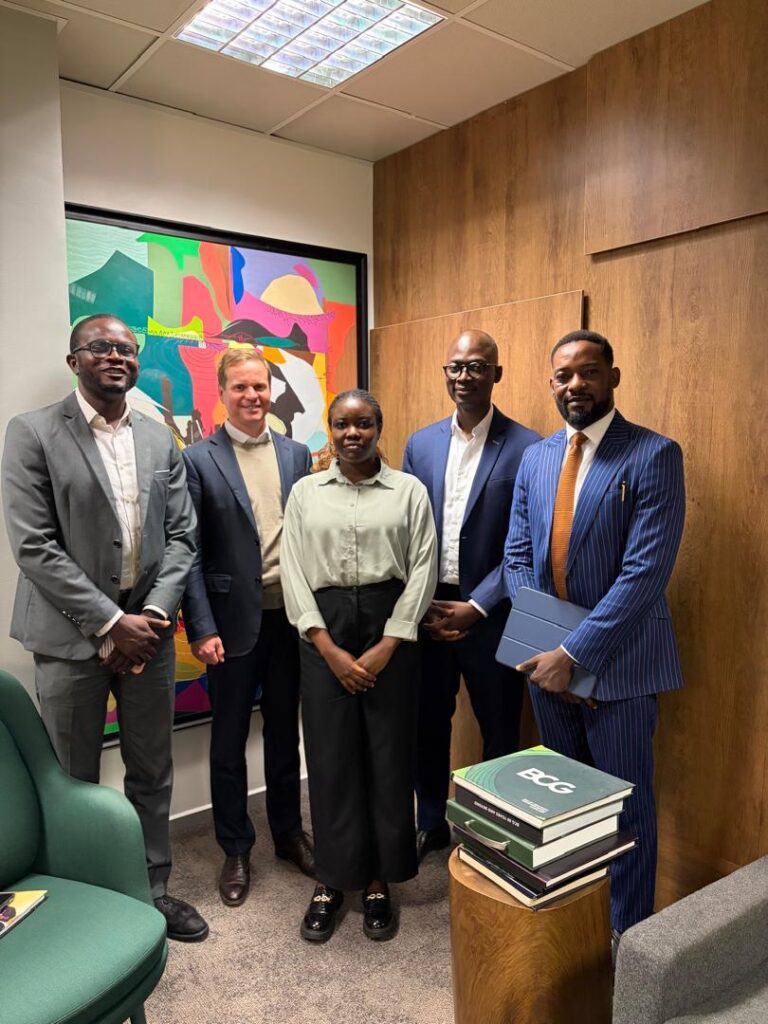
In this interview with BusinessDay’s Lolade Akinmurele, Dipo Oladehinde and Ayomide Odunlami, Matthias Tauber, Head of Boston Consulting Group (BCG) Europe, Middle East, South America and Africa (EMESA), and Tolu Oyekan, Head of BCG Nigeria, discuss where AI will create the most value, why many organisations are still moving too slowly, how Nigeria could use AI to leapfrog longstanding development constraints, and what business leaders must do to successfully transform their organisations for the next decade.
How can businesses and leaders create value over the next decade through AI adoption and organisational transformation?
Matthias Tauber: Let me start with what is currently top of mind for many CEOs and business leaders. Today, two issues dominate virtually every executive conversation: AI and geopolitics. AI is largely viewed through an offensive lens which entails how to create growth and competitive advantage, while geopolitics is increasingly a defensive issue centred on resilience and risk management.
Starting with AI, the opportunity is enormous for countries, industries and companies alike. The developments emerging from leading AI companies have been remarkable, but much of the value creation will ultimately occur not within AI labs, but inside enterprises. Companies that adopt AI effectively and integrate it deeply into their operations will create significant value for shareholders.
There is a tendency to assume that most of the value will accrue to those further down the technology stack in computing infrastructure, foundation models or the first layer of applications. While those players will certainly benefit, a substantial share of the value will go to organisations that successfully embed AI into the way they operate.
At BCG, we distinguish between simply deploying AI and using AI to reshape critical business processes. Deployment is straightforward: giving employees access to tools such as Microsoft Copilot or ChatGPT and encouraging them to use them. While useful, this approach typically generates limited value because usage remains sporadic and disconnected from core business activities.
The alternative is to redesign key processes around AI. This is where we see the greatest returns. In banking, for example, the most successful institutions are rethinking credit approvals, market approvals and other core processes with AI at the centre. When organisations redesign workflows in this way, they generate meaningful value for both the business and its customers.
Success requires more than technology adoption; it requires organisational transformation. We often describe this as a 10-20-70 equation. Ten percent is selecting the right AI models. Twenty percent is having the right technology architecture and systems. The remaining 70 percent involves people, processes, culture and leadership. Organisations that want to realise AI’s full potential must get that 70 percent right.
Our advice is therefore clear: focus on reshaping the organisation and prioritising people, processes and culture. The technology itself can often be purchased or built. The harder challenge is organisational change.
There is also another critical dimension that leaders must address: public perception. Many people remain sceptical about AI. Surveys in the United States suggest that roughly seven in ten Americans have concerns about the technology. These concerns range from environmental impacts and privacy issues to hallucinations and job displacement.
Those concerns are legitimate and should not be dismissed. Leaders cannot simply present AI as a solution to every problem. They must explain both the benefits and the trade-offs. Bringing people along on the journey is essential.
Ultimately, leaders must focus on three priorities: reshaping the organisation, investing in people and culture, and building trust through a credible narrative about AI’s role and value.
Tolu Oyekan: There is also a perspective that is particularly relevant for resource-constrained environments such as Nigeria.
In economies where skills are scarce and productivity challenges persist, AI presents an opportunity to leapfrog traditional development constraints. We were speaking with a bank today where credit approval processes that take a matter of days in some markets can take as long as 150 days. This is occurring in an environment where businesses need capital and banks have capital to deploy, yet bureaucracy and execution challenges create significant delays.
AI offers the potential to overcome some of those structural constraints. The concerns in developing markets may not be identical to those in developed economies, and that distinction is important. While responsible adoption remains essential, we should not overlook the substantial benefits AI can deliver.
In a survey we conducted with senior executives in Nigeria late last year, virtually all respondents expressed interest in AI and recognised its potential. However, many organisations remain at the conceptual stage. Few have moved beyond discussion into implementation.
Deployment is not simply purchasing software licences. It requires a structured programme that embeds AI into daily operations and business processes. There remains a significant opportunity for organisations to define the value they want to create, redesign processes accordingly and track the returns on their investments.
Are Nigerian businesses moving fast enough on AI adoption?
Matthias Tauber: No. But I would also say that no country or organisation is moving as fast as it could.
Whether you look at Europe, the United States, China or much of the Global South, the pace of adoption is generally slower than the scale of the opportunity would justify. AI is a horizontal technology that has the potential to transform virtually every function and industry. Embedding that kind of technology across organisations inevitably takes time.
The situation in Nigeria is not unique. Across markets, there is significant room to accelerate adoption, learning and experimentation.
What are the main barriers to adoption, and what needs to happen for businesses to capture AI’s benefits more broadly?
Tolu Oyekan: Among senior executives responsible for delivering growth and value creation, awareness is relatively high. However, that group represents only a small fraction of Nigeria’s population.
The first challenge is expanding awareness beyond executive leadership. The second is translating awareness into action.
Many leaders understand AI’s potential, but the question remains: what do we do next?
We recently met with a senior executive at what is likely the largest company in its sector. It was clear from the discussion that there was awareness of AI and its capabilities. Yet there was little evidence of meaningful implementation beyond that.
This creates a significant opportunity for advisory firms, technology providers and ecosystem participants to help organisations move from understanding AI to creating value from it.
Can you share examples of companies that have successfully adopted AI and achieved measurable business results?
Matthias Tauber: The most prominent success story today is software development.
AI is having a profound impact on coding, particularly within software companies and organisations with large technology operations, including banks. It is arguably the clearest and most mature use case at present.
Some critics argue that AI-driven productivity gains will eliminate jobs. The evidence remains mixed, and it is still early. However, some data suggest that the United States employs more software engineers today than ever before, despite rapid AI adoption.
The reason is straightforward: productivity gains are being redirected into creating more software. Rather than producing the same amount of code with fewer engineers, organisations are producing significantly more software with similarly sized teams.
We expect similar dynamics to emerge in other sectors.
Beyond software development, we are seeing meaningful adoption in legal services and financial services. However, coding remains the area where adoption has reached the greatest scale.
It is also instructive because software engineering involves much more than writing code. Typically, only about 25 percent of an engineer’s time is spent coding. The remaining 75 percent involves collaboration, coordination and problem-solving.
That pattern may offer insight into how AI will affect other professions. Rather than replacing people outright, it is more likely to automate certain tasks while increasing the value of human judgment, collaboration and decision-making.
A useful analogy is Excel’s impact on accounting. Excel automated calculations that accountants once performed manually. Yet we have more accountants today than before. The nature of the work changed, but the profession did not disappear.
AI may ultimately have a similar effect across many occupations.
How is AI reshaping the work you do at BCG?
Matthias Tauber: Much of what I described applies to BCG as well.
AI is enhancing productivity across insight generation and analytical work. It allows us to produce insights more efficiently, which frees up capacity to focus on what matters most: impact and implementation.
As a result, a greater share of our effort is directed toward helping clients achieve outcomes rather than simply generating analysis.
We also see significant opportunities for clients to redesign critical processes. In banking, for example, core operational workflows are being transformed. The same applies to sales organisations, customer service operations and call centres.
AI is changing how we work, but more importantly, it is creating opportunities for impact that did not previously exist.

Join BusinessDay whatsapp Channel, to stay up to date
Open In Whatsapp