
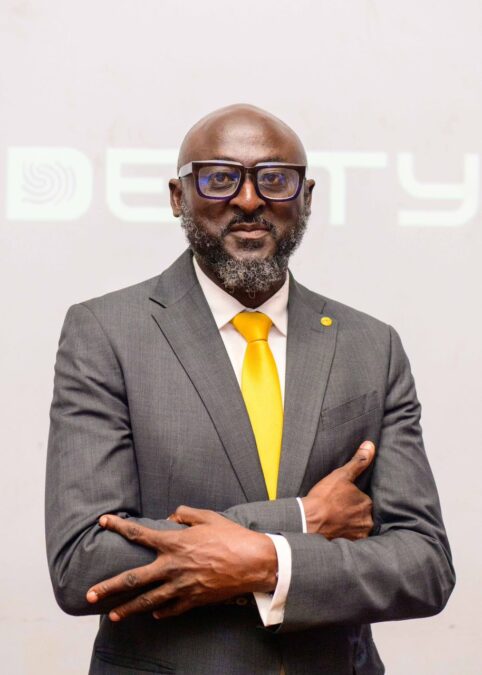
BusinessDay’s Folake Balogun spoke with Dr. Ola Olasiyan, regional head at identity.io, on rising fraud risks in Nigeria’s banking sector, biometric identity verification, AI-powered security systems, and the future of digital identity infrastructure.
Nigeria’s banking sector is faced with increasing fraud and identity-related risks. How serious is the problem today, and what trend concerns you the most?
The trend that concerns me the most is bank fraud involving stolen identities, where criminals take money from people’s bank accounts without their knowledge.
The new technology we are bringing will help prevent that because transactions will be tied to biometrics, specifically a person’s face and fingerprints. With that, nobody can use your credit card or access your account unless they have your biometric information.
We also have what we call ‘liveness detection,’ whereby even if someone tries to use fake or stolen biometric data, the system can recognise whether it is from a live person. That makes it significantly harder for fraudsters to compromise banking transactions.
With the Central Bank of Nigeria tightening KYC requirements, how prepared are Nigerian banks to meet evolving compliance expectations?
Nigerian banks are already taking this seriously. If you remember, the first major biometric project in Nigeria was the Bank Verification Number (BVN), which was introduced by the banks themselv,es which shows their commitment to tackling fraud.
As technology evolves, banks also need to evolve. What exists currently does not fully incorporate Artificial Intelligence(AI). We are introducing AI-powered systems that can prevent spoofing attempts, such as someone taking your image from social media platforms like LinkedIn and trying to use it to access your account. Our technology is designed to block those threats.
The executive roundtable on mobile biometric innovation for Nigerian banking is themed ‘Secure Identity Without Borders’. What does borderless identity verification mean in practical terms for Nigerian banks?
Borderless identity verification means that once I have a secure digital ID linked to my biometrics on my phone, I can use it anywhere in the world where the system is supported.
I would not need to carry a physical driver’s licence or passport. My identity can be verified using my face and digital credentials. Once the application reads and confirms my biometric information, it can establish that I am truly the person I claim to be.
How can mobile biometric technology help reduce fraud without creating friction for customers during onboarding?
Mobile technology makes onboarding much easier and safer. Customers can complete their own enrollment directly from their phones instead of relying on third parties or agents who may try to manipulate the process.
When people onboard themselves, they have greater control over securing their accounts. They can also visit a bank branch and complete the process personally using mobile devices. This reduces opportunities for fraudulent interference during onboarding.
What are the biggest weaknesses in the current onboarding and KYC systems used across the banking industry?
One of the major weaknesses is the current Automated Biometric Identification System (ABIS), because many existing systems do not yet integrate advanced AI technology.
ABIS is the system that stores and manages biometric information such as fingerprints, facial recognition, palm prints, and data. With the integration of AI into these systems, the banking industry can significantly strengthen identity verification and fraud prevention.
Beyond compliance, can stronger digital identity infrastructure unlock new opportunities for financial inclusion and credit access?
Yes, absolutely. Stronger digital identity systems can improve the security of banking applications and other financial services. Banks can build more secure digital products on top of these systems.
For example, ATMs could eventually rely on facial recognition or fingerprints instead of PINs. This would improve both convenience and security for customers.
Data privacy remains a major concern whenever biometrics are discussed. How can banks build public confidence while deploying these technologies?
Data privacy is extremely important. One of the key things we always advise is that biometric databases should remain in Nigeria. Sensitive identity data should not be hosted abroad or entirely in the cloud without local control.
Nigeria must maintain ownership and control of its biometric databases. One positive example is the BVN database, which is hosted within Nigeria.
There are also strong regulations under Nigeria’s identity management framework that restrict sensitive data from being moved outside the country. Banks need to remain very conscious of that.
What outcomes do you expect from the executive roundtable?
The goal is to find better ways to improve BVN verification, authentication, and onboarding processes. The technologies we are introducing are designed to strengthen what already exists.
The focus is on making the system more secure thereby reducing the opportunities for fraud.
What exactly is identy.io and what does the company do?
identy.io is fundamentally a security company built around biometric identity technology. Our focus is on helping organisations secure their systems and protect people from fraud.
It is not just about biometrics; it is about securing the entire ecosystem which is why we are introducing technologies that can detect deepfakes, injection attacks, and masks used to bypass facial recognition systems.
For example, if someone attempts to use a realistic mask or spoofing method to access an account, our technology can detect that it is not a genuine human identity. We are building secure biometric systems that are extremely difficult to penetrate.
Our target audience includes any organisation involved in identity management. In many countries, governments are major users of these systems for national ID cards, driver’s licences, pensions, and healthcare services.
We also work with banks, financial institutions, and fintech companies that require secure identity verification solutions.

Join BusinessDay whatsapp Channel, to stay up to date
Open In Whatsapp