Africa is entering one of the most consequential periods in its post-independence security history. The continent is no longer simply responding to isolated insurgencies or civil conflicts. Instead, it is confronting a fundamental transformation in the character of warfare, strategic competition and defence planning.
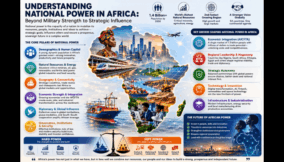
By the end of 2027, African governments are expected to collectively spend more than US$58 billion annually on defence, reflecting not only persistent internal security challenges but also the emergence of Africa as an increasingly important theatre in global geopolitical competition.
Yet higher defence spending alone will not determine Africa’s future security. The continent is simultaneously experiencing the rapid rise of drone warfare, declining Western military engagement, expanding Chinese and Turkish defence partnerships, growing Russian security cooperation, and mounting pressure to develop indigenous defence industries.
The defining strategic question is no longer whether Africa should modernise its armed forces. It is whether Africa can build defence capabilities that are sustainable, technologically independent and suited to the continent’s unique security environment.
A new era of strategic competition
The international security environment surrounding Africa has changed dramatically.
For nearly three decades after the Cold War, Western powers dominated security partnerships across much of the continent. France maintained significant military deployments across the Sahel, while the United States expanded intelligence cooperation through AFRICOM. European peacekeeping missions and United Nations operations became central pillars of conflict management.
That model is rapidly changing.
Political transitions across the Sahel, public opposition to foreign military deployments and shifting geopolitical priorities have reduced the influence of several traditional Western security partners.
The resulting vacuum is being filled by new actors pursuing bilateral rather than multilateral partnerships.
China has emerged as one of the most influential of these partners. Under the Forum on China-Africa Cooperation (FOCAC) Beijing Action Plan for 2025-2027, Beijing is significantly expanding military cooperation with African states through professional military education, defence diplomacy and equipment transfers.
By September 2027, China plans to train approximately 6,500 African military and police personnel while expanding intelligence cooperation, peacekeeping support and logistics partnerships. This represents one of the largest military education programmes ever undertaken between China and Africa.
Hardware is creating long-term dependencies
Chinese influence extends beyond training. Today, approximately 70 percent of African militaries operate Chinese-manufactured armoured vehicles or military equipment. While these systems are often more affordable than Western alternatives, they create long-term strategic dependencies. Modern military equipment requires decades of maintenance, software upgrades, spare parts and technical expertise.
This means procurement decisions made today will shape operational relationships well into the 2040s. For many African governments, affordability remains a decisive factor. For strategic planners, however, logistics may ultimately prove more important than acquisition costs. Military partnerships increasingly extend beyond equipment purchases to include maintenance contracts, officer education and technology transfer.
The rise of bilateral defence partnerships
As Western influence contracts, bilateral security agreements are expanding. Türkiye has become one of Africa’s fastest-growing defence partners, supplying drones, armoured vehicles, helicopters and military training programmes. Nigeria’s recent defence cooperation agreement with Türkiye reflects this broader trend.
Russia continues to maintain security partnerships across several African countries through military cooperation agreements and defence exports, while Gulf states have also increased investment in strategic infrastructure and maritime security. Rather than relying on a single security partner, many African governments are pursuing diversified defence relationships. This reflects a broader foreign policy objective of strategic autonomy.
The drone revolution
Perhaps the most important military transformation occurring across Africa is the rapid expansion of unmanned aerial systems. Traditional military modernisation focused on tanks, fighter aircraft and heavy artillery. Today’s conflicts increasingly favour persistent surveillance, precision strikes and real-time intelligence. Drones provide all three.
Across the Sahel, East Africa and the Gulf of Guinea, unmanned aerial vehicles are becoming central components of Intelligence, Surveillance, Target Acquisition and Reconnaissance (ISTAR) operations. Countries including Nigeria, Ethiopia, Morocco and Egypt are investing heavily in drone capabilities for counter-insurgency, border security and maritime surveillance.
The economics are compelling. A drone capable of monitoring large areas continuously costs only a fraction of a conventional combat aircraft while reducing operational risks to military personnel.
However, a structural weakness remains. Africa is primarily importing drone technology rather than owning the intellectual property behind it. Without domestic research and development, African states risk remaining long-term consumers within a global defence technology market projected to exceed US$123 billion.
Maritime security becomes a strategic priority
Africa’s maritime environment is becoming increasingly important. Continuing instability in the Red Sea has redirected significant volumes of international shipping around the Cape of Good Hope. As a result, southern African sea routes have become critical components of global trade.
At the same time, piracy, illegal fishing, narcotics trafficking and energy infrastructure protection continue to dominate security concerns in the Gulf of Guinea. These developments are encouraging renewed investment in naval modernisation.
Maritime domain awareness systems, coastal radar networks, unmanned maritime platforms and integrated command centres are increasingly viewed as essential rather than optional defence capabilities. The ability to secure sea lines of communication is becoming directly linked to economic resilience.
The Sahel’s lessons
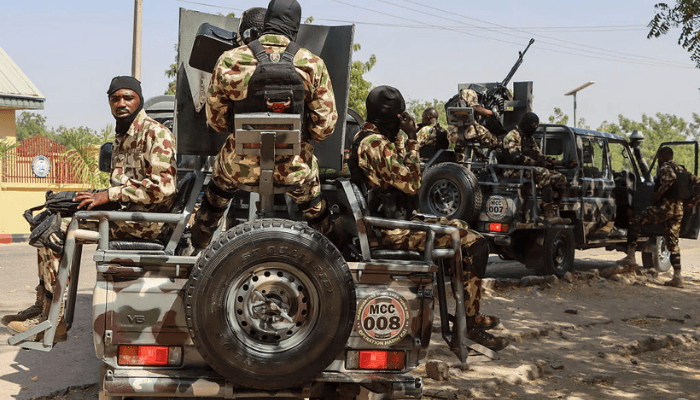
The conflicts unfolding across Mali, Burkina Faso and Niger have fundamentally changed military thinking. Large conventional formations have often struggled against highly mobile insurgent groups operating across vast geographical areas. African militaries are therefore shifting toward lighter, more agile force structures.
Special operations forces, intelligence-driven operations, drones and rapid mobility increasingly take precedence over heavy armour. The emphasis is moving from territorial occupation to persistent surveillance and targeted disruption of insurgent networks. This evolution mirrors broader global trends in counter-insurgency.
The case for defence integration
Despite rising defence expenditure, Africa continues to operate through fifty-four largely independent military procurement systems. This fragmentation creates significant inefficiencies. Different countries purchase incompatible equipment, maintain separate logistics chains and negotiate independently with suppliers.
Strategic analysts increasingly argue that greater regional coordination could substantially reduce costs while improving operational interoperability. The African Union has already begun discussions around more integrated procurement frameworks, common standards and enhanced regional defence cooperation.
Although political and sovereignty concerns remain significant obstacles, economic pressures are making greater collaboration increasingly attractive.
Defence spending must deliver industrial growth
One of Africa’s greatest strategic challenges is converting defence expenditure into industrial development. Military procurement often involves billions of dollars flowing to overseas manufacturers. Relatively little of this investment translates into domestic industrial capacity.
Countries such as South Africa, Egypt, Nigeria and Morocco are attempting to reverse this trend through local assembly, defence manufacturing and technology partnerships. Success will depend on moving beyond licensed production toward genuine research, innovation and intellectual property development. Defence spending should strengthen not only military capability but also engineering, advanced manufacturing and technological competitiveness.
Strategic outlook
Africa’s defence environment through 2027 will be defined less by conventional interstate warfare than by technological adaptation, strategic partnerships and institutional transformation. The continent’s armed forces are increasingly confronting hybrid threats that combine terrorism, organised crime, cyber attacks, maritime insecurity and information warfare. Success will depend on developing integrated capabilities rather than simply expanding military budgets.
For policymakers, the strategic imperative is clear. Africa must reduce dependence on external suppliers, strengthen indigenous defence industries, modernise intelligence capabilities and deepen regional cooperation while preserving national sovereignty.
For BusinessDay readers, the central strategic insight is that Africa’s future security will not be determined solely by how much governments spend on defence. It will depend on whether those investments produce technological independence, industrial capability and resilient security institutions capable of responding to an increasingly complex strategic environment.
The race to modernise Africa’s armed forces has already begun. The question through 2027 is not whether transformation will occur but whether African states will shape that transformation themselves or remain dependent on the strategic priorities of external powers.

Join BusinessDay whatsapp Channel, to stay up to date
Open In Whatsapp