Artificial intelligence can now detect diseases faster. Genomic technology is making personalised treatment possible. Digital health records are improving patient care across the world.
Yet for millions of Nigerians, access to something as basic as a diagnostic test remains out of reach.
Healthcare experts say the problem is not a lack of medical innovation but a healthcare financing system that leaves most Nigerians paying directly from their pockets whenever they need tests, scans or treatment.
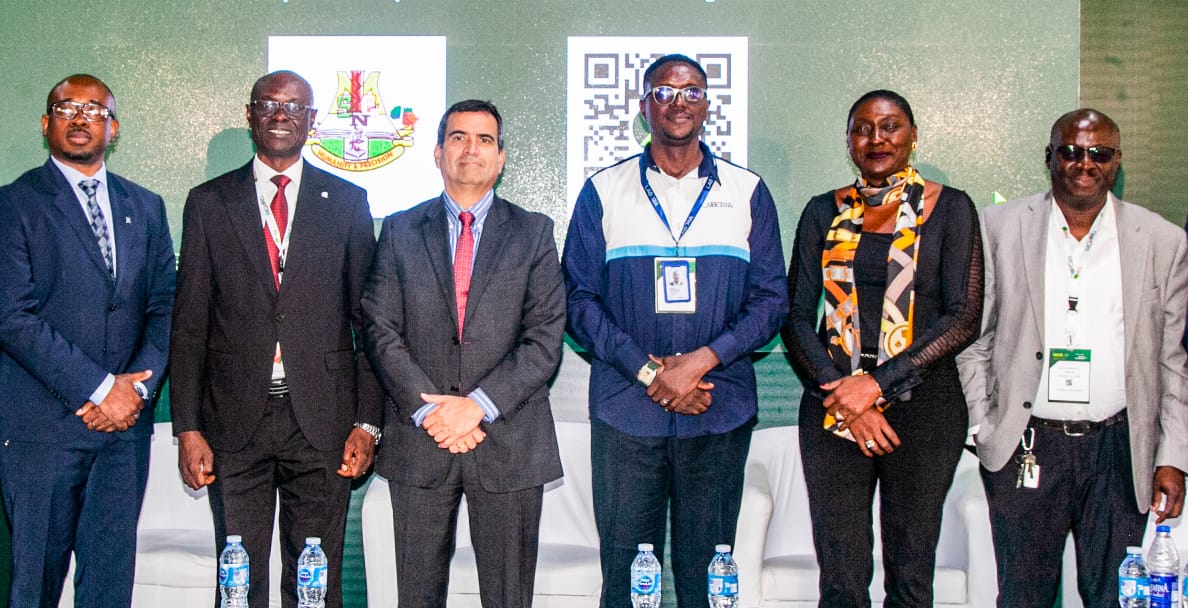
The challenge came into sharp focus at the World Health Expo (WHX) conference in Lagos, where healthcare leaders, researchers and industry executives gathered to discuss how technology is reshaping diagnosis and healthcare delivery.
Read also: UNICEF warns health workers against diversion of supplements meant for child nutrition
The conference, which attracted more than 8,000 healthcare professionals and 500 exhibitors from 40 countries, showcased some of the latest advances in healthcare technology.
However, discussions repeatedly returned to a more fundamental question: how can Nigerians benefit from these innovations if they cannot afford basic healthcare services?
For many households, healthcare spending comes after more immediate needs such as food, rent and transportation. As a result, routine medical tests are often delayed until illnesses become severe, reducing the chances of successful treatment and increasing healthcare costs.
Kenneth Okolie, chief executive officer of SYNLAB Nigeria, described poor healthcare financing as one of the biggest barriers to quality healthcare access in the country.
“Before the average individual spends on healthcare, he asks himself: Have I eaten? Have I paid my rent? Healthcare is still largely out-of-pocket in Nigeria, and that creates a major challenge,” Okolie said.
His comments highlight a growing concern among healthcare professionals that delayed diagnosis is quietly worsening the burden of disease across the country.
Many conditions, including cancer, diabetes, hypertension and kidney disease, can be managed more effectively when detected early. Yet early detection depends on access to diagnostic services, which many Nigerians struggle to afford.
Health experts argue that the consequences go beyond individual patients. When diseases are diagnosed late, treatment becomes more expensive, health outcomes worsen, and pressure on already stretched healthcare facilities increases.
Professor Oluyemi Akinloye, director of the Centre for Genomics of Non-Communicable Diseases and Personalised Healthcare at the University of Lagos, said diagnostic medicine has advanced significantly over the decades.
According to him, healthcare has moved from basic observation and microscopy to sophisticated systems powered by artificial intelligence, machine learning, automation and genomics.
These technologies are helping doctors improve diagnostic accuracy, reduce errors and provide more personalised care. However, Akinloye warned that innovation alone cannot solve healthcare access challenges.
“We need huge investments and innovations that move beyond the research space and become available to ordinary people. Government, industries, universities and research institutes must work together to ensure these innovations reach the common man,” he said.
His remarks reflect a broader concern within the healthcare sector that cutting-edge technologies often remain concentrated in major urban centres and private healthcare facilities, making them inaccessible to large segments of the population.
Another challenge is Nigeria’s relatively low health insurance coverage. Although efforts have been made to expand health insurance enrolment, millions of Nigerians still rely on direct payments whenever they require healthcare services.
Experts believe this financing model discourages preventive healthcare and early diagnosis.
Okolie argued that strengthening health insurance systems could help remove one of the biggest barriers to accessing medical tests.
“We need to find ways that tests can be paid for so that people can access care without having to think about where the money is going to come from,” he said.
The issue is becoming even more important as healthcare increasingly shifts toward personalised medicine, where diagnosis and treatment decisions are based on a patient’s unique medical history and health profile.
Read also: As hunger becomes a national healthcare crisis in Nigeria
Dimitrios Giantzoudis, senior product manager for AIA/CL EMEA, said healthcare systems must evolve in a way that brings diagnostic services closer to people while remaining affordable and sustainable.
“We need a sustainable way to move diagnostics closer to everybody. Medical records and personalised diagnostics are becoming increasingly important because healthcare decisions should be based on a patient’s history and evolving health data,” he said.
Industry observers note that while technology is transforming healthcare globally, access remains the defining challenge in many developing countries.
Nigeria’s healthcare sector is increasingly adopting advanced technologies, but experts say the real test will be whether these innovations can reach ordinary citizens rather than remain available only to a small segment of the population.
The consensus from the WHX conference was clear: expanding health insurance coverage, attracting greater investment into healthcare infrastructure and encouraging stronger public-private partnerships will be essential if Nigeria hopes to close its diagnostic gap.
Without those reforms, life-saving medical technologies may continue to advance while millions remain unable to access the tests that could detect disease early enough to save their lives.

Join BusinessDay whatsapp Channel, to stay up to date
Open In Whatsapp