The escalating housing crisis in Nigeria is not entirely a result of growing population and rapid urbanisation. Investments and interventions that can change the narrative and create the needed impact are still lacking; hence, the kind of partnership between the Federal Mortgage Bank of Nigeria (FMBN) and the Federal Government Staff Housing Loans Board (FGSHLB) on workers’ housing scheme should be encouraged, even at the private-sector level, writes CHUKA UROKO, Property Editor.
Lack of easy access to affordable housing is one of the most intractable social and economic problems Nigerians, particularly low-income workers, have been contending with over the years.
Many of these workers, who work in the city centres, find homes in far-flung and unimaginable locations outside the city, spending quality man-hours commuting to work daily. This has grave implications, not only for productivity but also for the health of the workers.
This explains why the N10 billion partnership for affordable housing fostered recently between the Federal Mortgage Bank of Nigeria (FMBN) and the Federal Government Staff Housing Loans Board (FGSHLB) is not only a good example of what to do to lift Nigerian workers, but also a potential changer of the affordable housing story in the country.
For thousands of these workers, who have been reeling under the weight of rising rents, stagnant wages, and the growing impossibility of owning a decent home, this partnership offers a much-needed lifeline. It signposts an end to a hopeless situation and represents the needed step at both public and private sector levels towards increasing housing stock.
Recently, FMBN and FGSHLB signed a N10 billion Memorandum of Understanding (MoU) aimed at expanding access to affordable housing finance for federal workers across the country. The partners hope this move will improve the housing needs of the workers.
The partnership, which comes on the heels of the federal government’s approval of N10 billion FMBN-funded housing loan scheme for civil servants, is expected to strengthen access to mortgage financing, home renovation support, rent assistance, and incremental housing development for public sector employees.
Many observers and housing sector stakeholders say this move is significant not only for the size of the facility, but for what it represents within Nigeria’s increasingly difficult housing environment, more so as it comes at a time when cost of housing construction continues to erode incomes and rental costs, which are spiralling across major cities.
It is also coming at a time when affordable housing is no longer viewed as a luxury but as one of the most urgent economic and social concerns facing Nigerian workers.
For civil servants, many of whom dedicate decades to public service with little hope of eventually owning a home, the collaboration between FMBN and FGSHLB is viewed as a practical intervention capable of restoring some level of financial stability, dignity and long-term security.
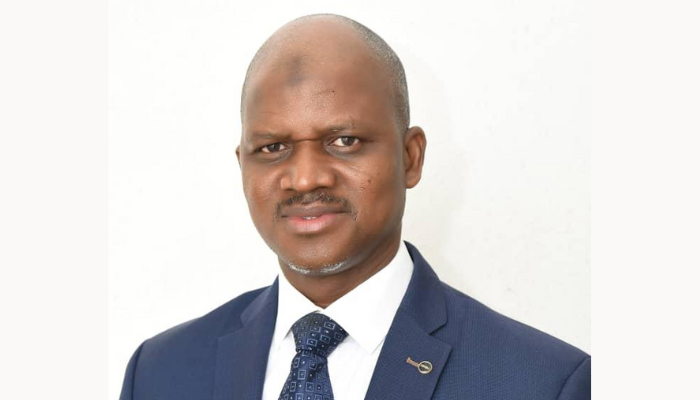
FMBN and FGSHLB are not entirely new to partnership. Over the years, both institutions have maintained a working collaboration around housing support initiatives for federal workers. According to Shehu Osidi, the managing director and chief executive of FMBN, , the bank has cumulatively disbursed over N2.6 billion in Home Renovation Loans to 3,051 federal civil servants through the FGSHLB in recent times.
The figure, which was disclosed during a strategic meeting between both institutions in Abuja, reflects years of intervention and should not be mistaken as part of the newly approved N10 billion scheme. Rather, stakeholders say it demonstrates that the collaboration already has a measurable implementation record, thereby giving credibility to the latest expansion effort.
Nigeria’s housing crisis and affordability conundrum
Nigeria’s housing challenge has remained one of the country’s most persistent developmental problems for decades. Despite repeated policy pronouncements by successive administrations, the gap between available housing stock and growing demand continues to widen.
Rapid urbanisation, population growth, rising construction costs and inadequate housing finance structures have combined to deepen the crisis. Millions of Nigerians remain unable to access decent and affordable homes, especially within urban centres where employment opportunities are concentrated.
Although estimates of Nigeria’s housing deficit vary, stakeholders generally agree that the shortfall runs beyond 15 million units. The implication is that millions of families either live in overcrowded accommodation, makeshift shanties, substandard housing or remain perpetually trapped within the rental market.
Mortgage systems that support widespread homeownership in many developed economies remain largely poor in Nigeria due to high commercial interest rates, low income levels and weak long-term financing structures. The only life-line being the FMBN which offers long-term loans at 6-7 percent, but poor capitalisation has limited its impact over the years.
For federal civil servants, the situation is even more difficult. While many workers depend on fixed salaries that rarely adjust adequately to inflation, housing costs continue to rise aggressively year after year.
The rent burden on Nigerian workers
Across Nigeria’s major cities, including Abuja, Lagos, Port Harcourt and Kano, rent prices have surged dramatically over the past few years. Workers are increasingly spending large portions of their salaries simply trying to secure accommodation.
Inflation, foreign exchange instability, rising energy costs and soaring prices of building materials have significantly increased the cost of housing development. Developers and landlords, in turn, transfer those costs directly to tenants.
The result is a rental market that has become unbearable for many salary earners. For civil servants whose salaries are often fixed over long periods despite inflationary pressures, the impact is particularly severe. Workers who previously lived within city centres are now relocating to distant suburbs where housing costs are slightly lower, only to spend substantial amounts on transportation and long commuting hours.
Many families now devote more than half of their income to housing-related expenses. Others resort to borrowing simply to meet rent obligations, especially because of the widespread practice of demanding one or two years’ rent upfront.
The emotional and psychological consequences are equally significant. Workers unable to secure stable accommodation often struggle with financial anxiety, declining living standards and reduced productivity. It is within this broader economic reality that affordable housing interventions targeted at workers become increasingly important.
This is why countries with stronger housing systems often prioritise worker-focused mortgage structures, cooperative housing schemes and low-interest housing finance initiatives. In Nigeria, institutions such as FMBN were specifically created to fill that gap.
FMBN’s expanding role in affordable housing delivery
Established to provide long-term housing finance through the National Housing Fund (NHF) Scheme, FMBN has emerged as one of the few institutions specifically focused on helping low and middle-income Nigerians access affordable housing.
In recent years, FMBN has expanded beyond conventional mortgage financing into a broader range of housing support products targeted at workers and contributors.
These include the NHF Mortgage Loan, Home Renovation Loan, Individual Construction Loan, Rent-to-Own product, Cooperative Housing Development Loans, and more recent additions like the Home Improvement Loan, Non-Interest Rent-to-Own, Rent Assistance and NHF Diaspora Mortgage Loan.
The Home Renovation Loan, in particular, has gained popularity among workers because it offers contributors access to relatively affordable financing to improve existing homes, complete unfinished structures, or undertake essential repairs without resorting to high-interest commercial loans.
Under the leadership of Shehu Osidi, industry observers say FMBN has intensified efforts to reposition itself as not just a more responsive housing finance institution, but a proactive enabler of socioeconomic development. Recent reforms have focused on operational efficiency, digitisation, stakeholder engagement, and the expansion of strategic partnerships aimed at improving affordability.
The bank has also consistently advocated stronger recapitalisation in order to improve its capacity to meet growing housing demand nationwide. While challenges remain, including gross undercapitalisation and outdated legal frameworks, analysts maintain that FMBN remains one of the most important institutions within Nigeria’s affordable housing ecosystem.
The FGSHLB partnership and what it represents
The latest collaboration with FGSHLB appears designed to deepen the interventions already begun by FMBN. FGSHLB itself was established to support federal civil servants in accessing housing opportunities and housing loans. By partnering more closely with FMBN, both institutions are effectively combining their respective strengths to expand financing access for workers.
The partnership gained renewed momentum following a strategic meeting held at FMBN Headquarters in Abuja between the leadership of both organisations. The meeting, led by Osidi and the Executive Secretary of FGSHLB, Salamatu Ladi Ahmed, focused on developing innovative housing solutions, specifically tailored to the realities confronting public servants.
During discussions, Osidi emphasised the urgent need for both institutions to collaborate more strategically in designing inclusive products capable of addressing the affordability constraints facing workers.
“We are desirous of working out unique housing solutions with FGSHLB for the benefit of our teeming federal civil servants,” he stated, stressing that FMBN remains committed to reducing housing costs and expanding affordability for contributors under the NHF Scheme.
The collaboration was formally strengthened days later with the signing of the N10 billion MoU at the Office of the Head of the Civil Service of the Federation. Under the arrangement, FMBN will provide funding to FGSHLB for on-lending to civil servants, thereby creating a more structured framework for delivering affordable housing finance tailored to workers’ needs.
Speaking during the signing ceremony, Osidi described the agreement as “the dawn of a renewed commitment to improving the lives and welfare of Nigerian workers.” According to him, the partnership would further streamline workers’ access to FMBN products covering homeownership, home renovation, rent support, and incremental housing development.
He explained that the initiative aligns with the Renewed Hope Housing Programme of President Bola Tinubu, which prioritises improved welfare and expanded housing access for Nigerians across income levels.
“Through our partnership with FGSHLB, we are aligning our strengths — FMBN as the primary provider of affordable housing finance, and FGSHLB as a key interface with federal workers — to ensure that access to housing loans becomes simpler, faster, and more responsive to the realities of our civil servants,” he said.

Join BusinessDay whatsapp Channel, to stay up to date
Open In Whatsapp