Foreign and local airlines have resumed ticket sales for destination Abuja,where the airport has been closed for weeks for repairs to the runway but is set to re-open on Wednesday April 19.
Hadi Sirika, minister of State for Aviation said about 95 percent of the work had been completed.
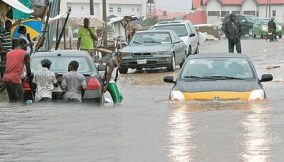
Sirika regretted that progress on the on-going project dragged temporarily as a result of the three-day rain, but expressed optimism that the airport’s runway would be completed on schedule.
The Abuja Airport is Nigeria’s second busiest airport after Lagos. According to data from the National Association of Nigerian Travel Agencies (NANTA), all the seven domestic airlines operate 30 daily return flights into Abuja.
Each aircraft having an average of 120 seats, depending on its configuration, bringing the total number of passengers to 3,600 passengers daily.
There are also a total of 12 international flights operating into Abuja daily, with a passenger capacity of 200 passengers on each aircraft, amounting to 2,400 passengers daily.
Kingsley Ezenwa, Corporate Communications Manager of Dana Air, said the airline started selling tickets for Abuja after the minister’s pronouncement that the airport would reopened on schedule.
International airlines have also started selling tickets and have notified their Abuja staff currently on leave, of their resumption date.
President of foreign airlines association in Nigeria, Kingsley Nwokoma, confirmed that foreign airlines have opened booking for tickets and that cargo flights to Abuja have already been booked by some carriers.
Following the commencement of repairs to the Abuja airport runway, there a marked build-up of motor traffic on the 186.5 kilometer Abuja-Kaduna highway as the Kaduna airport became the alternate for Abuja.
Henrietta Yakubu, spokesperson of the Federal Airports Authority of Nigeria (FAAN), said the parastatal entered into a bilateral agreement with Chisco Transport Limited to provide round-trip free bus shuttle services to air travellers moving from Abuja Airport to Kaduna Airport by road on scheduled departures that commenced as early as 5.30 am everyday.
The shuttle bus services run in a convoys with heavy security escorts and security checkpoints at every two kilometre distance, complemented with aerial security surveillance.
At the rail mass transit route, since the Abuja Airport closure, passengers are properly screened, alongside their luggage before they board the train. The train is capable of carrying about 380 passengers at full capacity in four coaches.
The rail manager at the Abuja Kubwa Railway station, Sola Sopei, said this is part of security measures put in to enable proper checks and give adequate account of personnel on board the train services.
He said, “There are combined security outfits here, ranging from the Nigeria Security and Civil Defence Corps, with their trained sniffer dogs, Mobile Armed Security Men, Members of the Police Special Anti-Robbery Squad and officers of the Federal Road Safety Corps.”
Industry analysts say that the relocation of Abuja Airport to Kaduna has also opened up a lot of spin-off businesses along the road and rail corridor.
The railway corridor which was initiated under former President Olusegun Obasanjo’s administration, started in July 2016 was completed at the cost of $1.46 billion with $800 million counterpart funding from the Exim Bank of China.
MIKE OCHONMA AND IFEOMA OKEKE

Join BusinessDay whatsapp Channel, to stay up to date
Open In Whatsapp