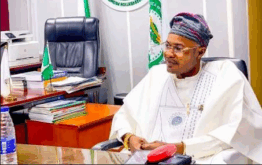
President Muhammadu Buhari resumes work today (Monday August 21) after 104 days of medical vacation in the UK but analysts say he has a very short time to make impact, especially on the economy.
He has begun the day with an address to the nation, thanking Nigerians for their support while he was away in the UK but Nigerians want to see a quick improvement in their economic well being, after a rise in inflation and unemployment has pushed many into poverty.
Ayodeji Ebo, managing director, Afrinvest Securities limited said people are looking to hear him speak today. It is the content of that speech that will determine peoples’ reaction.
He expects President Buhari to reassure Nigerians that some of the policies which have suffered slow implementation, will going forward, yield positive result.
“In terms of affairs of the economy, he should allow Osinbanjo more power to direct the economy while he (Buhari) should focus on corruption and security. This will boost investor confidence”, Ebo told BusinessDay on phone.
Segun Ajibola, president/chairman in council, Chartered Institute of Bankers of Nigeria (CIBN) said stability is returning to the polity with his return.
“With the support of the Vice President and Federal Executive Council (FEC) we believe anxiety and speculation would be fully rested and we can now face governance”, Ajibola said by phone.
He said if the economy improves, banking and finance would be better for it. “I strongly believe that the banking and finance outlook is better going forward.”
Even though Nigeria’s economy is seen to have recovered from its first recession in 29 years, in the second quarter of 2017, the recovery is weak, with the economy expected to grow only at one percent this year, not enough to put a dent on rising poverty levels in the country.
Buhari’s absence created a lot of uncertainty around policy direction but with his presence, analysts are urging him to take bold actions that would have an immediate impact on the economy.
“President Buhari certainly faces multiple challenges as he resumes duty,” Nnamdi Obasi, senior adviser on Nigeria at the Brussels-based International Crisis Group, said in an emailed response to questions from Bloomberg.
“The biggest challenge would be to calm nerves and curb divisions, to rally Nigerians around a common vision for the country and bring some urgency towards pursuing that vision.”
Though negotiations led by the Acting President have seen the increase in oil production in the country, as global oil prices picked, industry watchers say investors have been slow to put down their money, given the uncertainty of the political space and the resurgence of Boko Haram attacks.
President Buhari is expected to quickly look to ensuring that the peace in the Niger Delta is sustained through the fulfillment of promises made. Despite efforts to diversify its economy, Nigeria, one of Africa’s largest economies is still largely dependent on proceeds from oil, which mostly comes from the oil-rich region.
The full commencement of the Ogoni clean up is an issue on the front burner in the Niger Delta, as a year after it was launched, not much seems to going in that direction.
Recently, the country has seen renewed calls for restructuring and true federalism, a bold demand, which can only be taken by the President himself.
A quit notice order by a Northern group, the Arewa Youth, for the Igbos to leave the region before October 1 is still lingering, and so are counter calls by other groups from the South East region. The Independent People of Biafra (IPOB) led by Nnamdi Kanu, has also been agitating for secession, despite Buhari’s insistence that the unity of Nigeria is not negotiable. Nigerians are expecting that he will be able to address the issue.
Analysts say that now that he is back, the President must do whatever it takes to mend fences between the mostly Muslim north and a predominantly Christian south.
The relationship between the executive and the legislature is a major issue that has to be addressed to make governance less cumbersome. Unresolved issues between the two arms of government are said to be clogging the wheel of governance, as face-offs brew.
A major unresolved tussle is that of the nomination of the acting chairman of the Economic and Financial Crimes Commission (EFCC) Ibrahim Magu, who the Senate rejected twice. The Upper Chamber of the Legislature has since insisted it will not treat nominations by the President except as listed in the constitution. As it stands, acting heads, mostly the most senior civil servant in the institution, run many of these agencies. Only last week, the Acting President issued a directive that appointees into important federal institutions should resume duties in acting capacities, pending the confirmation of their appointments by the Senate.
The Senate has already kicked against the Vice President’s order, setting the stage for another clash between the Presidency and the legislature.
A statement by Bolaji Adebiyi, Permanent Secretary and Director Press Office of the Secretary to the Government of the Federation, on Friday, said the order was to ensure that there was no vacuum in certain important federal institutions.
The appointees include the chairmanship nominee, National Pension Commission, Ali Usman; his counterparts at the Code of Conduct Bureau (CBB) and Independent Corrupt Practices Commission (ICPC), Mohammed Isah and Bolaji Owasanoye respectively.
A statement by the Chairman, Senate Committee on Media and Public Affairs, Aliyu Sabi Abdullahi, however, advised the three nominees not to resume work until their nominations are confirmed, in accordance with the provision of the constitution and established laws of the affected institutions.
A report by a committee set up by the President in April this year, to probe the suspended Secretary to the Government of the Federation, Babachir Lawal and the Director-General of the National Intelligence Agency (NIA) Ayo Oke, is also awaiting his final decision. The duo have remained suspended and their offices occupied by the most senior civil servants, pending the President’s return.
There is still the completion of appointments into boards of different agencies of government, which are still trickling in two years after. Some other appointments have been made, but without confirmation from the Senate, because of an unresolved squabble between the executive and the legislative arms of government.
There have also been speculations of a reshuffle of the Buhari cabinet, to boot out nonperforming ministers, even as officials say this was to happen as part of the government’s second year anniversary.
However, Zamfara State governor, Abdullazeez Yari, on Saturday, said President Muhammadu Buhari’s return to the country will impact positively on the economy, as well as the security sector.
Yari says Nigerians will begin to notice the difference between when the President was away and now that he is back. He was quick to add that though Acting President Yemi Osinbajo did a good job of holding the fort, the difference will be clear.
“This is the moment that Nigerians have been waiting for over 90 days. We, as governors that paid him a visit, what we saw the first time we reported to Nigerians, Nigerians will see for themselves. We pray to God to give the President good health and for him to continue to manage the economy for the benefit of Nigerians.”
Kano State Governor, Abdullahi Umar Ganduje, who also spoke to journalists, agreed that Buhari’s return would be good for the economy.
“It will impact on the socio economic activities in the country because now that the number one decision maker is around. he and his deputy will take decision together and things will be done in a quicker way. We will see improvement.”
ELIZABETH ARCHIBONG, KEHINDE AKINTOLA, Abuja & HOPE MOSES-ASHIKE, Lagos

Join BusinessDay whatsapp Channel, to stay up to date
Open In Whatsapp