

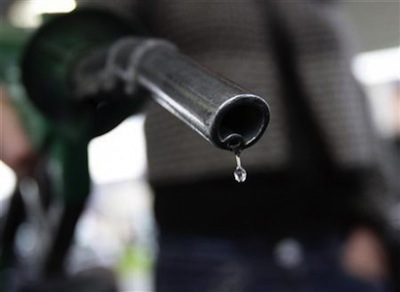
Petrol will retail at about N97 per litre if the subsidy is removed today, going by the current landing price of between N77 – N79 per litre, in addition to transport to pumphead, marketers and other margins for about N18. With that, queues will disappear from the fuel stations.
“Nigeria can no longer afford subsidy. All indications are that crude oil is going to slide lower next year. The best time to remove the subsidy is when crude oil price is low because we cannot afford to do that when crude oil price is $100 per barrel. This is the best time to remove subsidy”, said Sena Anthony, former executive director, legal, Nigerian National Petroleum Corporation (NNPC).
“When the price is right, refineries will spring up and competition sets in. Remember how much we used to pay for GSM lines and today, the telecom companies are begging us to take their lines free. Money that should be used to pay salaries and develop infrastructure is being used for subsidy. It is a difficult pill but all of us just have to face it”, Anthony added.
While the timing is adjudged right for removal of subsidy, analysts say government should put some palliatives in place for the subsidy to go.
“Government should show the people tangible impacts of subsidy removal right from the onset, not many months later. The populace should immediately identify the benefits of subsidy removal as soon as the subsidy is removed, or even prior; be it free education, improved transport system, wage increase or social allowance for the unemployed. Subsidy reforms rarely work without an immediately tangible exchange”, said Chijioke Mama, a senior research analyst and founder of Energy Policy & Investment Advisory Initiative, Africa’s Barrel Equations.
Adding to the urgency to eliminate wasteful and inefficient spending, are the mounting fiscal pressures for Nigeria whose currency and budget will come even under more pressure as crude oil prices hit fresh seven-year lows on Friday.
Oil fell as the International Energy Agency (IEA) warned that global oversupply could worsen in the new year.
Brent slipped below $39 per barrel for the first time since December 2008 as the IEA, which advises developed nations on energy, warned that demand growth was starting to slow.
Nigerian policy makers have ignored the ticking time-bomb of fuel subsidy costs which has continued to grow exponentially, even as the country receives less revenue from oil sales.
This growth in subsidy payments is partly due to the rising cost of imported fuel, which meant that the government had to spend even more to keep domestic prices low, and also due to Nigeria’s increasing population, which resulted in increased fuel consumption; together these pressures made the cost of the fuel subsidy unsustainable.
In 2011 alone, Nigeria’s fuel subsidy cost the country an estimated $8 billion. It cost another $4 billion in 2012 and an average of $5 billion a year between 2012 and 2015.
The price of crude oil increased from $30.4 per barrel in 2000 to $94.9 in 2010 over the same period Nigeria’s population increased from about 123 million to 158 million.
By 2011, the fuel subsidy accounted for 30 percent of the Nigerian government’s expenditure and it was about 4 percent of GDP and 118 percent of the capital budget.
Nigeria’s fuel subsidy continues to crowd out other development spending. By comparison, the country’s total allocation for education is about $2.2 billion a year and it is not much higher for health care. Infant mortality in Nigeria remains unacceptably high at 90.4 per 1,000 live births. In 2004, it was estimated that only 15 percent of the country’s roads were paved.
The estimated $44 billion spent on fuel subsidy from 2000 till 2015 could help to address some of these issues. A single track railway line with simple signalling, costs about S$ 2 million per kilometre including electrical and mechanical equipment, according to data from Railway technical. The $44 billion spent on subsidy could have been used to construct about 22,000 km of railway tracks for freight and passengers in Nigeria.
In addition, keeping the domestic price of oil artificially low with the fuel subsidy has discouraged additional investment in Nigeria’s oil sector. This is especially problematic, given that the oil sector is the lifeblood of the Nigerian economy. Since 2000, Nigeria has issued at least 20 refinery licenses to private companies.
However, not one refinery has been built because investors could not recoup their investment under the artificially low price structure.
With the government subsidising the market to keep domestic fuel prices artificially low, it is those who consume the most that have a greater benefit from the subsidy. Nigeria’s poor rely primarily on public transportation, as such their per capita fuel consumption is significantly less than the country’s rich, who generally use private vehicles. Neighbouring countries also benefit significantly from Nigeria’s fuel subsidy through smuggling.
PATRICK ATUANYA & FRANK UZUEGBUNAM

Join BusinessDay whatsapp Channel, to stay up to date
Open In Whatsapp


