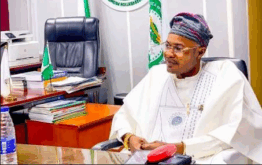
Amina Mohammed, minister of Environment, spoke with IGNATIUS CHUKWU on the back of the Presidential visit to Oginiland for the flag off of the cleanup exercise. She spoke on the importance of the exercise, government’s commitment to the cleanup, the need for collaboration in ensuring that the Niger Delta region is safeguarded, and that remediation is key to resolving Nigeria’s conflicts from Boko Haram to Avengers. Excerpts:
Why has it taken Mr. President up to one year to flag-off this controversial, delayed project?
I think it’s important to look at the back drop. First of all, it was a campaign promise he made before coming into office. I think you know that it took some time before the cabinet actually came into place. Even at that, there were various processes that looked at what had happened before, and where we had stopped so we could know where to continue from. I think it’s important that one looks at what had happened in the past so you learn lessons on what not to do in the future and plan for success. We came into office in November and very quickly attended the climate change conference that lasted two weeks. So at the end of that conference, coming back in December, one of the first things we did was come straight to Ogoni land to see what this is about because it was one of Mr. President’s campaign promises.
A lot happened since then including reaching out to the UNEP who had done the report, asking them to come and review it; looking at the processes that had taken place in the last government and then actually visiting the area to see what in fact needed to be done. This year has been all about getting the stakeholders back on board. There has been a lot of mistrust, and we have been making this promise for decades, and I think that this government is about going to where the problem is and not everybody trooping to Abuja to make their complains. So we have spent a lot of time here: engaging with people, work with their expectations: what has gone wrong in the past, how do we get people back on board, etc?
This is not a prescription by the Federal Government. It’s a collaborative effort to try to get the Niger-Delta cleaned up, and to start from Ogoni land.
There were many, many issues that came up and so this is why it has taken a long time. We were planning to succeed, and that takes time. I think we have gone as fast as we could. We hope that in the next few days we will begin to deliver on our promise.
Let us go to the sites now. Of all the major sites in Ogoni area, it is the fish pond of Numuu Tekuru village that was chosen as the flag-off spot. Won’t the President be accused of satisfying his sense of nostalgia in trying to get back to where he commissioned a project 27 years ago, instead of going to a site that has a very big debacle of pollution?
We didn’t choose the site because the President had an instance to be there to commission another project so many years ago. It’s a coincidence that we found out when we went to look at two, three sites, that there is one. It’s actually the best site. It shows the creeks and the damage done to the mangrove, and to the water ways. It shows how a livelihood has been killed off by the oil pollution. It also was accessible; you have to look at all sorts of factors when you are choosing a site. So, I don’t think that the premise of choosing a site was the person going there before, but I do believe that the coincidence has served us well because it does show you that some years ago when things were so prosperous we could commission livelihood from fish farming. This reminds us that we didn’t have to go down there with security like you saw we had to do today. The difference is clear, and I think opportunity comes once again for us to right the wrong of the past and make it clear that the investments in the Niger-Delta starting with Ogoni land should restore the ecosystem as it should be.
Honourable Minister, apart from restoring the Ogoni environment, what else can an ordinary Ogoni man benefit from the clean up exercise?
I think that it’s a very big benefit to know that you now drink and eat and breathe cleaner than you were in the past; things that you and I take for granted are not things that can be taken for granted in Ogoni land.
I think the second thing is that once we keep the Niger-Delta and Ogoni land clean, that’s about giving alternatives to what has happened now and giving a future to young people, especially women, and young men. So we will be looking at the livelihoods. We will be looking at that whole scenario when we talk about the diversification of the economy beyond oil. What do we gain in the Niger-Delta by doing that? There is so much to be done. We can have industrial parks, we can look at fishing, we can look at so many other parts of the ecosystem that can profit, not just everyone in the country because revenue goes into one pot but actually profits the lives of people in there.
So what kind of programmes, definite programmes, have been planed post clean up?
The first set of programmes is to actually look at the emergency response, because in many of these polluted areas people can’t drink the water. The ground they till for agriculture is poisoned. The toxicity in water and plant and the food we eat, that’s the first thing that we will have to deal with. We said where people are living, remove from the sites that are really toxic and then deal with the water issue. So, these are some of the first things that will happen.
The second is really providing a baseline to understand where we should start. This is a programme that’s going to take 20 – 25 years, so where do we begin the clean up, it’s really important. You just can’t land in one part of the creek and say you are starting to clean. You have to clean where there would be a definite return in that clean up to livelihood. So if you look today at the demonstration site, we thought we could do with the fish ponds that are dead. We said if we revive that, then we have revived fishing opportunity for young people.
The other immediate programmes are that we want centre of excellence; the UNEC report promised to that and a laboratory, so, things can be done within us. We can train the expertise; we can do that within the Niger-Delta. So, we will be looking to where we position the child, the centre of excellence and where we position the soil labs so that we will begin to do some of the technical work of how to make it sustainable in Bodo. We can clean up what is already there, but in future as some of these accidents happen, some of the third party oil spills that we are seeing, we can deal with them.
The third is that a lot of training has to be done for the work. We want people in the Niger-Delta to benefit from the clean up, and the cleanup will happen in different ways in different places; water, soil and etcetera. So the training programme for young people will take place, giving them skill sets that they can benefit from those contracts that come to clean up the Niger-Delta.
Let’s look at funds. The report has estimated what should be set aside for it, and everybody is talking about $1billion. Where is this money? Is it with the Federal Government; is it with Shell, or would other agencies be bringing money anyhow they like and make it up to $1billion? Where is the money?
Well, the $1billion is a commitment that SPDC (Shell Petroleum Development Company) has made to providing it. So it is with them. What we have done now is to set up governance structures so that we first of all agree on the kind of programme that will take place, and there is a board of trustees that will make sure that those resources for Ogoni land are for use for those recommendations the UNEC Report had done openly, and transparently. Those two boards and councils will be constituted after the flag-off, and then all will see how those resources will be used.
We hope that we will have funds manager take care of this money because $1billion is not going to be enough. When we get the $1billion we need to start the job, but we also need to use that to leverage on the funding, from the budget, from other donors, from other opportunities around. You will see that the structure of the council also includes key stakeholders, Ministry of Niger-Delta, NDDC (Niger-Delta Development Commission). These are all key stakeholders in the Niger-Delta who are already investing and spending money. So we want better coordination and coherence, and not duplicating but actually adding value to each other’s investment.
Getting value for money! Everybody seems to be afraid that re-pollution or secondary pollution may be bigger issues than the pollution we see, and some even think the $1billion will be wasted if after clean up, they break more pipes and re-pollute it. Will you have to bring another $1billion; how have you taken this naked possibility into your plan?
It’s a very real concern. First, I think oil companies have to do better. When we go to the sites where it is an oil spill as a result of their faults, then you know you can really talk about the remedial work that needs to be done to make sure there are no seepages from where the oil spill has come, you can contain that. What you can’t contain so easily is where you have young people come back and start to break pipelines or illegal refinery. So that’s why you have to do things with the community.
Community has to take responsibility, this is a collective responsibility. You really need to seat down: do we want to clean this up so that it is in the interest of the person in Ogoni land first? Cleaning up the Niger-Delta, that’s the first responsibilities for the people in the Niger-Delta. They need to take responsibility, if they continue to pollute their own community; there is not much the government can do about it. You would just stop the work. It is very clear to us that there is rule of law here; there would not be any criminality that would be accepted.
Once the community decides that’s what they want cleaned up we will make the investment in it. They too together with government have to try to protect it, and we have to convince young people that this is not the best way to go. If it happens then you have to stop the work because you cannot throw good money after bad project.
There has to be an understanding because that just cannot continue. It’s a sorry situation that we see ourselves in, if we really look at the pollution in the Niger-Delta today over 60 percent of it is third party. While today we are addressing what oil companies did in Ogoni land, we really have to think abouttomorrow and what is existing. So we start in Ogoni land but we know that the wider Niger-Delta has very different kinds of reasons for pollution, and we have to deal with that. I think together with our colleagues in Amnesty, in NDDC, the Ministry of Niger-Delta, we have to work together to change the mindsets of people who believe that there is some future in polluting their communities.
Based on the situation in the Niger Delta, some say it may be difficult to get people to comply in the face of a lot of contending factors, contending issues and community-based issues of politics, and all that? Also, you speak of water and land pollution, but we are also concerned about gas flaring. We understand that there are lots of laws and statutes already established globally to stop gas flaring and that another major issue is pollution?
Well, those are two issues you’ve picked up as follow-up. The first one is how do you – as they say, you can take a horse to water, you can’t make it to drink it – make the horse to drink it? It’s dialogue. It’s appealing to hearts and minds; it’s trying to find alternatives; having a conversation. What we have done so far is to set up an ad-hoc committee for people from the community, young people, older people, experts, people who have been involved in the struggle to actually say how do we go about communicating what we are doing and bringing people on board to be part of the change, actually living and leading the change? To do that we don’t have the silver bullet for it; we can just keep trying to achieve the objective. I think it is important to bring them along. We have a lot of young people who have ideas right now who want to participate. I think we will just bring people along gradually. In the beginning, we will have a lot of push-back. In the state I come from in the North East, when we had issues with young people who went the wrong way of doing things, it took a long time, over a year. When they saw peace of mind and a future, very quickly they pulled the other people along with them. It was easy to make a lot of money by being violent, and you couldn’t equate that kind of money with a nice job. That was the wrong way to go about it. What we sold to them was a future with peace of mind. That worked for us; because in 18 months we were able to turn young people around who were doing some diabolical things in my state. We believe that Nigerian young people were not born that way. It is a set of circumstances that makes them like that. It’s due to pressure, lack of a future, and exclusion. If you can change all of that away, you can actually get them back on track, back to be part of the future and the change they long to see in the Niger Delta.
On the second point, you are absolutely right. When Nigerians signed on to the declaration that was made in Paris on Climate Change agreement, there were a number of things we took there, including end to flaring by 2020 and a number of other objectives such as emissions. The more emission you have from different places the more you warm the globe and cause rise in sea levels. So, there is a number of issues we have to take on and string them together to say that gas flaring is damaging our environment and houses. No matter what the world is saying, emissions matter to us first. So, we put that target there.
Many things were involved in stopping us such as policy decisions and regulations in the Ministry of Petroleum and it is also taking place. We have also joined the World Bank coalition on ending gas flaring. There is a road map on how to do that, not just say it. We have got concrete steps to it. This week, we join a breakfast meeting with our fellow ministers because this is collaboration. We have Ministry of Petroleum, Transport, Power and Agriculture. This is because we cannot do a lot without agriculture because of the agric chain. It is not just clean; if you clean, staying clean brings a lot of other responsibilities.
What parameters would the Ministry be setting to measure the milestones in the clean-up?
One of the things we observed when we came in was absence of any clear framework for monitoring and evaluation. It is not good for government to set the measurement alone. There must be independent measurement frameworks because Government is always measuring its successes. We have to have independent feedbacks. What we are proposing is involving civil society and experts in framing those measurements and indicators to have the scorecard. That is one of the things the committee would have to design. So the tools we use to frame the indicators will not be designed by government but by those in the outside who will hold us to account when we say this is the target we are setting for the cleanup. To measure and say whether it has been done or not should come from the end-users, those that are going to be impacted by it. There was no such mechanism in the former arrangement.
Have you discovered what we have found; that in the day, the Ogoni people demand for clean-up, at night, they ask for compensation? Have you been able to integrate their mouth and their mind in this exercise?
That is really an interesting perspective. It is not whether it is the Ogoni people or not. Any people that have been in a situation of the tragedy that we have seen in the Niger Delta, once they begin to lose trust in government; anybody that they see coming to bail them out, they develop all sorts of responses, usually survival instincts. They will want you to clean up, and they will like to benefit in a clean environment, in investments and jobs. Bust, just in case that’s not where you are going, they will want night time discussion. So, it’s truly hedging your back because people don’t have any trust in the system. To reverse that, it is going to take time.
The first thing we want to say is, there will be zero tolerance for sharing money. We are taking money meant for Ogoni people and investing it in clean up and livelihoods thereafter. That is the first message that we have to put out there. We have to follow it up with actions, and we too do not have to join them at night doing deal. That was in the past, it not going to happen in the future. You surely will not find me doing deals at night. You might find me drinking pepper soup because am having a conversation to agree on some issues. It won’t be about sharing money.
The oil companies have to help here because it has been about compensation all the years. I think it has suited people to solve problems in the past to get rid of a problem by just saying you want to compensate, but money has not compensated for the toxicity, for the prolusion in people’s lives in the Niger Delta and that has to stop. Compensation is when you pay people what they are due, but that is not all. When I look at the way oil companies clean up after spill, it is not the gold standards for Nigeria. We want the gold standard because that is what our people deserve. I think the standards used in other parts of the world are better than what we get in Nigeria. We want human beings to get the gold standard in Nigeria. Oil companies have to be taken up on that.
The cleanup is a large project that may take long, how do you get all groups to support and participate because the Ogoni issue should transcend politics?
Politics is warped now. It is supposed to be response to your people and their constituency on their challenges. It has changed. We derailed. What politicians say they are doing for their people is far different from what they want today. We have to get back to the issues and reinforce the voice of the people over what they want and what the so-called those representing them get for them. That is why in any place where there is true representation, you find stability and investments going there. So, it is in doing (it) that we can change how politics is done. We also have to look at how governance is done at the local levels, and institutions that help them to function, not just in Abuja. It is going to take some time, but what we can hope to do is get back on track and lay a solid foundation in the next three years. After that, who we leave behind will determine if the people will find a system where people will demand for a good thing because we did a good thing. If Amina Mohammed leaves and all this crumbles, it would have been failure. President Buhari has got integrity and experience and we have got experience. We are just pulling all of that together. We do not have all the answers, but if we put the matter on the table and we get the key stakeholders together, it will amaze you where the solution will come from.
Connecting a woman and her job, you talk as if you trained for this job. Did the President have you in mind for this kind of task going by the depth of knowledge and sophistication that you have brought on the table to the complication in this task?
I do not believe anybody had any idea that he was going to put me in Environment. I did not even know he was going to nominate me. It was a surprise. My career track has proved that. What I know is, whatever you throw at me in the civil service, I will embrace it because I am a daughter of a civil servant. I was brought up in a family where integrity matters, name matters, performance matters; and you cannot walk past anyone where you see injustice. I am allergic to injustice. That does not work. It does not matter where it comes from. It is about humanity. Injustice is injustice, to man or to animal. That is the way I am. Wherever you find yourself, you must fight that fight so far as it is about your humanity. I do not believe that you can fight a fight without experiencing it, even if it is for 24 hours. You think you can prescribe solution to Ogoni people from Abuja is absolute nonsense. You must have to come down here and feel what they are going through. Once you experience that, you can go back and tell anybody anything because you have the conviction. You do not have to refer to a book with figures you are not even sure of. So, when I say to people that it is unacceptable that a people should eat a type of food with the level of toxicity in it, it is because I have tasted it. Buhari has asked us to do a job; it is a privilege because millions of other Nigerians could do it, perhaps better than the way I am doing it. So, I have to put in my best, knowing that I am answerable to the Almighty. So, I do the best that I can do and I leave the rest to God.
What is your message to the Niger Delta and the Ogonis?
There is light at the end of the tunnel, especially as we have a president that is delivering on a promise. This is a collective responsibility and we want to get the job done. It cannot be done by me alone or by Mr. President alone. All hands must be on deck.
What is your message to the average Niger Deltan who wants to destroy oil pipelines?
I think those criminal acts will not augur well, not for them, and not for the people they care about. I think at the end, it will contribute to destruction. That is not a future for anyone. There are alternatives and there can be dialogue. There is nothing by force anymore. The one thing that President Buhari has given us is an opportunity to do things right. And, if you have that opportunity, grab it, because it may not come again.
Is 25 years plan to clean Ogoni an indication that the door is closed to other parts of the Niger Delta; what is President Buhari’s thinking?
The overall plan is pollution anywhere in the country, and that is my mandate as minister, but we are mindful that the genesis is what happened in Ogoni where the struggle started and which is the target of the UNEP Report. That is the first bus stop. The second one is the nine oil producing states and the third is the whole country. It is not about where the pollution is the largest or where oil was first produced. It is about the struggle and where it started and the promise Mr. President made.
IGNATIUS CHUKWU

Join BusinessDay whatsapp Channel, to stay up to date
Open In Whatsapp