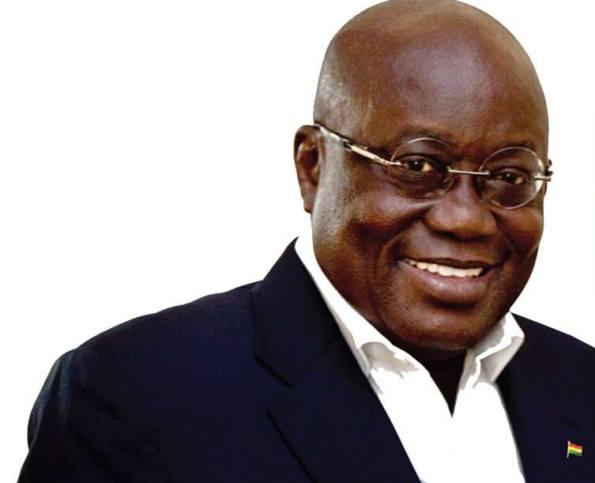
Just as Nigeria did in 2015, Ghana has done in 2016 by voting a man who, like Nigerian President Muhammadu Buhari, has sought to become president in the last three elections and promises to bring “change” to Ghana’s estimated 30 million people while he rids the country of corruption.
These, however, are not to be the only similarities between 75-year old Buhari and 72-year old Nana Akufo-Addo, Ghana’s president-elect.
Both skipped their presidential debates on their way to presidency and their predecessors, Goodluck Jonathan (Nigeria) and John Mahama (Ghana) took over from presidents who died in office in the persons of Umar Yar’Adua and Atta Mills respectively.
It does not stop here for West Africa’s two largest economies. Just as Jonathan called Buhari to congratulate him even before the final election results were announced, Mahama is reported by local Ghanaian newspapers to have called Akufo-Addo to congratulate him.
Interestingly, the new President Akufo-Addo campaigned on the promise of fighting corruption and bringing “change” to Ghana, a campaign style that made some skeptics warn Ghanaians to be careful, lest they end up with the “change” that Nigerians got.
However, Ghanaians have gone on to shrug off such views, choosing to sail with Addo’s change, rather than stick with Mahama’s status-quo.
Most Ghanaians who voted for “Change”, were expressing dissatisfaction with the way the Ghana economy had performed in the past four years, which has appeared more like a shadow of its original self, since the drop in global prices paid for its major exports, especially cocoa.
The cedi fell 0.59 percent on Monday to 4.18 cedis/$ from an opening price of 4.23 cedis/$.
Cocoa plunged 9.4 percent last week to $2,170 a metric ton, the biggest loss since 2009. It is down 31 percent for the year, the biggest decline in commodities tracked by the Standard and Poor’s GSCI Index. Cocoa was trading for $2,227 as at 2:00pm on Monday.
Steady power shortages have also weighed on economic output.
The economy will likely expand 3.3 percent this year, the slowest pace since 1990, according to International Monetary Fund data, after growing 3.9 percent in 2015.
Allegations that Mahama’s government has mismanaged national finances, widening a budget deficit and heightening inflation, have contributed to his defeat at the polls.
The economic narrative in Ghana is no different, except that Nigeria is yet to turn to the IMF for bail-out funds. Nigeria’s economy slipped into recession under Buhari’s watch, and is forecast by the IMF to contract a further 1.7 percent, strectching negative growth from 0.36, 2.06 and 2.24 percent in the first, second and third quarters of 2016 respectively.
The macro fundamentals of Nigeria appeared shaky even from afar, and even Buhari acknowledged it, but promised to halt the looming crisis but has since gone on to struggle with his promises and in most cases delivered a stark opposite of his promise.
For instance, he promised to fight poverty, yet under his watch Nigerians have grown poorer since a transition to democracy in 1999.
Average income in Nigeria contracted for the first time in seven years in 2015, and fell further in the first nine months of 2016, pushing many households deeper into poverty.
GDP per-capita income, which measures the average income earned per person in a given area, fell 17.57 percent to $2,640 per annum in 2015, from $3,203 in 2014, according to the World Bank, as a slump in economic output but steady population growth rate saw per-capita income slump into negative territory.
Factoring Nigeria’s economic contraction in the first three quarters of 2016, divided by a population growing at an average of 3 percent (185 million, according to World Bank), per-capita income dropped 3 percent to $2,599 in 2016 from $2,640 in 2015, in line with a survey assumption of a 3 percent decline this year.
Buhari also promised to pay N5,000 stipends to one million of Nigeria’s vulnerable which was estimated to gulp N60 billion per annum, but has been stopped in his tracks, as public revenues plunge to record lows.
In Ghana, average income is also on the decline, falling 6.97 percent to $10,004 in 2015, from $10,754 in 2014, according to World Bank data.
Perhaps, Nana Akuffo-Addo, just like President Buhari, may soon find out that the easiest part of becoming president was the campaign.
Addo, like Buhari, inherits an economy that is struggling with falling economic output, high levels of inflation and unemployment with pressure on its official currency, the Ghana Cedi.
Addo promises to pay each of Ghana’s 275 constituencies the local equivalent of US$1 million annually if he won power, about US$1.1 billion over four years, sound a bit far-fetched for a country indebted by a similar amount to the IMF.
Ghana agreed to a near-$1 billion program with the Washington-based lender in April last year to help rein in the budget deficit and arrest declines in the cedi.
Addo also promises to raise the Ghanaian minimum wage. However, increasing salaries contradicts the need for government to manage its debts and tame the public payroll.
He also said every village would get a dam, every district, 110 in all, a factory and everyone eligible a free secondary school education.
How Ghana, which sought $480 million to support its 2016 budget following a shortfall in revenue, would take on such costs remains unclear.
The country, which started producing oil in 2010, lost millions of dollars in revenue between March and May this year when production ground to a halt following a breakdown on an oil production ship in the offshore Jubilee field.
LOLADE AKINMURELE

Join BusinessDay whatsapp Channel, to stay up to date
Open In Whatsapp