

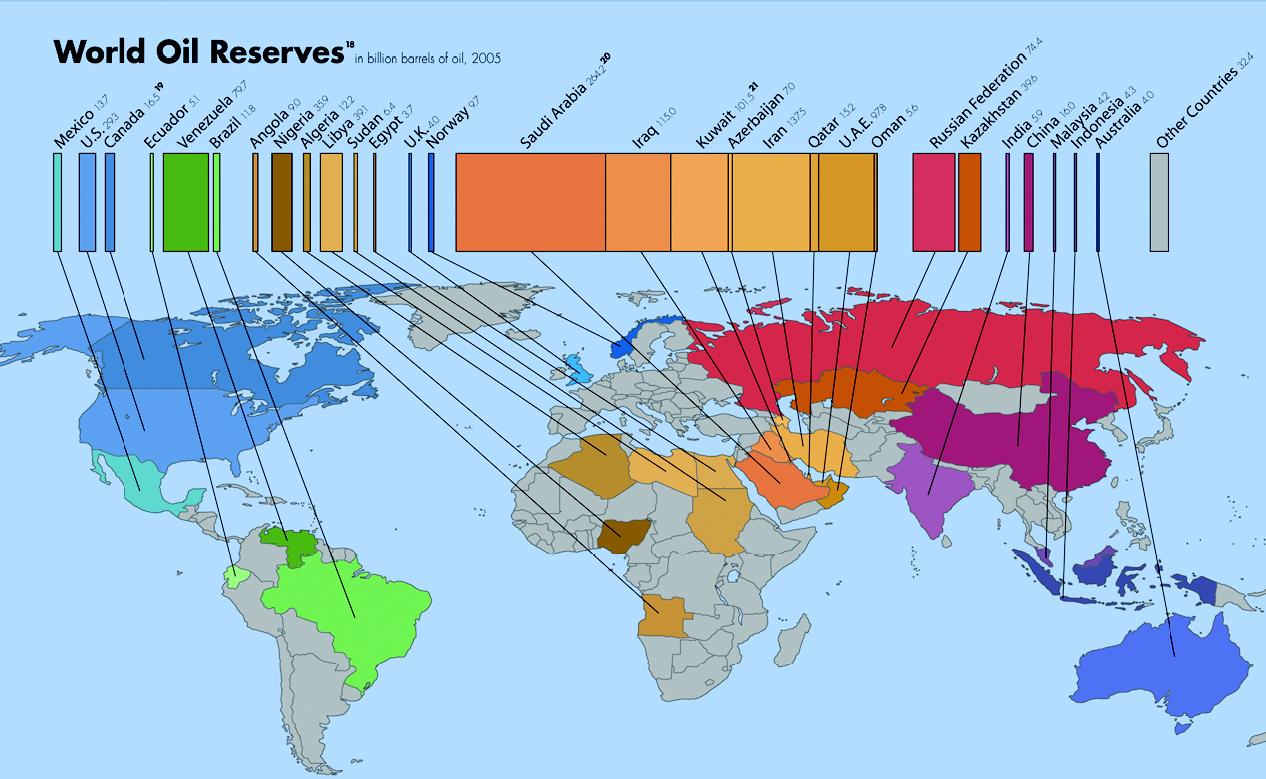
The slide in Nigeria’s crude oil reserves has further accentuated the urgency with which the oil and gas industry must be overhauled to attract new investment for exploration drilling activity, which has drastically slowed down in the country. The country aims to grow its oil reserves, but it has seen its reserve base decline from 37 billion barrels to 35 billion barrels, according to the Department of Petroleum Resources (DPR). According to data from CIA World Factbook, Nigeria’s proven oil reserves slumped from 38.5 billion barrels in 2008 to 37.5 billion barrels in 2010. In 2011, the reserves further dropped to 37.2 billion barrels, raising concerns among industry stakeholders and watchers. The decline has been attributed to the fact that little or no significant investment has been recorded in oil exploration in the last five years and the number of wells drilled has also been on the decline since 2006. Oil wells completed in Nigeria, which include development and exploration of oil and gas wells, dropped from 124 in 2011 to 107 in 2012, according to the Organisation of Petroleum Exporting Countries (OPEC) annual statistical bulletin 2013. Over the last five years (2006 to 2011), Nigerian gas reserves have fallen by around 1 percent, showing reduced investment in improving oil reserves (53 percent of Nigerian gas reserves is associated gas).
Reserve of 40 billion barrels by 2020, a mirage?
By 2020, Nigeria hopes to have ramped up oil reserves to 40 billion barrels and production to 4 million barrels per day, but analysts believe it would be a tall order to achieve this considering the hassles plaguing the oil and gas industry. Rising security problems related to oil theft, pipeline sabotage, and piracy in the Gulf of Guinea, coupled with investment uncertainties surrounding the long-delayed Petroleum Industry Bill (PIB), have curtailed oil exploration projects and impeded the country from advancing towards its target to grow reserve base and production. Exploration activity levels are at their lowest in a decade and only three exploratory wells were drilled in 2011, compared to over 20 in 2005, according to the Energy Information Administration (EIA), the statistics arm of United States’ Energy Department. Despite the fact that 20 deepwater exploration blocks have been awarded since 2005, higher exploration costs and a high oil price led some companies to shift their focus away from deepwater exploration and into appraisal and development drilling in the shallow water and onshore areas. While final investment decision (FIDs) have been made on 1993 production sharing contracts (PSCs), no FID has been made beyond 1993 PSCs. Last week, Shell Petroleum Development Company reportedly said it was pushing forward to have the FID on the world-class Bonga Southwest project ready by the end of this year. “The way you add to your reserves is by exploration and appraisal drilling. For a while now, exploration drilling and exploration investment in the country has declined. And that is not unusual. Whenever the price of oil is rising, the tendency is to do development and increased production. Also, one cannot be unconcerned about the uncertainty that the PIB has brought to the oil and gas industry,” said Wumi Iledare, president of International Association of Energy Economics (IAEE) and director Emerald Energy Institute, University of Port Harcourt.
The new kids in the block
Oil exploration began in Nigeria over 60 years ago and focused entirely in onshore and shallow water prospects for the first 50 years or so. With the surge in crude oil theft and pipeline vandalism on the onshore and near shore areas discouraging further investment, international oil companies operating in the country
have increased their footprint on the offshore region. Deepwater exploration began in early 1996, and the country started to enjoy tremendous deepwater exploration success with several major discoveries such as Erha, Bonga, Bosi, Akpo, and Agbami. Deepwater production has more than offset declines in onshore and shelf production in the last five years. However, deepwater exploration drilling activity in the country has substantially decreased since 2006.
In the last few years, deepwater exploration spends in Nigeria has been fairly low compared to other emerging deepwater provinces such as Ghana or offshore East Africa. According to Wood Mackenzie, the draft PIB and the global economic recession has had a significant impact on Nigeria’s deepwater exploration activity. Uncertainty over future royalty tiers and government share, reduced the appetite for testing highrisk deepwater prospects, resulting in only nine deep- and ultra-deepwater wells completed in the second half of the decade, compared in the first half.
What is the way forward?
“Nigeria is uniquely challenged by reduced exploration activity, decreasing resource size, tightening of
fiscals and uncertain gas terms. Nigeria needs to develop clear regulatory and competitive policies,” said Elijah Whiite, vice-president of Exxon Mobil Production Company at a recent conference in Lagos. While noting that the government’s
focus on restructuring the industry through the PIB was timely, he said it must be designed and implemented in a manner that both benefits Nigeria and creates an attractive investment climate. “The fiscal regime that is going to develop new discoveries is not clear and so those are some of the reason why you find the situation where we are not adding to our reserves. We can’t add to reserves without exploration drilling,” said Iledare. Claire Lawrie, head of oil and gas
advisory, Ernst & Young believes Nigeria is at a vantage position as it has the largest conventional reserves in Africa and in the top 10 globally for oil reserves, adding that there is significant heavy oil yet to be tapped in the Benin basin, which is one of the world’s largest heavy oil belts in the world after Canada and Venezuela. Based on 2011 production and
reserve figures, Nigeria has a reserve to production ratio of 42.1 years indicating the remaining lifespan of Nigeria’s oil resource and clearly highlighting the need for Nigeria to diversify its exploration programme in order to increase its oil reserve base, says CBO Capital in its Oil and Gas Monitor. “This is necessary if Nigeria is to achieve its planned 40 billion barrels of oil reserves, as well as 4 million barrels per day oil production target in the next few years.”

Join BusinessDay whatsapp Channel, to stay up to date
Open In Whatsapp


