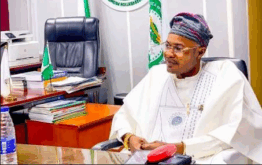
The clatter of construction activity was unceasing at a site opposite the head office of Lekki Gardens, a rapidly growing residential real estate developer in Lagos.
The cluster of high-rise apartments at the site being developed by the firm was barely at foundation level about three months ago (when the reporters first visited) but is now nearing completion.
In a country notorious for abandoned and delayed projects by real estate developers, Lekki gardens has garnered a reputation in the market for quick delivery of housing projects it embarks on, due to its unique business model.
“There is no magic in what we are doing. It is just a clear vision about providing housing solutions, and far beyond that is the desire to serve the customers,” said Richard Nyong, the youngish CEO of Lekki Gardens Limited, in a July 18 interview with BusinessDay in Lagos.
“We serve our customers and give them good returns on investment by ensuring that their houses are delivered on time; by giving them five-year payment plan or through anything at all that we can do. And whether we are talking about Ikoyi, Ajah, Lekki, Port Harcourt or any other place, the mantra is the same, and that is serving the customer.”
Lekki Gardens is trying to dent a national housing shortage that the World Bank estimates at 17 million.

The developer has had to contend with a dearth of home loans, double digit interest rates, an obsolete land tenure system and a lack of infrastructure.
Even then, homes delivered by Lekki Gardens have grown by about 1,000 percent in two years.
“In our first one year of full operation, 2012-2013, we delivered 200 houses; and from May 2013 to June 2014, we delivered 2,000 houses. We are consistent and committed to the delivery of houses. We have never had any issue of houses collapsing and no customer has come back to tell us that his walls are cracking or roof falling off,” said Nyong.
Some of the strands of Lekki gardens unique model involve limiting the use of expensive bank loans and having an efficient cash flow management system for optimum output, according to Nyong.
“We are very, very disciplined in the way we use people’s money and we don’t buy personal luxuries with the money customers bring. What we do therefore, is that if we have not sold it, we won’t build it. People who want to build in one year, have their plan and so do people who want to build in three or five years. We always work towards aligning our corporate goals to the customer’s income,” said Nyong.
Another innovative model that enables quick home delivery at reduced costs, is that Lekki gardens allows customers to complete the interiors of their homes to their individual tastes.
“Allowing customers to finish their houses is our way of allowing them to own the houses. We make our projects democratic and that is why we don’t impose our kind of facilities on our customers. Here, customers vote with their pockets and decide how they want their houses to look,” said Nyong.
Beyond the immediate impact of fulfilling the home ownership dreams of thousands of people, Lekki Gardens are also having a social impact as a result of their construction activities.
“In our Lekki Phase 1 development, we delivered 1km of roads and at Isheri; we delivered 1.8km of roads. Altogether, we have spent about N1 billion to deliver roads,” said Nyong.
Lekki Gardens, while not looking to expand too quickly, would soon have a presence in Benin City, Delta, Abuja, Akwa Ibom and Ogun states.
“Our target is to serve 100,000 people in the next 18 to 36 months. We are putting the management, advertising and building capacity in place to make all this happen.We are not going to go to these place because we are ambitious, but because customers want us there and also because we have the capacity to deliver there,” said Nyong.
PATRICK ATUANYA & CHUKA UROKO

Join BusinessDay whatsapp Channel, to stay up to date
Open In Whatsapp