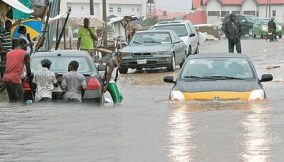
Inadequate infrastructure, high cost of land and the unfavourable business environment among others, have been listed as slowing the flow of Foreign Direct Investment into the country’s real estate sector.
Analysts say the implication is that the sector is yet to see up to 50 percent of expected FDIs despite strong propects stemming from the emergence of Nigeria as Africa’s largest economy.
They add that there is particularly strong appeal in the commercial segment of the market, where opportunities are compelling in retail and hospitality.
The analysts explain that foreign investors usually find it difficult to take investment decisions on Nigeria because of many business environment risks. Top among these, they say, are huge infrastructure deficits in the country and high cost of land.
According to them, as against 80 inter-regional private equity firms looking to invest in South Africa’s real estate market, 30 in Egypt and 40 in Kenya, only 16 of such companies are interested in Nigeria’s real estate market, due in part, to difficulty in registering property and doing business generally.
They added for instance, that to secure land in the city centre in major Nigerian cities, there are at least 12 steps an investor has to undergo in the registration process which can take up to 824 days, and four of the steps carry their own associated costs which on average total about 20 percent of the property’s value.
“Investment decision in real the estate space is highly capital intensive. Therefore, the variables that need to be considered are many and they must be carefully analysed to ensure that all the risks are within manageable limit to be affordable”, Femi Akintunde, the MD/CEO, Alpha Mead Facilities Management Services Limited, affirms.
Akintunde further said that the factors affecting real estate investment in this environment are still disjointed, stressing that they are not coordinated well enough to give that comfort to an international investor to suddenly move his money to this environment.
On account of demographics and strong purchasing power, Nigeria is seen as a green field and an investment haven, yet investors are slow in moving into the market. Akintunde explains further that it costs 300 percent more to build in Nigeria, than in the United States of America, and that the coming investor finds it difficult to justify the economics of that project.
“When he gets the issue of land on which to build with so much risk sorted out, the next thing is the supply logistics. The complication in logistics of supplying construction materials in Nigeria today is a major headache. It can kill any major development”, he emphasised.
Akindolire Oludaramola, the general manager, AMDC Real Estate Development Company, says infrastructure presents a big question mark for foreign investors wishing to invest in Nigerian market.
“Foreclosure laws are not just there”, he added, explaining that the justice system is not adequately prepared nor strong enough to give comfort and assurance to a foreign investor that when he has challenges, the rule of law is there to protect him.
CHUKA UROKO

Join BusinessDay whatsapp Channel, to stay up to date
Open In Whatsapp