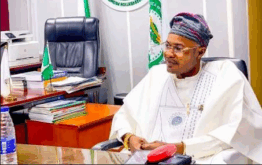
Babatunde Fashola, minister of power, works and housing, has said that subject to budgetary provisions, the ministry of petroleum will build some critical infrastructure to transport gas to the nation’s power plants, resulting in an additional 2,000mw to Nigeria’s stock of power within the next 12 to 15 months.
At his inaugural media briefing in Abuja, Fashola said apart from the availability of gas infrastructure, other issues like environmental concerns and appropriate pricing for gas had had negative impact on the nation’s power sector.
The minister said the recent review of gas from $1.30 per unit to $3.30, although still below $4 international market price, would help bridge the availability gap.
On transmission network, he said the available power in generation stations was slightly larger than the capacity, which it could support and could result in persistent system collapse, if totally conveyed.
“So, government through the Transmission Company of Nigeria (TCN) has identified a total of 142 critical projects, out of which 45 are at 50 percent and above level of completion, and 22 of them can be completed within a year,” the minister assured.
The government intends to aggressively pursue completion to increase the carrying capacity from the generation companies (Gencos) to the distribution companies (Discos), meaning that the transmission carrying capacity must expand well ahead of generation capacity to conveniently take care of future expansion in power generation, he said.
On electricity tariffs, the minister described the issue as a complex one, as it relates more to citizens’ attitudes, but that the government’s intention is to attract investors to the fledgling market, which underscores the clear intention of attractive pricing of product to woo investors and strengthen the privatisation exercise.
Fashola further appealed to Nigerians for better understanding on “this contentious matter,” which he said if well handled, would assist the government in consistently maintaining its regulatory credibility with investors.
According to him, like the per second billing for phone calls in the telecoms sector, the power market will grow and stabilise, and Nigerians will begin to take power access for granted.
He also noted that with time, the implementation of a market realistic tariff order would take root, and that citizens should not be oppose to it “when it comes upstream.”
He however decried the low budgetary provisions by past governments for capital expenditure in the Nigerian power sector.
In 2015, the total budget for the power ministry was N9.606 billion, out of which N4.476 billion was for recurrent expenditure to cover salaries and overheads, while N5.130 billion was billed for capital expenditure, supposedly for ongoing projects.
According to him, this was a significant under-provision, even if it was to complete only 22 of the 142 transmission projects estimated at over N40 billion.
Apart from these, there is an ongoing 10-megawatt wind energy project in Katsina, a 215-megawatt plant in Kaduna and the 3,050-megawatt plant in Manbilla, Taraba State, all of which, he said, need to be completed.
“If we succeed, we can get a lot of workers back to work in cottage and small industries, which are the critical driving forces of our economy, as our economy cannot wait indefinitely and suffer job losses,” Fashola submitted.
In achieving this under his watch, the ministry will make it its first priority to ensure that contractors working on the various transmission projects across the country finish their work.
This, he said, is to enable the transportation of power from the nation’s electricity stations through the distribution companies (Discos) to consumers.
“Our second priority is to ask the governors to help us identify and enumerate their most populous industrial and commercial clusters where manufacturing, fabrication, welding and related productive work is going on, especially by small businesses,” he said.
This is to help the government see how it can leverage on the existing legal framework to attract embedded power supply to these people whom the minister said must be ready to pay for the power so generated.
In such cases, the tariffs are expected to be higher than the current official tariffs, but with significant improvement on power availability.
Fashola said such a model would move them from self generation with their noisy generators of diesel petrol which cost them N48 kW/hour and more, and which does not deliver all round electricity to where they will get over 90% predictable and reliable power to run their businesses.
Success stories in this regard include small independent power projects in places like Isolo industrial estate and Lekki Free Trade Zone in Lagos, as well as Aba in Abia State.
The minister also noted that the owners of the Discos will be expected to give their co-operation to the government through flexibility and innovative disposition for emergency interventions, while planning and developing their wholesale roll out plan.

Join BusinessDay whatsapp Channel, to stay up to date
Open In Whatsapp