The availability of timely and accurate information (or early warning) about impending severe weather phenomena has been described as the first and critical step in weather disaster risk reduction by any country.
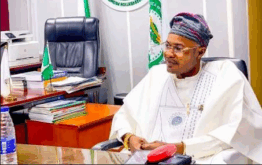
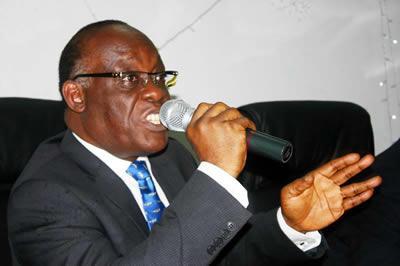
Anthony Anuforom, director-general, Nigerian Meteorological Agency (NiMet), made this declaration in Enugu in a keynote address on “Reducing Climate Change Vulnerability in Africa: the Role of Science, Engineering Technology and Innovation (SETI)” at the sixth regional conference of Vice Chancellors, Provosts, Deans of Science, Engineering and Technology (COVIDSET 2015).
Anuforom, who stated that Africa was the most vulnerable continent to the impacts of climate change, however emphasised that early warning was an essential part of emergency preparedness.
“Early warning is an essential part of emergency preparedness. It enables relevant agencies, communities and individuals at risk to plan and execute necessary precautionary measures such as evacuation of people at risk before the occurrence of a severe weather event, thereby reducing exposure to hazards,” Anuforom said.
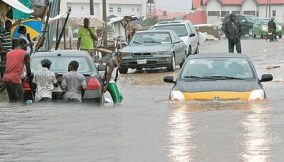
Climate change ranks among the greatest challenges facing contemporary human society, especially as “hydro meteorological hazards contribute the largest proportion to worldwide natural disasters that threaten human lives and wellbeing,” he said, stressing that it also “undermines sustainable development efforts of governments.”
He explained that although climate change was a global challenge, Africa remained the most vulnerable continent in the world to its impact because while the human systems were highly exposed to extreme weather, the adaptive capacity was low.
Other contributory factors to the vulnerability of Africa, according to him, are weak economic and technological power, lack or inadequate Early Weather Warning Systems (EWS) and poor logistical infrastructure.
“Other sociological issues such as local traditional and religious beliefs may also be contributory factors. The weak economy of most African countries also slows down the speed of recovery after the occurrence of weather disaster and makes the process of post-disaster rehabilitation and reconstruction more difficult,” he said.
He listed agriculture in Africa as among the most vulnerable sectors to climate change, lamenting that the implication of this was that “the overall economic development of Africa is highly vulnerable to climate change.”
He further noted that it was not all doomsday though, as the objective of the World Meteorological Organization (WMO)’s Global Framework for Climate Services (GFCS) is to provide a global mechanism for better management of climate risks by ensuring the provision of adequate science-based climate information and incorporating same into policy formulation and decision making.
Since climate scientists predict that in the years ahead, climate change is likely to amplify existing risks and create new ones for natural and human systems, the DG said it is expedient to mainstream vulnerability reduction strategies and action for the implementation of post-2015 Sustainable Development Goals for Africa’s transformation. He therefore charged the Conference to harness Science, Engineering Technology and Innovation (SETI) to “develop knowledge and technologies for increasing adaptive capacity and reducing vulnerability in Africa”.

Join BusinessDay whatsapp Channel, to stay up to date
Open In Whatsapp