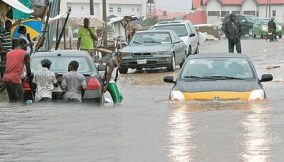
Bitterness, complaints, unending sighing and gnashing of teeth have been the lot of Nigerians since the inauguration of the Muhammadu Buhari administration one year ago. One week to the first anniversary of the All Progressives Congress (APC)-led government, Nigerians are writhing under the heavy weight of suffering made manifest in constant power outages or no supply at all, double-digit inflation and the attendant rising cost of goods and services, job losses, non-payment of or delayed salaries, scarcity of foreign exchange, water scarcity, fuel scarcity, scarcity of money to purchase bare essentials, and a general feeling of hopelessness over the unfortunate state of affairs in the country.
Despite widespread euphoria and ululations that greeted the election and swearing-in of the Buhari government, which rode to power on the mantra of change, signs of disappointment began to show early in the day when the president, despite virulent criticism, failed to make public the economic thrust of his government. It also took President Buhari about seven months to constitute his cabinet, and when the list did come out, Nigerians were disappointed that most of the names on it were regular Nigerian politicians of both the old and new order and not a crack team of economists needed to turn the country’s fortunes around. His obvious slow pace to tackling the multifarious challenges of the country, in spite of his rosy promises during the campaigns and on the day of his inauguration, earned him the sobriquet ‘Baba Go Slow’.
Some of the recent policies of government have negatively impacted the well-being of Nigerians. The Treasury Single Account (TSA) policy, which though has been hailed by many experts, was, however, criticized for having been introduced hastily.
The TSA implementation stifled and crippled the system. The banking sector was hard hit. The policy, combined with the Central Bank of Nigeria (CBN) policy on foreign exchange, hampered import activities and brought many businesses to their knees. The twin policies worsened the socio-economic situation of the country, nearly driving many Nigerians into taking extreme decisions.
Although he hailed the TSA policy, Olisa Agbakoba, a former national president of the Nigerian Bar Association (NBA), had, while speaking with BDSUNDAY recently, observed that the near-recession status of Nigeria needed more money to be pumped into the system to encourage spending.
“If an anaemic patient came to me, if I were a medical doctor, I would pump blood into him because he needed blood. But if a person with excess blood should come to me, I would drain away some blood from him. So, what I would do depends on the health condition of the patients,” he said.
“As we speak, our economy is anaemic, seriously needing blood. Government has been retrieving money, keeping money in TSA and the huge amount is not being spent. Why I cannot overtly criticise President Buhari for adopting monetarism is because we have to realise that the out-gone government was rather profligate. They spent money but we saw nothing. But at the same time, I will not align myself with the view that not spending money is the way to go. Buhari felt that restraint was what Nigeria really needs now. If we gather all the money and put in TSA, we may further go into recession. Government must urgently reflate,” Agbakoba said.
Dele Adesina, Senior Advocate of Nigeria (SAN), told BDSUNDAY in an interview that the current pain Nigerians are going through as a result of policies of the Buhari administration can be likened to that of a pregnant woman in a labour room who is sustained by hope of bringing a baby to the world.
He explained that what the regime met on assumption of office was obviously far worse than they had anticipated during election campaign and that as a result, the government is confronted with what it never envisaged. He, however, added that government is not communicating enough information to Nigerians.
“If Nigerians can bear this current extreme pain for a while, the country would be better for it. When a pregnant woman enters the labour room with great pains, the only hope sustaining her is the expectation of a new baby and once the baby is delivered, she no longer remembers the pain. This is the picture of what Nigerians are currently going through. It is truly hard for Nigerians at the moment but the government must provide Nigerians access to information,” he said.
Highlighting some of the policies of government that have immensely contributed to the current plight of Nigerians, he said although he welcomes the removal of fuel subsidy, government should have taken little time to encourage smaller local refineries, since the major ones are not producing, before embarking on the total removal of subsidy.
“While I welcome the removal of fuel subsidy because of the corruption associated with it, a lot of things should have been put in place before its removal. If we have allowed smaller refineries we would have prepared optimally for fuel subsidy removal. The other day, the NNPC claimed that some refineries in the country were working at certain capacity but they have not told us the current working capacity of those refineries. Allowing smaller refineries because of the question mark of the major ones would have reduced the volume of refined products we import,” he said.
According to him, the CBN foreign exchange policy under the current administration which largely contributed to the economic woes Nigerians are facing focuses more on demand of forex but is less concerned about supply. His suggestion is that the apex bank should move to exclusively wire money belonging to Nigerians in the Diaspora back home as a way to boost forex in its reserve.
“I am not speaking as an economist but as a Nigerian affected by the lack of forex. I think the forex issue could have been better managed. The CBN appears to be only concerned about the demand of forex but less concerned about supply. The CBN can increase its forex reserve by taking keen interest in the money of Nigerians in Diaspora. If these Nigerians want to buy land in Nigeria, for instance, how do they bring money home? These Nigerians would be very pleased to wire money through CBN. The result of this is increase in CNB’s forex reserve,” he said.
Charles Okafor, Nollywood veteran, told BDSUNDAY that Nigerians are currently going through a trajectory that will eventually define the future of the country and added that though current economic challenges are bitter pill to swallow by several Nigerians, the end result could become true healing to the nation’s economy.
He also upheld that the removal of fuel subsidy by the regime is a welcome development because of global ridicule it has brought to the country but regretted that there was no palliative on ground to cushion the effect which, he said, has now worsened the economic condition of countless Nigerians.
“Nigerians are at the moment going through hard times but it doesn’t mean this government is ineffective. Sometimes things need to get so bad to become so good. One year is a big time but not big enough to make a huge impact. I think what the government has been able to achieve this one year is to lay a good foundation. I am going through pain as a Nigerian at the moment, but is the pain necessary for a better tomorrow? Yes, it is,” he said.
CHUKS OLUIGBO & NATHANIEL AKHIGBE

Join BusinessDay whatsapp Channel, to stay up to date
Open In Whatsapp