Experts are at a loss as to how Nigeria will achieve its 2017 revenue projection of N4.9 trillion, which is 28.9 percent higher in naira terms, than the N3.8 trillion estimate in 2016.
Actual revenues generated so far in 2016 have consistently fallen below forecast on a pro-rata basis, due to oil production shut-ins and sinking company profits.
The Federal Government raked in N180.46 billion in October, according to the office of the Accountant-General of the Federation, 56% below the pro-rata full-year estimate of N321.6 billion for 2016. In September, it was off-target by 25 percent.
The pro-rata estimate is a breakdown of how much the Federal Government must earn in one month to achieve its full-year revenue target and is calculated by dividing the full-year forecast by 12.
Between January and November, actual revenues have never met this forecast, and Yvonne Mhango, Sub-Saharan Africa Economist at investment bank, Renaissance Capital, says it is difficult to see how the Federal Government will meet its 2017 projection.
To achieve 2017’s revenue projection of N4.94 trillion, Nigeria must earn N411.66 billion monthly.
“The flaws in the full-year 2017 budget emerge when we look at the revenue projections – an ambitious 28% increase to N4.9 trillion– particularly when the Federal Government has failed to meet its full-year 2016 target, due to low oil prices in the first quarter of 2016 and disruptions to crude oil production,” Mhango said by email.
Nigeria’s revenue is derived from oil, non-oil and independent sources.
The country revised down its independent revenue projection for 2017, which at N807 billion is almost half that projected for 2016. Non-oil revenues, largely comprising Companies Income Tax, Value Added Tax, Customs and Excise duties, and Federation Account levies, are estimated to contribute N1.373 trillion, 5 percent lower than 2016’s forecast.
However, it expects a 140% increase in oil revenue projections to N2 trillion in 2017, from N820 billion in 2016.
Bongo Adi, an economist at the Lagos Business School (LBS) says government runs a risk of missing its 2017 projections, as “Some of the issues that affected the 2016 budget have not been addressed.”
“We have seen some projections based on oil production and a drive to stabilise the situation in the Niger-Delta by increasing allocation to the Amnesty Programme and so on, which have not worked. Yet the 2017 budget is very optimistic that these things will work. I think that is a gamble that could go either way,” Adi added.
Militant attacks on oil pipelines dealt a heavy blow on government finances, even more than a plunge in oil prices.
Although Nigeria pegged oil production at 2.2 million barrels per day in 2016, production has since dropped to as low as 1.2 million barrels at the height of militant attacks in the oil-rich Niger-Delta region.
However, production is rising again due to the relative peace in that region and the country’s oil production was at 1.6 million barrels in November, according to OPEC data.
“The government appears to have reached an understanding that oil revenue is a key determinant of total revenue and I think this should be followed up by opening the sector to attract the kind of revenue the country needs to fight the economic recession,” said Tiffany Odugwe, an economist at investment firm, Cardinal Stone Partners Ltd, by phone.
Dolapo Oni, head of energy research at Ecobank Group, said the oil price rally is positive for government revenue, but the latter “must strive to put a lid on pipeline vandalisation and do the needful with the Petroleum Industry Bill, which has been dragging and is yet to be approved for almost a decade now.”
The oil sector contracted by 22 per cent in the nine months through September and sector’s woes are having a negative impact on the economy as a whole, which is headed for its first full year contraction in 25 years.
Industry stakeholders say passing the PIB, which will open the sector to more investments, is a low hanging fruit to revive the ailing sector.
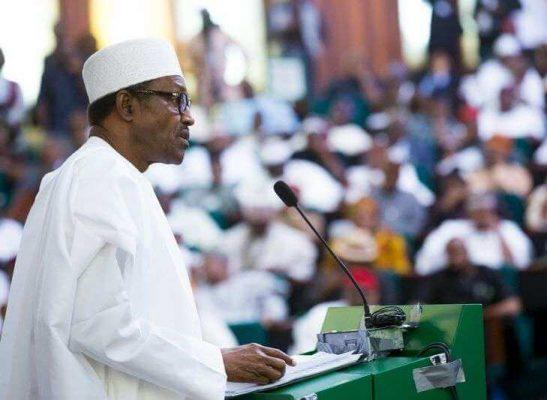
President Buhari presented the country’s 2017 budget, outlining expenditure of NGN7.3trn on Wednesday and now awaits approval from the National Assembly.
The President tagged the budget “A budget of recovery and growth,” and says it will take the economy, which contracted by 2.24 percent in the nine months through 2016 compared to the same period a year ago, out of recession.
LOLADE AKINMURELE & STEPHEN ONYEKWELU

Join BusinessDay whatsapp Channel, to stay up to date
Open In Whatsapp