

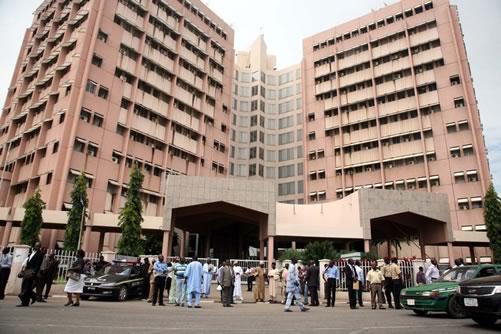
For the in-coming administration of Muhammadu Buhari, the President-elect, to have a functional civil service that will aid governance and raise productivity in the economy, the administration will have to embark on comprehensive reforms that will right the many wrongs in the system, analysts have advised.
The civil service system as currently structured in Nigeria, cannot serve the interest of the country because, according to the analysts, the system is weak, unwieldy and unproductive. They stress that the recruitment process into the system is totally flawed, while those already there, lack proper orientation.
“At independence in 1960 when Nigerian nationals took over the administrative leadership, no attempt was made by them to restructure the Civil Service to suit our own developmental needs”, says Joseph Okoye, a professor at the Department of Public Administration, Faculty of Management Sciences, Nnamdi Azikiwe University, Awka.
Okoye observes that the Nigerian bureaucrats who occupied leadership positions in the service, imbibed the colonial mentality of wealth acquisition for self aggrandisement and self-superiority, such that instead of working to improve the lot of the country, they became colonial masters themselves.
Several attempts have been made to structure the civil service and by the last count since 1954 when the Nigerian Civil Service was inaugurated, there have been about 21 attempts at reforming the service, and these include the Udoji Reform which gave fabulous salary increases to civil servants, with the attendant hyper inflation; the Bureau of Civil Service Reform, the Presidential Committee on Restructuring and Rationalisation of the Federal Government Parastatals, Commissions and Agencies etc.
“If these attempts have not yielded the desired results, it is because emphasis has largely been on reducing the size of the workforce, which in itself, is a good idea but the challenge there is that it will create social problems”, Bennett Etaghene, a finance analyst/property consultant, told BusinessDay.
Reducing the size of the workforce, Etaghene reasoned, meant that some people had to be sent to the labour market, stressing that what the incoming government should do was to first of create productive areas, such as industries that would create employment, and also develop the agric sector, especially mechanised farming, which employs thousands of people.
As currently structured also, the civil service is bottom-heavy in terms of number and quality, which an aide to one of the politicians in Abuja, who does not want to be named, explained to BusinessDay, was reason for most ministers and political appointees relying heavily on special assistants, rather than civil servants for ideas and execution of the ideas.
“I think what the incoming administration needs to do, and urgently too, is to look into the recruitment process into the civil service, which has been grossly compromised. There is this Nigerian factor in the process, whereby people are recruited not on the basis of merit, but because they are relations to people highly placed in the service”, the aide noted, adding that those already in the system “are generally egocentric, working for themselves and not for the country. For this class of civil servants, there is need for orientation, while the recruitment process has to be strengthened for new intakes.
“I think the manner in which civil servants are promoted is flawed”, an analyst with a private equity investment firm said in a telephone interview, noting that civil servants are promoted automatically after a number of years, usually three years.
“To be promoted, they sit for meaningless promotion examinations which are totally unrelated to the work that has been done in the three years. They all sit for the same exam, not minding whether they are engineers or economists. They all pass this exam and thereafter everybody is promoted”, the analyst, who pleaded anonymity, fumed, pointing out that “in other climes, promotions are, in the first place, dependent on vacancy. Here someone can be promoted and yet remains in the same job and position.
“In every matter of civil service”, the analyst said, the method of recruitment and promotion was totally flawed, advising the in-coming Buhari administration to set out with urgent attention to the civil service.
CHUKA UROKO

Join BusinessDay whatsapp Channel, to stay up to date
Open In Whatsapp


