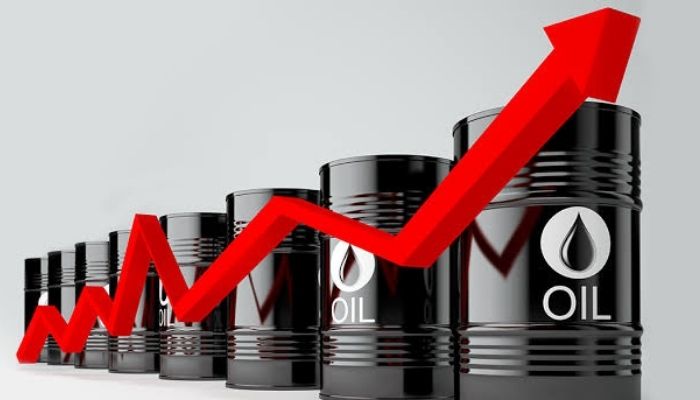
Nigeria is failing to fully capitalise on the windfall from elevated crude prices triggered by the Iran war, as oil production continues to underperform for a third consecutive month, according to the latest data from the Nigerian National Petroleum Company (NNPC) Limited.
The March 2026 monthly report showed that crude oil and condensate output rose marginally to 1.56 million barrels per day (bpd), up from 1.51 million bpd in February, but still below January levels and far beneath the Federal Government’s benchmark of 1.84 million bpd.
“Production improved compared to the previous month, driven by the early completion of the OML 118 Bonga Turnaround Maintenance, delivered 12 days ahead of schedule,” the report said.
However, the Trans Forcados Pipeline (TFP) outage, resulting from a leak at the Keremor axis, negatively impacted production volumes, leading to curtailments across several assets from February 20 to March 25, alongside other operational challenges.
The figures highlighted a persistent production drag that has limited Nigeria’s ability to monetise the ongoing geopolitical price rally.
This underperformance came at a time when global oil markets are experiencing heightened volatility and price spikes linked to the Iran conflict, with Brent crude trading above $100 per barrel and, in some cases, exceeding $110 amid supply disruptions.
BusinessDay’s check showed that Brent Crude stood at $113.7 per barrel as of Monday noon.
Windfall meets structural constraints
Analysts said the mismatch between high prices and weak output reflects a recurring structural problem in Nigeria’s oil sector.
The Iran war has created a substantial “geopolitical premium”, pushing Nigeria’s light sweet crude to record highs, with some grades trading above $113 per barrel and attracting strong demand from Europe and Asia. According to reports, the country and oil firms have already earned an estimated $4 billion windfall within weeks of the conflict.
However, this upside is being eroded by production inefficiencies.
Nigeria has consistently fallen short of its output target in 2026, averaging roughly 1.58 million bpd in the first quarter, about 260,000 bpd below budget assumptions. Every unproduced barrel at current price levels represents significant foregone revenue.
Operational setbacks persist
The NNPC report attributed the March production constraints primarily to infrastructure disruptions and operational challenges.
While output received a boost from the early completion of turnaround maintenance on the Bonga field, a key export route, the Trans Forcados Pipeline, suffered a leak at the Keremor axis, forcing shutdowns and curtailments across multiple assets from late February to late March .
Upstream pipeline availability stood at just 76 percent, highlighting ongoing evacuation bottlenecks that continue to weigh on volumes .
Industry experts argued that such disruptions, alongside oil theft, ageing infrastructure, and underinvestment, remain binding constraints on Nigeria’s ability to ramp up supply quickly, even during favourable price cycles.
Gas gains, oil lags
In contrast to crude output, gas production showed relative resilience, rising to 7,731 million standard cubic feet per day (mmscf/d) in March, continuing an upward trend since late 2025.
Progress on strategic gas infrastructure projects also remained strong, with the Ajaokuta-Kaduna-Kano (AKK) pipeline reaching 93 percent completion and the OB3 pipeline at 96 percent.
Despite these gains, oil remains the dominant revenue driver, meaning weak crude volumes have a disproportionate impact on fiscal performance.
A narrowing window
The global energy shock triggered by the Iran conflict has created a rare fiscal opportunity for Nigeria. Estimates suggest the country could generate tens of billions of dollars in additional revenue annually if elevated prices persist.
Yet the window to capture this upside may be narrowing.
Oil markets remain highly sensitive to geopolitical developments, with analysts warning that prices could retreat quickly if tensions ease or supply routes stabilise. At the same time, OPEC+ has already signalled modest production increases, which could temper price gains.


Join BusinessDay whatsapp Channel, to stay up to date
Open In Whatsapp