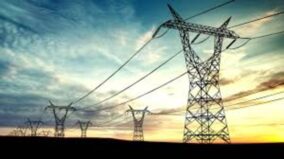
Lagos State Government says it is developing an independent electricity market and targeting an additional 2,000 megawatts of power supply as part of efforts to end persistent blackouts across the state.
Biodun Ogunleye, commissioner for energy and mineral resources said the state was strengthening regulation, expanding embedded generation and creating an investor-friendly electricity market to support stable electricity supply.
Earlier, Lagos State Commissioner for Information and Strategy, Gbenga Omotoso, said stable electricity supply remained critical to Lagos’ industrialisation and economic transformation, adding that the state was laying the foundation for improved power delivery across sectors
Ogunleye said Lagos was targeting an additional 2,000 megawatts through partnerships with private investors and other market operators, while advancing a market structure designed to eliminate the single buyer model and encourage wider participation.
According to him, the state had updated its Integrated Resource Plan and was implementing policies aligned with international electricity market standards.
Ogunleye said Lagos had strengthened licensing frameworks, consumer complaint mechanisms and enforcement procedures through the Lagos State Electricity Regulatory Commission, while also pursuing a 100 per cent metering policy.
“We are saying farewell to the culture of blackout,” he said.
The commissioner disclosed that Lagos currently had 12 independent power producers under regulation, with seven already operational, adding that the government was working to convert existing generation assets into embedded assets within the emerging electricity market.
He said the state government would focus on creating an enabling environment for private investors rather than directly generating electricity.
Ogunleye also hinted that Lagos could soon announce floating power barges as part of plans to expand electricity capacity within six to 12 months.
He said the state, in partnership with electricity distribution companies, the Transmission Company of Nigeria (TCN), Nigerian Electricity Regulatory Commission (NERC), Nigerian Independent System Operator (NISO) and Rural Electrification Agency (REA), was expanding grid infrastructure, mini-grids and solar systems across underserved communities.
Among ongoing projects, Ogunleye listed the March 2026 commissioning of electricity infrastructure in Badagry, including distribution towers crossing the Gbaji Lagoon and the rehabilitation of 33KV power lines spanning about 37.7 kilometres across the Gbaji, Seme, Owode and Apa axis.
He added that the state was facilitating right-of-way approvals for a 132KV transmission line from Ajah through Eleko Junction to Alaro City under the Lekki-Epe Integrated Energy Corridor project, which also includes a parallel gas pipeline.
Ogunleye said several transformers had been installed across the state, while damaged electricity infrastructure in Ilashe and neighbouring communities had been rehabilitated.
On renewable energy, he said about 42,000 streetlights were being deployed across Lagos, while solar and power projects had also been extended to schools and health facilities.
He disclosed that Bagada General Hospital was being connected directly to TCN to guarantee between 21 and 22 hours of electricity supply daily.
According to him, renewable energy projects had delivered 710 kilowatts of solar photovoltaic systems, 1,060 kilovolts of inverter capacity and 4.732 megawatts of battery storage across schools, primary healthcare centres and general hospitals.
The commissioner also said Lagos was advancing cleaner transport initiatives through compressed natural gas (CNG), liquefied natural gas (LNG) and electric vehicle technologies.
He disclosed that monitoring teams visited more than 72 facilities within the last year to enforce safety compliance in the oil and gas sector.
Ogunleye added that clean cooking initiatives had expanded LPG access to more than 80,000 households across the state, supported by seven standalone LPG plants and four specialised kits.
He further said the state had converted several vehicles to cleaner fuel alternatives, including 102 heavy-duty vehicles, 85 tricycles and 16 commercial vehicles, while 17 dedicated CNG stations were expected to be completed before the end of 2026.
On mineral resources, the commissioner said the ministry had intensified geological investigations, groundwater protection and enforcement operations against illegal dredging and unauthorised land reclamation.
He added that the ministry, in collaboration with the Lagos Waste Management Authority (LAWMA), deployed enforcement teams along the Ajah, Ibeju-Lekki and Epe corridors to address sand spillage and environmental violations.
Responding to reports that residents would require permits before installing solar systems, Ogunleye denied the claim.
“For the umpteenth time, let me repeat again, nobody in this state administration authorised anyone to say that if you want to install solar, you must get a Lagos State permit,” he said.
He, however, said the government was developing measures to certify solar installers and prevent unsafe installations linked to fire outbreaks.
Ogunleye also said the proposed Lagos Independent System Operator was currently embedded within the Lagos State Electricity Regulatory Commission, adding that further announcements on implementation would be made soon.
He said the state was working towards uninterrupted electricity supply rather than focusing on electricity banding.


Join BusinessDay whatsapp Channel, to stay up to date
Open In Whatsapp