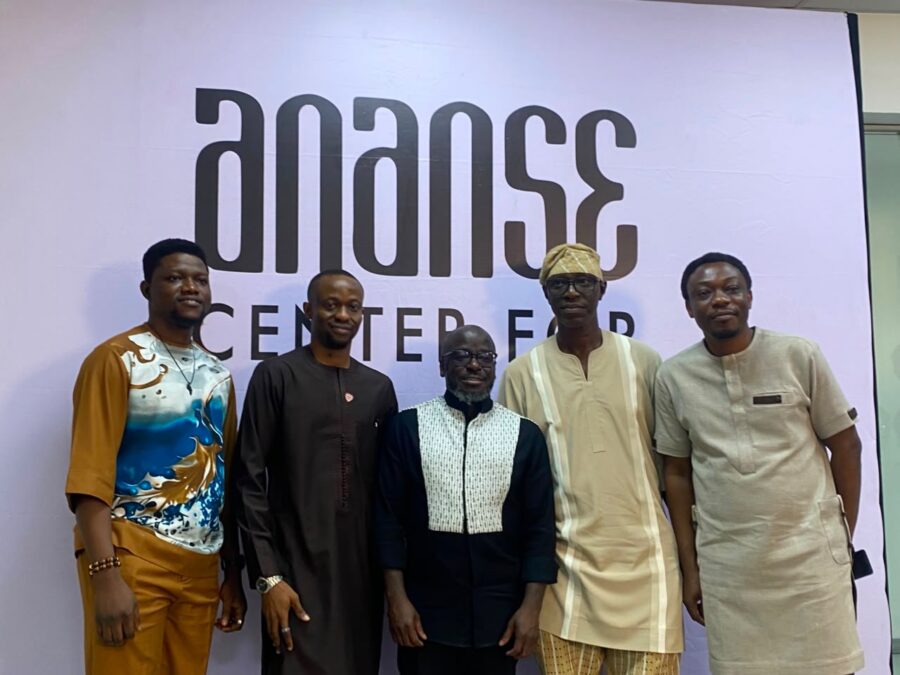
…as Ananse Centre for Design graduate new cohort in Lagos
As Africa’s fashion industry continues its rapid expansion, a new generation of creative entrepreneurs is emerging to help drive growth. The latest cohort of graduates from Ananse Centre for Design is poised to contribute to a fashion economy estimated at over $31 billion.
Industry experts, at Ananse Centre for Design graduation of new cohort in Lagos argued that Africa’s fashion industry has no shortage of creativity, but that limited access to quality training, business education and international markets continues to hold back many young designers.
Samuel Mensah, founder and chief executive officer of Ananse, speaking at the graduation ceremony, said the organisation was established to bridge the gap between talent and opportunity.
“We’re celebrating what happens when talent is given an opportunity. Many of the designers you see today began this journey with passion and ambition, but without access to the equipment, production facilities, professional networks and support needed to build a career in fashion,” Mensah said.
Besides, Mensah said the programme combines technical training, entrepreneurship and market access to help graduates move beyond acquiring vocational skills to building viable businesses.
Moreover, he emphasised that closing that gap requires more than technical ability. “A sustainable fashion business rests on three pillars, technical skills, business knowledge and access to markets. If one is missing, the business will not be stable,” he said.
According to Mensah, the organisation has trained more than 7,000 creatives through its one-year programme and currently supports over 700 designers and makers on its e-commerce platform across Nigeria, Ghana, Kenya, Senegal, Côte d’Ivoire and South Africa.
However, he urged graduates to see the ceremony as the beginning of their professional journey. “I hope people leave here believing that the future of African fashion is already here. It’s sitting in this room. It’s walking this runway. And this is only the beginning.”
He disclosed that the Ananse programme is supported by the Mastercard Foundation, the Ishk Tolaram Foundation, the Federal Ministry of Education’s Technical and Vocational Education and Training (TVET) initiative and the National Board for Technical Education (NBTE).
The event celebrates graduates who completed Ananse’s fashion entrepreneurship programme while highlighting the role of technical education in preparing young creatives to build sustainable businesses.
The graduation comes as Africa’s fashion industry continues to attract growing global attention. According to market intelligence platform Clearly Invincible, Africa’s apparel, footwear and fashion market is valued at about $31 billion, driven by a young population, rapid urbanisation and expanding digital commerce.
According to UNESCO report, while Africa exports $15.5 billion worth of textiles, clothing and footwear annually, it imports $23.1 billion in finished garments, highlighting the continent’s dependence on foreign manufacturing.
Also at the event, development partners described the programme as an investment in youth employment and enterprise development.
Oje Olaolu-Ivagba, the programme director (skills training) for Nigeria at the Ishk Tolaram Foundation, said the foundation identified fashion as one of the country’s most promising but underserved sectors after reviewing its post-pandemic interventions.
“We recognised there were viable opportunities within the creative industry, particularly fashion. When we visited Ananse and saw the structure, quality and systems already in place, partnering became an easy decision because our goals aligned,” he said.
For Owoduni Temiloluwa, programmes lead at Ananse, the objective extends beyond producing skilled tailors. He said the curriculum was intentionally designed around international standards while integrating business management and technology.
“Many people know how to sew, but what is often missing is the knowledge needed to transform that skill into a sustainable business. That’s why we combine technical training with business education and technology,” Temiloluwa said.
Evans Oghenewe, one of the 36 graduates completing the programme said it marked the fulfilment of a long-held ambition. After relocating from Delta State to Lagos under a scholarship programme, he faced long commutes, heavy traffic and the challenge of living away from family.
“What started as a dream has become a reality. The sacrifices, the sleepless nights and the resilience have all been worth it,” he said.
He encouraged other young Nigerians to continue pursuing their aspirations despite setbacks. “Keep believing in your dream. Keep trying and don’t stop pursuing what you want.”

Join BusinessDay whatsapp Channel, to stay up to date
Open In Whatsapp