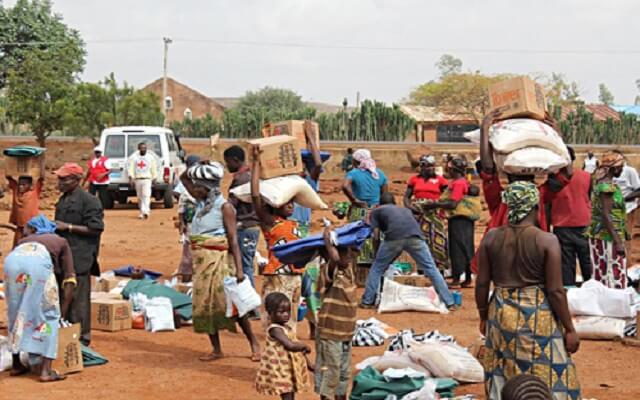
For decades, internally displaced persons (IDPs) and refugees across Africa have largely been viewed through the narrow lens of humanitarian assistance. Governments, international agencies and donor organisations have understandably focused on providing food, shelter, healthcare and emergency relief. While these interventions remain indispensable, a new report by the Amahoro Coalition presents a compelling argument that should reshape the continent’s approach to displacement.
The report reveals that Africa’s 43.1 million displaced people collectively generate an estimated $27 billion in yearly income, while Nigeria’s displaced population alone contributes about $300 million yearly. These figures should force policymakers, investors and development partners to rethink long-held assumptions. Displaced people are not merely victims waiting for handouts; they are economic actors capable of creating wealth when given the opportunity.
“With internet connectivity, digital training and affordable devices, displaced youths can participate in the global digital economy through remote work, software services, online commerce and digital entrepreneurship.”
This revelation is particularly significant for Nigeria, home to between 3.7 million and 7 million displaced persons, most of whom were uprooted by insurgency, banditry and communal conflicts. Their displacement has understandably attracted humanitarian sympathy, but little attention has been paid to their economic potential. The Amahoro Coalition’s findings challenge this narrative by demonstrating that more than half of Africa’s displaced population remains economically active despite enormous obstacles.
Perhaps the most encouraging finding is that businesses owned by displaced persons reportedly fail at only one-third the rate of businesses owned by members of host communities. That statistic alone should capture the attention of financial institutions, development finance agencies and private investors. It points to resilience, adaptability and determination (qualities every successful entrepreneur requires).
The implications extend beyond humanitarian policy. Nigeria is battling unemployment, rising poverty, food insecurity and sluggish economic growth. Rather than seeing displaced communities solely as consumers of scarce public resources, government and investors should recognise them as contributors to economic recovery.
Agriculture presents the most immediate opportunity. Many displaced Nigerians were farmers before insecurity forced them from their homes. Their skills did not disappear because violence disrupted their livelihoods. What they lack is access to land, credit, quality inputs, improved technology and markets. Reintegrating these experienced farmers into agricultural value chains through outgrower schemes, cooperatives and agribusiness partnerships could simultaneously improve food production, create jobs and reduce dependence on food imports.
The report’s estimate of a $2.4 billion agricultural opportunity across Africa is not unrealistic. Northern Nigeria, despite its security challenges, remains one of the nation’s agricultural powerhouses. If peace gradually returns and appropriate investments follow, the combination of fertile land and experienced displaced farmers could become a major driver of national food security.
Equally important are opportunities in digital services and renewable energy. Technology has broken many geographical barriers. With internet connectivity, digital training and affordable devices, displaced youths can participate in the global digital economy through remote work, software services, online commerce and digital entrepreneurship. Renewable energy projects can similarly provide electricity for businesses while creating employment in underserved communities.
However, unlocking this potential requires a fundamental policy shift. Banks and other financial institutions must develop products tailored to displaced populations. The revelation that fewer than 10 formal financial service providers currently serve roughly 27 million displaced Africans represents both a glaring market failure and a tremendous business opportunity. Inclusive finance should become an integral component of Nigeria’s financial inclusion agenda.
The government must also strengthen collaboration with the private sector. Investment incentives, insurance mechanisms and public-private partnerships can encourage businesses to integrate displaced persons into supply chains rather than viewing them as charity cases. Development agencies should increasingly support programmes that restore livelihoods instead of fostering prolonged dependency.
The success story from Benue State, where 5,000 displaced families reportedly earned up to N2 million each within a year after receiving productive livestock and extension support, demonstrates what becomes possible when empowerment replaces perpetual relief.
None of this diminishes the tragedy of displacement. Millions of Nigerians still long to return safely to their ancestral homes. Security remains the ultimate solution. Nevertheless, while efforts continue to restore peace, those displaced deserve more than survival, as they deserve opportunities to rebuild their lives with dignity.

Join BusinessDay whatsapp Channel, to stay up to date
Open In Whatsapp