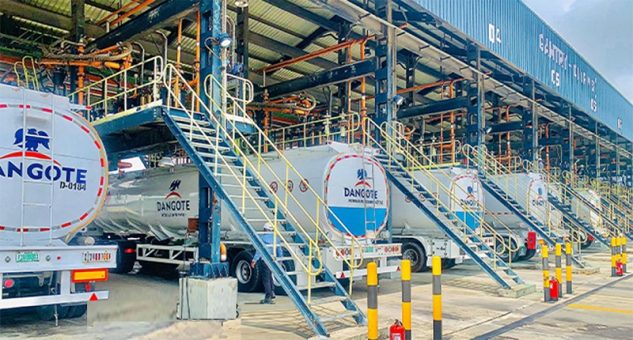
The decision by the National Pension Commission (PenCom) to grant Pension Fund Administrators (PFAs) special dispensation to invest in the proposed $50 billion IPO of Dangote Petroleum Refinery and Petrochemicals FZE is as bold as it is consequential. Framed within the principle of ‘Nigeria First, the move reflects a deliberate attempt to align national savings with national development. It also raises critical questions about risk, trust, and the fiduciary duty owed to millions of Nigerian pensioners.
At its core, this is not just an investment decision; it is a statement about economic direction. Nigeria has long struggled with the paradox of abundant domestic capital sitting idle or flowing into low-yield government securities, while critical infrastructure projects rely heavily on foreign financing. By opening the door for pension funds to participate in a strategic national asset, PenCom is effectively saying: Nigeria must begin to finance its own future.
There is logic in that position. The refinery, backed by Dangote Industries Limited, represents one of the most ambitious industrial projects on the continent. Its potential to reduce fuel imports, stabilise foreign exchange demand, and create jobs is well documented. If successful, it could serve as a cornerstone for Nigeria’s industrial renaissance. For pension funds, which require long-term, stable returns, such an asset, particularly one offering dollar-denominated dividends, can appear attractive. But this is where caution must temper optimism.
Pension funds are not speculative capital. They represent the deferred livelihoods of workers (public and private sector employees) who rely on these savings for dignity in retirement. Any decision to deploy these funds must therefore pass the highest thresholds of prudence, transparency, and risk management. The fact that PenCom had to waive certain eligibility requirements, including profitability and dividend history, underscores the exceptional nature of this approval. It is, by the Commission’s own admission, a one-off.
For pensioners, the implications are twofold. On the positive side, successful participation in the IPO could enhance returns in a way that traditional fixed-income instruments cannot. Nigeria’s pension industry has often been criticised for its conservative posture, heavily skewed towards government bonds that barely outpace inflation. Exposure to a large-scale, revenue-generating industrial asset could diversify portfolios and improve long-term yields, ultimately benefiting retirees.
However, the risks are equally real. The refinery, despite its promise, operates in a complex environment marked by regulatory uncertainties, energy market volatility, and operational challenges. If the investment underperforms, it is not abstract capital that suffers; it is the retirement security of millions. This is why the principle of ‘Nigeria First’ must never be mistaken for ‘Nigeria at all costs’. National interest cannot override fiduciary responsibility.
For private investment in Nigeria, this move sends a powerful signal. It demonstrates that the government is willing to use policy tools to channel domestic capital into large-scale projects. This could catalyse a new wave of private-sector-led infrastructure financing, reducing reliance on external debt. If managed well, it may also deepen Nigeria’s capital markets, encouraging more companies to list and providing investors with broader opportunities.
Indeed, there is a delicate balance to maintain. Regulatory forbearance, if overused or poorly applied, can distort markets and erode investor confidence. Private investors must be assured that the playing field remains fair and that decisions are driven by sound economics rather than preferential treatment. The credibility of institutions like PenCom is, in itself, a critical asset, one that must not be compromised.
There is also a broader philosophical question at play: what does ‘Nigeria First’ truly mean in economic terms?
If it means prioritising investments that create local value, jobs, and industrial capacity, then this decision aligns well with that vision. But if it becomes a justification for lowering standards or concentrating risk, it could backfire. True economic patriotism lies not in shielding investments from scrutiny but in ensuring they meet the highest standards of viability and governance.
PFAs must approach this opportunity with rigorous due diligence, independent analysis, and strict adherence to their internal risk frameworks. The regulatory green light is not a mandate but an option.
Also, transparency must be non-negotiable. Pension contributors deserve clear communication about how their funds are being invested, the risks involved, and the expected returns.
Equally, this must remain the exception, not the rule. PenCom’s insistence that the dispensation is one-off is both wise and necessary. The integrity of the pension system depends on consistency and predictability.
Ultimately, the Dangote Refinery IPO presents a rare convergence of national ambition and financial opportunity. If handled with discipline, it could mark a turning point, where Nigeria begins to harness its own savings to build its future. If mishandled, it risks undermining the very trust that sustains the pension system.

Join BusinessDay whatsapp Channel, to stay up to date
Open In Whatsapp