Nigeria has pledged support for the International Organisation for Migration’s (IOM) initiative to mobilise investment and address climate-induced migration in West and Central Africa.
The move underscores the government’s recognition of the growing threat posed by climate change to vulnerable communities across the region.
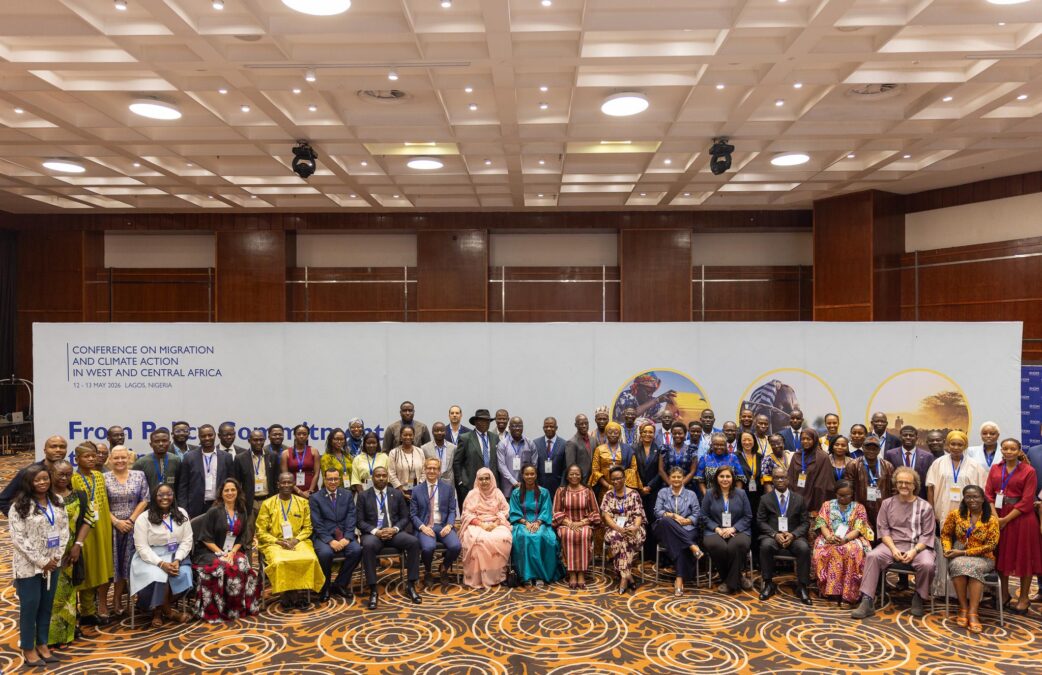
Balarabe Lawal, minister of Environment, made the commitment on Tuesday in Lagos at a regional conference organised by IOM – themed ‘Migration and Climate Action in West and Central Africa: From Policy Commitment to Climate Mobility Investment.’
Lawal, who was represented by Iniobong Abiola-Awe, director of climate change in the ministry, said Nigeria would continue to support efforts to bridge the gap between climate policy and financing.
The minister explained that the region was facing increasing environmental pressures, including desertification in the Sahel, coastal erosion in the Gulf of Guinea and flooding across major river basins.
According to him, these climate-related challenges are disrupting livelihoods and compelling people to migrate, relocate, or become displaced.
“Climate change acts as a threat multiplier, intensifying vulnerabilities and influencing migration decisions.” “However, we must shift our perspective. Mobility is not only a crisis to be managed, but also a form of adaptation and a pathway to resilience when properly harnessed.”
The minister noted that Nigeria had taken proactive steps through its National Adaptation Plan, which provides a long-term framework for building resilience and reducing vulnerability to climate risks.
He said the plan prioritised climate-resilient agriculture, water resource management, disaster risk reduction, urban resilience, infrastructure and ecosystem-based adaptation.
Lawal added that Nigeria was integrating human mobility into its climate policy frameworks, recognising migration as a legitimate adaptation strategy rather than solely a consequence of failed adaptation.
He stated that the country’s approach aligns with the Kampala Ministerial Declaration on Migration, Environment, and Climate Change.
“Without adequate investment, policy commitments risk remaining aspirational.”
He reaffirmed Nigeria’s readiness to collaborate with regional partners, development institutions and the private sector to strengthen climate mobility governance and institutional capacity.
In her opening remarks, Sylvia Ekra, IOM’s regional director for West and Central Africa, said climate change was already reshaping livelihoods, economies, and migration patterns across the region.
Ekra said more than two million people in West and Central Africa had already been displaced by disasters.
She explained that about 32 million people in the region could be forced to move internally by 2050 if inclusive and effective climate action is not taken.
“Mobility is not only a crisis. It is also part of the solution, enabling people to adapt, manage risks and preserve livelihoods,” she said.
Ekra noted that while policy frameworks existed, responses remained fragmented and insufficient in scale.
She added that the conference was significant as it provided a platform for climate and migration stakeholders to deliberate and jointly develop practical financing solutions.
Massimo De Luca, head of cooperation at the delegation of the European Union to Nigeria and ECOWAS, reaffirmed the EU’s commitment to supporting IOM activities in Nigeria and across West and Central Africa.

Join BusinessDay whatsapp Channel, to stay up to date
Open In Whatsapp