More than 50 million Africans have gained access to electricity under Mission 300, with tens of millions more expected to be connected by the end of 2026 as development partners intensify efforts to tackle the continent’s energy access deficit.
The milestone was announced as the African Development Bank Group (AfDB) and Sustainable Energy for All (SEforALL) launched a new technical assistance programme aimed at accelerating implementation of national electrification plans across participating countries.
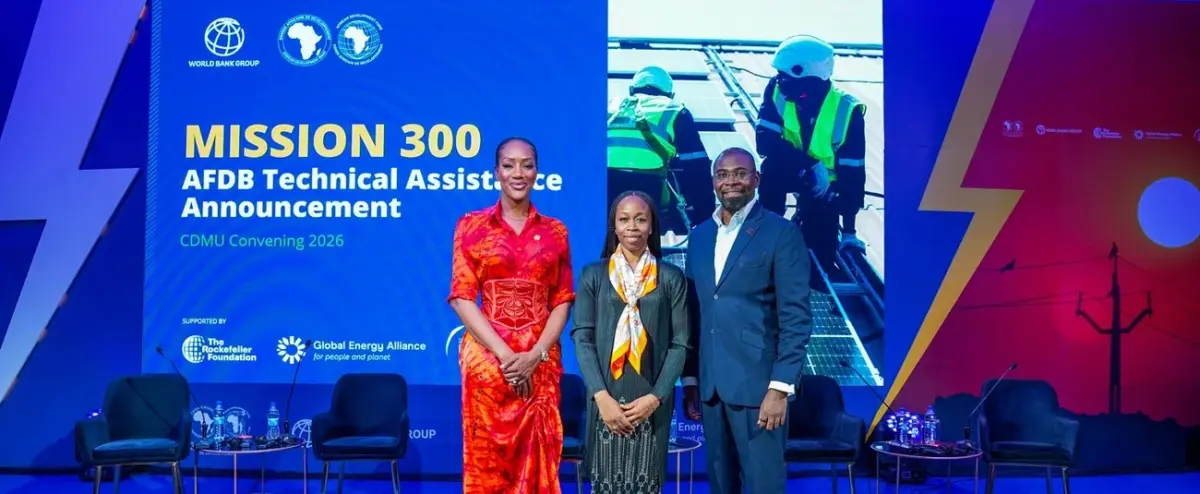
The initiative, unveiled at the Compact Delivery and Monitoring Units (CDMU) Convening in Nairobi, Kenya, will strengthen the institutional capacity of countries participating in Mission 300, a joint programme of the AfDB and the World Bank Group that seeks to provide electricity access to an additional 300 million people across Africa by 2030.
Known as the Africa Energy Sector Technical Assistance Program (AESTAP–Mission 300 Phase I), the programme is designed to support Compact Delivery and Monitoring Units, the national platforms established to coordinate implementation of energy sector commitments under Mission 300.
Read also: Sahara Power GMD, Kola Adesina appointed to Mission 300 Private Sector Council
Wale Shonibare, director for Energy Financial Solutions, Policy and Regulation at the African Development Bank Group, said Mission 300’s success would ultimately depend on countries’ ability to deliver results at scale.
“Mission 300 is fundamentally about delivery, and turning ambition into results at scale,” Shonibare said.
“In line with the African Development Bank’s commitment to accelerate universal energy access and strengthen enabling environments, this new programme will play a critical role in strengthening government delivery capacity and enhancing the coordination and monitoring of national-level electrification targets.”
His comments reflected increasing recognition among development finance institutions that achieving universal energy access will require not only funding but also stronger institutions capable of managing complex energy projects and reforms.
Read also: MISSION 300: Africa’s new opportunity to fix electricity gaps amid old challenges
SEforALL, which serves as a key coordinating partner for the initiative, will implement the programme over the next 12 months, providing monitoring support, stakeholder coordination, peer learning opportunities and knowledge-sharing mechanisms intended to accelerate delivery of country energy compacts.
The announcement signals a growing shift from planning to execution as governments and development partners seek to translate ambitious electrification targets into measurable results on the ground.
Africa remains home to the world’s largest electricity access gap, with hundreds of millions of people still lacking reliable power. The shortage continues to constrain economic growth, industrialisation, healthcare delivery, education and job creation across the continent.
Mission 300 was launched to address this challenge by mobilising financing, policy reforms and institutional support needed to dramatically expand access to affordable, reliable and sustainable electricity.
Read also: Nigeria’s broken grid is quietly building Africa’s fastest solar market
To date, 30 African countries have launched National Energy Compacts under the initiative. These compacts set out country-specific electrification targets, policy reforms and investment priorities aimed at accelerating energy access by 2030.
The newly announced support programme seeks to strengthen the institutions responsible for implementing those commitments.
Lolade Abiola, chief of staff at SEforALL, said the organisation welcomed the initiative as an important mechanism for improving implementation and accountability across participating countries.
“Sustainable Energy for All is proud to support Mission 300 as the dedicated Secretariat team for the Mission 300 Joint Working Group supporting operational frameworks, strategic planning and performance monitoring towards the successful delivery of Mission 300,” she said.
Compact Delivery and Monitoring Units function as national delivery hubs, coordinating implementation across government agencies, monitoring progress against agreed targets, facilitating stakeholder engagement and resolving bottlenecks that could delay projects.
Read also: Solar energy is becoming an alternative to an unreliable grid electricity in Nigeria
Development experts have long identified weak institutional coordination and implementation capacity as key obstacles to infrastructure delivery in many African countries.
The AfDB and SEforALL believed stronger delivery units will help countries move faster in executing reforms and attracting investments required to expand electricity access.
Abiola noted that SEforALL also hosts the Secretariat of the Technical Working Group for Compact Delivery and Monitoring Units, which focuses on tracking progress and providing technical support to national implementation teams.
“We welcome this new programme that will ensure that CDMUs can coordinate implementation and track progress of National Energy Compacts,” she added.

Join BusinessDay whatsapp Channel, to stay up to date
Open In Whatsapp