- Wednesday, June 10, 2026


BusinessDay

A sharp rise in foreign-currency liquidity across Nigeria’s banking sector is reducing the risk around about $1.7 billion of Eurobonds...

Nigeria’s real GDP grew by 4.07 percent in the fourth quarter of 2025, driven by an increase in the average...
Nigeria works to collect more taxes and raise money for government projects, and the informal sector, which makes up more...

Nigeria’s economy expanded at its fastest pace in three years in 2025, supported by stronger output in agriculture and industry,...
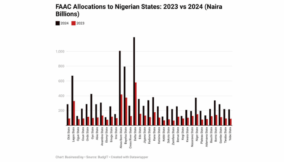
…With post-subsidy revenues surging, scrutiny should shift from Abuja to the states Nigerian’s political conversation still revolves around Abuja. When...
Manufacturing and agro-allied industries have been identified as the primary drivers of Nigeria’s long-term economic transformation under Agenda 2050, according...

Nigeria’s tax authorities have brought cryptocurrency gains within the formal tax net, but the absence of sector-specific guidance on how...

Nigeria is shifting from a self-assessment tax regime to an automated system in which authorities validate returns against independently sourced...

Nigeria is tightening its rules on royalty payments, a move that could raise the tax bills of foreign companies operating...

The naira’s recent surge showed signs of cooling in the official foreign-exchange market after the Central Bank of Nigeria (CBN) stepped in...

The Centre for the Promotion of Private Enterprise (CPPE) has cautioned that the Central Bank of Nigeria’s (CBN) shift toward...

The German state of Rheinland-Pfalz has signalled a strategic pivot towards Nigeria as both a production base and renewable energy...

Think of the Central Bank of Nigeria as the referee of the economy. Its job is not to score goals....
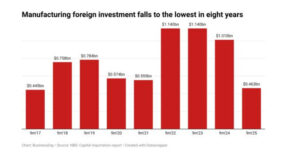
Foreign investment in Nigeria’s production and manufacturing sector declined to its lowest level in nine years in the first nine...

Nigeria’s transition to electronic invoicing is no longer theoretical. With large taxpayers already onboarded and medium-sized businesses scheduled to go...