
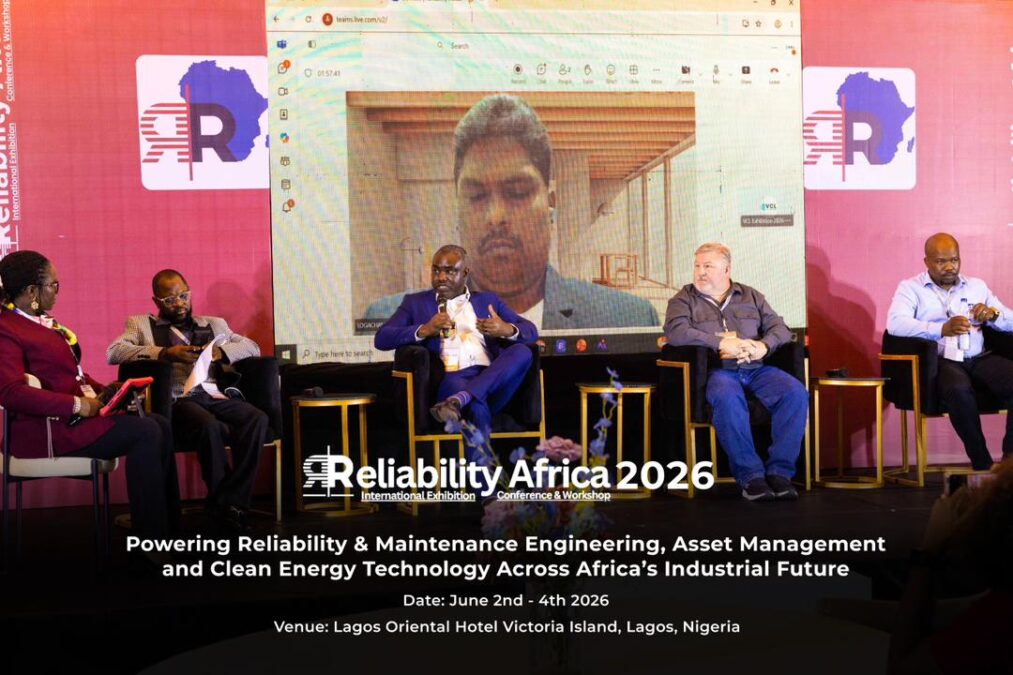
Predictive maintenance, asset management, reliable electricity, clean energy technologies, and smart manufacturing will determine whether Nigeria and other African countries can build competitive industries in the decades ahead, experts said at the inaugural Reliability Africa International Exhibition, Conference, and Workshop in Lagos.
The event, organised by Vethan Concept Limited, brought together policymakers, engineers, manufacturers, investors, and technology experts to discuss how clean energy, artificial intelligence, and industrial automation can drive economic growth while addressing some of Africa’s biggest development challenges.
A central theme of the conference was the urgent need to expand electricity access and improve reliability as industries grapple with high energy costs, unstable power supply, and rising operational expenses.
Speaking at the event, Dr Abba Aliyu, MD/CEO of the Rural Electrification Agency (REA), stated that Nigeria’s electricity challenge remains urgent despite global clean energy progress.
“Our mandate is clear: to provide electricity to Nigerians without access and improve reliability for underserved communities,” he said.
Dr Aliyu noted that while renewable energy now attracts $1.7 trillion globally, Nigeria still generates only 4,500-5,200MW, leaving about 85 million Nigerians without electricity
“We are planning over 1,000 mini-grid projects across Nigeria, one of the most ambitious electrification programmes in the country’s history,” he added.
Read also: Reliability Africa 2026 targets industrial efficiency, sustainable energy solutions
Engr Saheed Kareem, an engineering professional at Nestle Nigeria Plc, said industries can lower production costs and improve competitiveness by adopting energy efficient technologies P
“The more we are able to produce equipment or our processes with less energy consumption the better for us because it will finally aid our cost of production,” he said.
Kareem explained that technologies such as predictive maintenance, industrial sensors and real time monitoring systems help manufacturers reduce downtime, improve productivity and make faster decisions based on accurate data.
He also highlighted the potential of technology to address food losses across agricultural supply chains through improved cold storage and logistics systems.
Prof Chika Yinka Banjo, an expert in artificial intelligence and robotics, said Africa must embrace emerging technologies while adapting them to local realities.
He noted that artificial intelligence, industrial internet systems and data analytics are already transforming sectors ranging from manufacturing to financial services across the continent.
“Workforce training is non-negotiable. Technology alone is insufficient,” Prof Banjo said.
He stressed that Africa’s greatest strength remains its young population and called for stronger collaboration between government, universities and industry to equip graduates with practical skills required by modern workplaces.
Prof Banjo also urged policymakers to invest in digital infrastructure, data systems and innovation hubs capable of supporting long term industrial growth.
Among the many exhibitors at RReliability Africa, Dinteco Group, represented by Engr Steve Horsley, showcased their lightning protection technology, designed to protect critical infrastructure, assets, and personnel from the growing threat of lightning strikes across Africa. The company, with over 10 years of presence in Africa,
“Our technology helps industries protect both assets and people while improving operational safety,” Engr Horsley said.
Doble Engineering, represented by Manqoba Mduba, an Electrical Engineer from its South African regional office, showcased advanced testing and diagnostic solutions for the power and electrical sector. He highlighted their commitment to supporting asset reliability and operational efficiency across Africa.
“Our solutions are designed to help industries improve asset performance, reliability, and safety through advanced testing and diagnostics,” he said.
Another Key Exhibitor, Universal Automation, represented by its Business Development Lead, Dr. Ezekiel, showcased its engineering and automation solutions for the oil and gas industry. The Nigeria-based company highlighted its expertise in instrumentation, electrical systems, procurement, operations, maintenance, commissioning, and installation, reinforcing its commitment to delivering reliable industrial solutions.
“Our focus is on providing end-to-end engineering and automation solutions that improve efficiency, safety, and reliability across operations,” he said.
Speaking on the vision behind RReliability Africa, Osazuwa Osasogie, the Exhibition director and managing director of Vethan Concept Limited, said the gathering reflected Africa’s growing ambition to become a center for engineering excellence and technological innovation.
The discussions underscored a common message: clean energy and smart manufacturing are no longer optional. As industries face mounting pressure to cut costs, improve efficiency and remain competitive, experts believe the combination of reliable electricity, advanced technologies and skilled workers could become the foundation of Africa’s next industrial revolution.

Join BusinessDay whatsapp Channel, to stay up to date
Open In Whatsapp