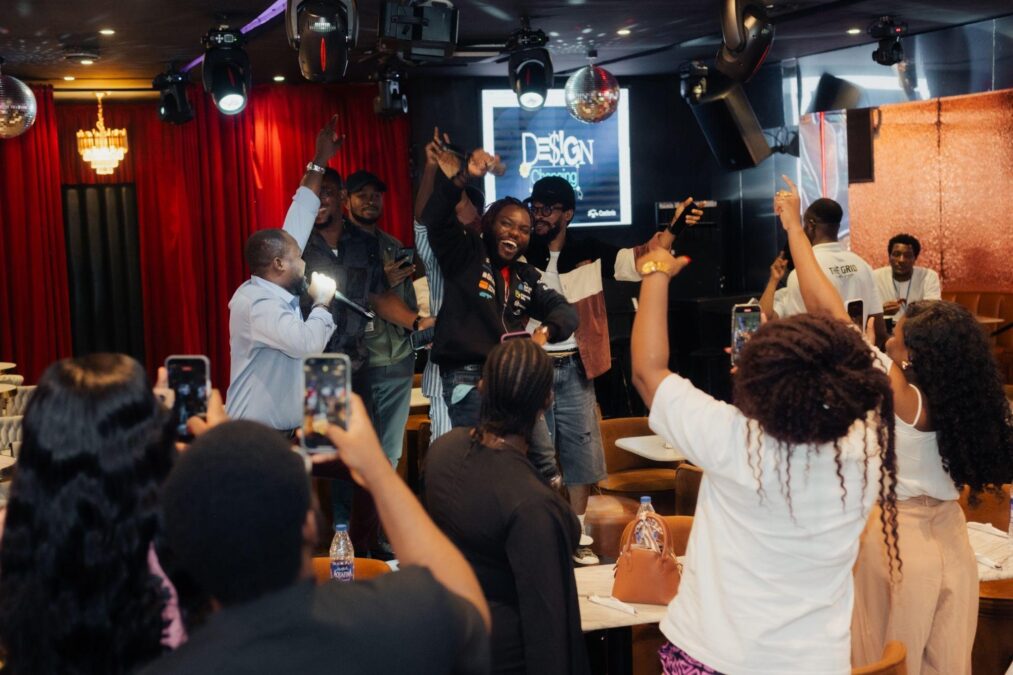
One thing creatives love is being in rooms filled with people like them. People who understand the thrill of a good idea, the frustration of a creative block, and the countless hours that go into work most people only see for a few seconds.
Cardtonic understands that feeling. It was part of the reason the fintech company hosted The Mixer, a closed gathering for Nigerian designers. It was meant to be a chance to unwind, connect, and share experiences. Instead, it became something much bigger. Conversations stretched longer than expected, ideas bounced across tables, and by the end of the night, nobody seemed ready to leave.
The Slow Start
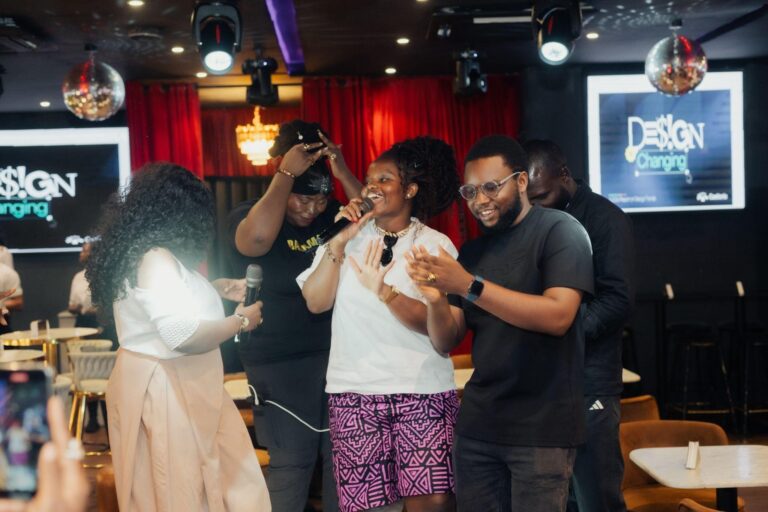
When the designers arrived on May 31, the room was quiet in the way rooms full of strangers often are. Small groups formed naturally. People exchanged greetings, found seats, and settled into conversations with those close to them.
It didn’t stay that way for long.
A few games and a round of karaoke got people laughing. The awkwardness of meeting new people faded quickly. Before long, conversations were flowing, and the room felt less like a gathering of strangers and more like a community of Nigerian designers.
With everyone more relaxed, the conversation turned to something many of them had already been noticing.
Earlier in the year, Cardtonic’s design team began paying attention to how people were responding to visual content. As AI-generated images became easier to create, audiences seemed to engage with design differently. Curious about what was happening, the team dug deeper, spoke to designers, studied emerging patterns, and eventually published the Design Is Changing report.
One of the key insights from the report was a subtle but growing preference shift. 72% of users associated mathematically perfect visuals with automated, low-effort content, while imperfect designs recorded 1.5x higher engagement.
These findings along with others were not unfamiliar to many designers in the room. They had noticed similar changes in their own work but rarely had space to compare notes with others experiencing the same thing.
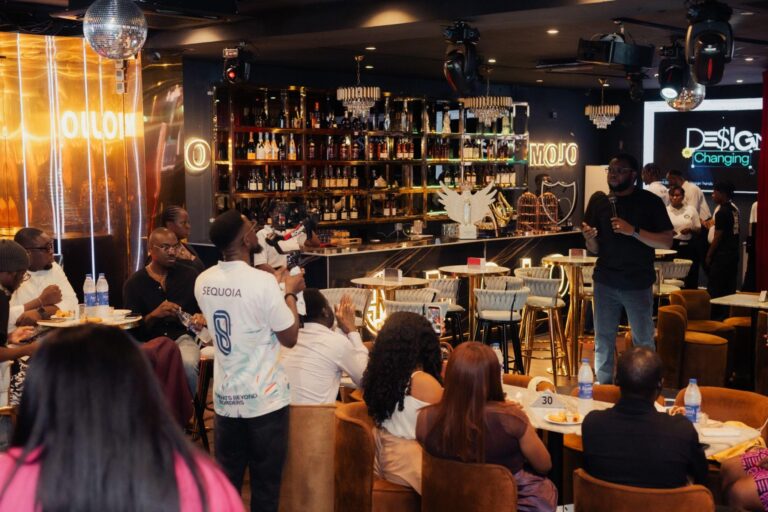
That conversation quickly became one of the most engaging parts of the evening. Designers compared experiences, shared observations from their projects, and reflected on the growing presence of AI in creative spaces.
As the conversations continued, one thing became clear: the questions raised by the report extended far beyond Cardtonic’s design team. They resonated with designers across different industries.
Why Was Cardtonic in the Room?
For many Nigerians, Cardtonic is best known for tools that make it easier to participate in a global digital world. Their virtual dollar card allows users to pay for subscriptions and services on global platforms. Alongside this, its eSIM helps users stay connected across borders without the usual friction of swapping physical SIMs while travelling.
Over the years, Cardtonic has also supported young Nigerians creatives in different ways. Through Cardtonic Upskill, creatives across different industries received MacBooks and tools to support their work and development. The company has also invested in grassroots football through Cardtonic FC, creating opportunities for young players to grow within the sport.
The Design Is Changing report, the closed design gathering, and what followed were built on the same foundation. Rather than only serving designers as users, Cardtonic chose to engage them as a community. The report captured questions many creatives were already asking, while the gathering created space for those conversations to happen in person.
As Ima Asuquo, Creative Lead, put it:
“Every product we’ve built answered the same question our founders asked on day one: does this solve a real problem for someone trying to participate in the global economy but hitting a wall? This challenge asks the same question, just in a different medium.”
The conversations that began during the gathering did not end there. If anything, they pointed to a larger possibility: what happens when designers across Nigeria are invited into the same ongoing conversation?
The Perfectly Imperfect Challenge
That evening as people ate, laughed, and drifted between conversations that refused to end. The discussions around AI, originality, and what “perfect” now means in design didn’t fade when the night ended. They lingered.
Out of that energy came The Perfectly Imperfect Challenge, a two-week invitation for designers across Nigeria to respond in their own language to the idea of imperfection.
The brief was simple: create a design interpreting what perfectly imperfect means. Submissions ran from June 1 to June 14, and by the time the window closed, entries had already begun to take on a life of their own. Three winners would eventually be selected, each receiving ₦1,000,000 from a ₦3,000,000 prize pool. The results are set to be shared via an X Space on June 17.
But the challenge was never really about structure.
It was about what it pointed back to.
“Show us what perfectly imperfect means to you and stand a chance to be one of three designers to win 1,000,000 naira each,” Lawal, Marketing Associate, said.
In the end, the challenge was less of a competition and more like an extension of the same conversation that had started quietly among designers, only this time, it wasn’t limited to the people in that space.
The End or Just The Beginning
“We didn’t build this to sell something. We built it because the designers who use our products deserve more than panic. They deserve clarity.”
— Ejenavi Peter, Graphics Designer
That idea sits quietly under everything that follows.
Because what happened in that room was never just about a gathering, and what came after was never just a challenge. It was a reminder that the people building tools for everyday use are also paying attention to the communities those tools serve.
Cardtonic has continued to exist in that space between utility and culture, offering products like its virtual dollar card and eSIM for Nigerians navigating a global digital world, while also showing up in ways that extend beyond transactions.
But on this particular evening, none of that felt transactional.
People ate, talked, debated ideas, and stayed longer than they were meant to. Even when the event ended, many left slowly, some still carrying conversations, others carrying takeouts as a quiet extension of a night that refused to end on time.
And beneath it all was the thread that started earlier: the Design Is Changing report. Not as a document to be read once, but as a reflection of something many designers were already living through, and something Cardtonic chose to bring into the open, rather than leave unspoken.

Join BusinessDay whatsapp Channel, to stay up to date
Open In Whatsapp