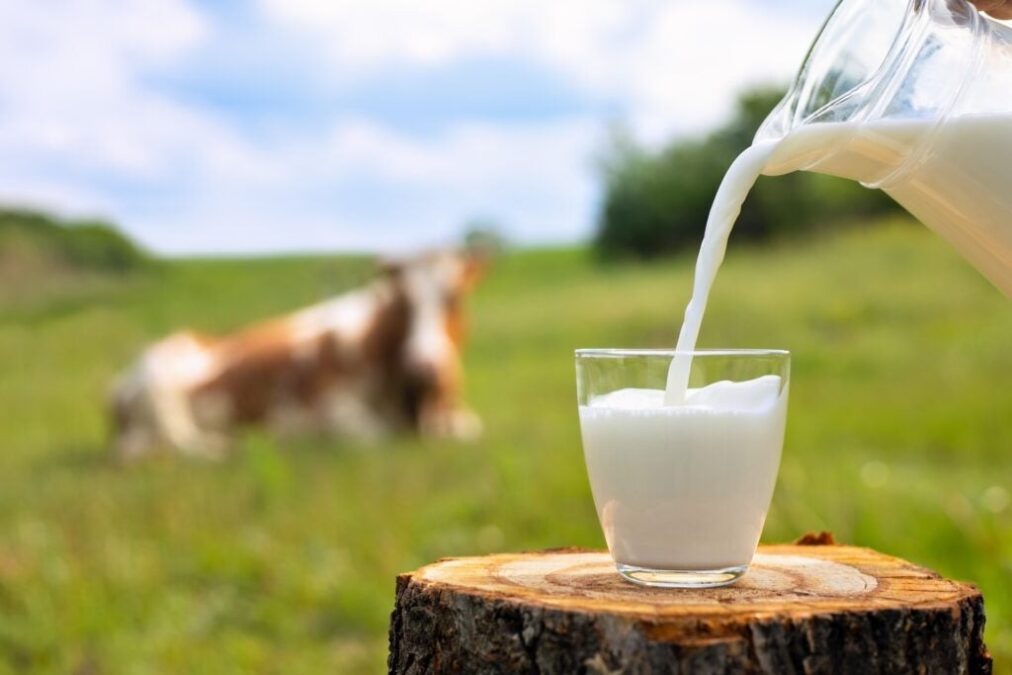
World Milk Day has been observed every June 1 since 2001, when the Food and Agriculture Organisation of the United Nations established it as a single global platform for a celebration that many countries were already holding independently. It has since grown into a campaign marked in more than 100 countries. Each year carries a theme; in 2026, that theme is “Celebrating Women Farmers,” a recognition of the more than 80 million women worldwide whose livelihoods are tied to dairy farming, among them nearly 37 million who head their own farms.
Across sub-Saharan Africa, 76 per cent of working women are employed in agrifood systems, yet access to land, credit, and markets remains disproportionately difficult for women farmers. World Milk Day 2026 offers a moment to name those doing the work anyway, building farms, processing plants, and supply chains from the ground up.
Nancy Abeiderrahmane — Mauritania
Nancy Abeiderrahmane is a British-born engineer who settled in Mauritania and, in 1987, founded Tiviski, Africa’s first camel milk dairy. At the time, there was no fresh pasteurised milk in Nouakchott; imported powdered and UHT milk from Europe was all city dwellers could buy. She secured a loan of approximately $195,000 from a French development fund to establish Tiviski, formally known as Laitière de Mauritanie, and began producing pasteurised camel milk in cartons for the local market. Today, Tiviski produces more than 20 products including fresh milk, yoghurt, cream, and cheeses from camel, cow, and goat milk, supplying pastoralists within a 90 km radius and supporting the livelihoods of more than 2,000 herders. The company received a $5.2 million investment from the International Finance Corporation in 2016 to expand production. Her daughter, Maryam Abeiderrahmane, now runs the company.
Azieb Tsegay – Eritrea
Azieb Tsegay is the founder of one of the largest private dairy farms in Eritrea. She ran a poultry operation in Dubarwa, a town approximately 30 km from Asmara, until a bird flu epidemic devastated her flock in 2007 and she pivoted to dairy, starting with just two cows. She has since grown her herd to more than 100 cattle, producing between 3,000 and 4,000 litres of milk per day. Working with Dutch experts, she trained in cheese production and today manufactures 19 varieties of soft and hard cheese alongside yoghurt and butter, supplying Eritrea’s mining industry as its lead dairy provider. Tsegay is also the Chairwoman of the Eritrean Women in Agribusiness Association, a network of over 70 members, and is widely credited as a visible model for female farmers across the country.
Nonny Penelope Wright — Botswana
Nonny Penelope Wright, known in her farming community as the “Mother of Cows,” founded Lopey Inc and the Sereledi dairy brand in 2013 in the Ngamiland region of north-western Botswana. Lopey Inc operates a complete dairy value chain, from raw milk production to retail-ready products including fresh milk, drinking yoghurt, and madila, a traditionally fermented milk, supplying schools and institutions across the region. In 2019, Wright lost 85 per cent of her cattle during one of Botswana’s worst droughts. She responded by applying for a land extension, introducing artificial insemination to rebuild her herd, and planning expanded irrigation infrastructure. Lopey Inc is currently the youngest female-run dairy in Botswana and Wright is an executive member of the Botswana National Dairy Association.
Tahiya Bauso Massawe — Tanzania
Tahiya Bauso Massawe is a dairy farmer in the village of Bumbisudi on the semi-autonomous island of Zanzibar. She has kept cows for 20 years and, in recent years, has become one of the more prominent voices for the transformation of smallholder dairy farming in Tanzania’s island region. In 2025, Massawe adopted Juncao grass technology, a high-yield livestock feed system developed by Chinese agricultural scientists at Fujian Agriculture and Forestry University and introduced to Tanzania through government-to-government agricultural cooperation programmes. After feeding the grass to her 30 dairy cows, she observed a clear increase in milk production, even during periods when commercial feed supplements were unavailable. The change in feed allowed her to build a relationship with agricultural lenders. Her farm now employs more than 16 workers. Massawe has publicly stated her intention to improve irrigation on her farm so that she can maintain consistent year-round production and support other women in Bumbisudi to join the same system.
Ruth Wakariti — Kenya
Ruth Wakariti is a dairy farmer in Gathiriti village, Nyeri County, in the highlands of central Kenya. She manages a household farm alongside her husband, Elias Goturuma, beginning her day at 5 a.m. with feeding, milking, and stall cleaning before their seven children wake for school. Wakariti and her husband supply milk through Wakulima Dairy Limited, a cooperative in Nyeri County founded in 1990 to collect and market members’ milk. Through the VWB/VSF VETS programme, an eight-year initiative running from 2020 to 2028, they received training in sustainable farm management, introduced new forage crops including Napier grass, Brachiaria, sweet potatoes, and arrowroot, built separate calf housing, and improved overall cow comfort. Wakariti leads the Gathiriti Dairy Farmers Group, a local farmers’ collective, and her story is consistently cited in agricultural development literature as an example of how access to training, market linkages, and gender-responsive technical support can improve the productivity and income of women smallholder dairy farmers.
Honourable Mention: Aisha Bashir — Nigeria
Aisha Bashir founded Cam Dairy Foods Limited in 2017, a pastoralist-driven dairy social enterprise in Abuja that partnered with over 400 pastoralists to produce locally sourced fresh milk, yoghurt, butter, and cream for Nigerian households. Central to her model was advancing women in the dairy supply chain, equipping female pastoralists and vendors with business skills, financial literacy, and food safety training. Cam Dairy Foods ceased operations in July 2025, a casualty of infrastructure deficit, and intense competition from subsidised dairy imports. The work Bashir did over nearly a decade remains a reference point for what a locally built, women-centred Nigerian dairy enterprise can look like.

Join BusinessDay whatsapp Channel, to stay up to date
Open In Whatsapp