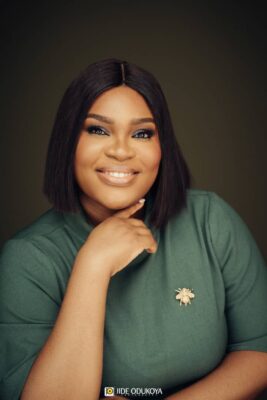
On the front lines of Nigeria’s oral health crisis is Funmi Adeniyi. She has spent the past seven years rewriting the narrative, one community at a time. As founder of Luxe Dental Clinic and the Smile Doctor Foundation, her work bridges private practice and grassroots outreach. She brings care and awareness to underserved populations often left behind. In this conversation marking World Oral Health Day 2026, Adeniyi speaks passionately about the importance of investing in healthcare at home, and why expanding dental institutions is critical to slowing the tide of talent lost to Nigeria’s “japa” wave.
What gap in dental care or patient experience made you start your own practice?
What pushed me to start my own practice was a gap I encountered, not just in patient care, but in how dental professionals themselves were treated. I had worked in several clinics where there was little structure; it showed in everything from operations to staff welfare. When I had my children and needed to go on maternity leave, I was not paid. I had to find my own replacement and go unpaid, while stepping away from work entirely. At the same time, I had friends and colleagues in corporate firms like PwC and KPMG who enjoyed paid leave and far more supportive systems.
Beyond that, I saw how poorly many dentists were compensated. I remember a younger colleague telling me he earned just N70,000; nearly four years after his NYSC. This is someone who had spent eight years training to become a medical professional. It did not sit right with me.
All of this made me realize there was a need to build something different; an institution with proper structure, fair compensation, and a more sustainable work culture. That pushed me toward entrepreneurship. One of the toughest moments, of course, was making the leap. I had spent years working across different clinics, and even managing one as a partner, but starting from scratch on my own was an entirely different challenge.
In your early years, what were the toughest moments, and what decisions helped you pull through?
I started on my own without outside financing; banks just were not lending at the time. It was the year after COVID, and they were especially hesitant to fund healthcare ventures because of the high default rates. So I used my savings, borrowed from my family, and decided to take the leap anyway.
But I kept asking myself, “What if I fail? Then I felt a nudge in my spirit like God saying to me, “What if you fly?” That beginning phase of taking the risk, stepping into the unknown, was the hardest part.
How do you balance being a hands-on clinician with being the CEO of a growing business?
I’ve balanced being a hands-on clinician with leading a growing business by committing to continuous learning. I’m constantly learning the business side of things. Medical school doesn’t really teach you how to run a practice or navigate the business of healthcare, so I’ve had to be intentional about building that knowledge over time.
Last year, I attended Lagos Business School, and I also completed an online diploma in healthcare management from the university in Washington. I’m an alumna of the Academy for Women Entrepreneurs, a U.S. government-led initiative focused on equipping women with core business skills. Over the years, that commitment to learning has shaped how I lead and grow my work.
I have built my business so it doesn’t revolve around me. It has structure, systems, and a life of its own, which gives me the freedom to focus on what matters most. I no longer handle every procedure. I have entrusted many of them to younger doctors and therapists, while I concentrate on the ones that require more advanced expertise.
We have also put clear systems in place. With our SOPs, everyone knows exactly how things begin and how they should be completed. There is consistency, standardization, and a shared understanding across the team.
How do you keep your practice profitable while running a community-focused initiative, Smile Doctor Foundation?
We keep a close eye on our numbers because it is not just about revenue, it is about profitability. We are constantly reviewing our cost of sales and making adjustments where needed, especially since dentistry is largely dollar-denominated. Most of our equipment and materials are imported, and we don’t produce them locally in Nigeria.
So when the dollar rises, we often have to adjust our pricing to stay sustainable. The same goes for increases in fuel costs, which directly affect our day-to-day operations. It is an ongoing process of monitoring, evaluating, and adapting to protect the health of the business.
We are also intentional about impact. A portion of our profits goes into funding our community initiatives, but we don’t carry that responsibility alone. We have built partnerships over time with Lagos State, the wife of the Olu of Warri, Colgate, and several NGOs, including collaborations in Benue state just last year. Those partnerships help us extend our reach while sharing the load.
Which key systems or structures helped move your practice from surviving to growing?
Showing up consistently is what builds a brand that becomes synonymous with excellence and expert care. Over time, that consistency speaks for itself through patient testimonials and referrals, as satisfied clients share their experiences and bring others along.
At the same time, we keep expanding what we offer while staying committed to growth. We’re continuously improving our digital capabilities and investing in the best equipment so we can deliver top-quality care. Just as importantly, we prioritize ongoing staff training, making sure everyone stays up to date and aligned with current standards and realities in the field.
What do you think about scaling (more locations, services, or products) and when to expand?
We are stepping into a new phase now where we focus on scaling the business. It starts with building the right structure to support that growth. We’re documenting and templating everything we do, and putting strong leadership systems in place so that as new arms of the business open, there are capable people ready to lead them.
We are also exploring new product and service lines to expand our offerings. Recently, we took delivery of a computerized cone beam tomography machine, which gives us detailed 3D views of the head and neck. It is a major upgrade that will elevate the quality of our implants, veneers, orthodontic treatments, and overall patient care.
What mindset shifts around risk money and failure should dentists make to become entrepreneurs?
Young dentists have to be willing to take risks, especially in Nigeria, where there is very little safety net. You have to adopt the mindset of, what is the worst that could happen? Even if things don’t go as planned, you can start again. Risk-taking, paired with resilience, is essential.
At the same time, commit to lifelong learning. Stay humble enough to seek out people who have done it well. Ask questions, learn from their journey, and understand what worked for them. That openness can accelerate your growth in ways nothing else can.
It is also important to reshape how you think about money. This is not about quick wins; you have to be in it for the long haul. For me, it is about building lasting relationships. I tell my patients we are here to walk through life with them, with their children, and even their grandchildren. Patient satisfaction is our highest priority. We are willing to take a short-term loss if it means building long-term trust. No cutting corners, no chasing quick money at the expense of quality care.
What is your 5 to 10 year vision for your practice and initiative, and what strategic moves are you making now?
My five-to-ten-year vision is to build a globally scalable brand. By the 10th year, we aim to have multiple locations both within Nigeria and beyond. We want to position ourselves as a pan-African reference for dental excellence. We want to be the name people think of when discussing dentistry in Africa, and once we have achieved that, we can look to expand even further globally.
We also want to lead in oral health advocacy and champion the knowledge that everyone has a human right to access proper dental care. We are open to partnerships that allow us to reach underserved communities and provide free dental care and education on how to maintain healthy mouths.
We are laying the groundwork strategically now. We are building structures and systems designed to support the growth and scale we are planning. We want to ensure that when expansion happens, it is sustainable and impactful.
Is there anything else you would like to add?
I want to say that there are real opportunities in Nigeria, and I’m proud to be one of the few in dentistry who chose to stay. Many see no hope and leave. But yes, building here is hard, and yet it is rewarding when you see the possibilities unfold. There is no safety net from the government or even from people around, but we can create one for the next generation.
I want to encourage everyone to see these possibilities and to come together. Private institutions, financial bodies, and parastatals all have a role to play in investing in healthcare. We can’t keep outsourcing the health of our people to foreign investors or others; we must take ownership. Let’s invest in group practices, fund clinics, provide ambulances, and generally invest in the health of our nation.
Currently, the dentist-to-patient ratio in Nigeria is roughly 1 to 50,000. That’s a huge gap. We need to build dental schools, train more dentists, and create a future where dental practitioners have opportunities and hope here at home. Healthcare investment is not just a business; it is a long-term commitment to the wellbeing of our people.
And to everyone personally: your mouth reflects your overall health. Dental care isn’t isolated. Visit a dentist every six months, brush twice daily, and floss daily, because your toothbrush alone is not enough. Your health starts with prevention.

Join BusinessDay whatsapp Channel, to stay up to date
Open In Whatsapp