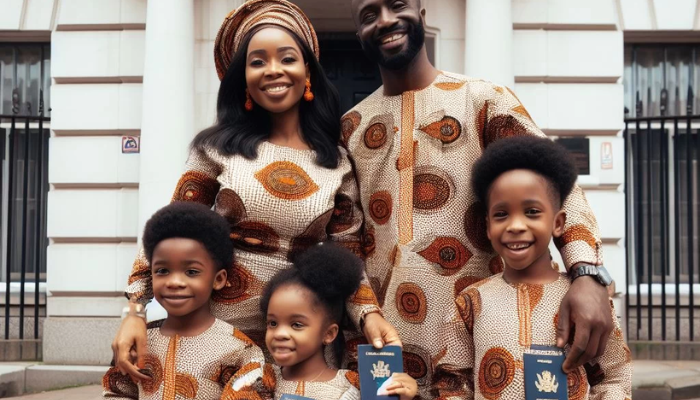
Most parents assume their children’s citizenship is fixed at birth. In fact, childhood is a window during which a family can shape citizenship options, and most routes become harder, slower, or closed once a child reaches adulthood. This window has become a priority for wealthy families across Africa.
The World Citizenship Report 2026 (WCR), produced by CS Global Partners, found that family security and generational protection now rank as the leading reason behind a second citizenship, ahead of planning for instability and ahead of asset protection or financial gain. Access to education and healthcare for family members ranked above business expansion. Parents, the data suggests, view citizenship as a plan spanning generations rather than a hedge for themselves alone. They want their children to study and work anywhere in the world, without visa restrictions, limited scholarships, or reliance on one country’s passport.
Behind this urgency lies a drop in confidence around governance, a trend affecting high-net-worth families worldwide, and one that carries particular weight for African families. The WCR found that only 33.5% of high-net-worth individuals remained confident their existing citizenship would provide the same security over the next decade. Around 27% had lost confidence altogether and were seeking a second citizenship for their families.
Read also: Parents race to lock in citizenship options for children before rules tighten further
For African parents, this concern often sits alongside a separate, long-standing frustration: the limits a single African passport places on travel, business, and study abroad. A second citizenship addresses both issues at once, offering a hedge against instability at home and freer movement internationally.
For some African families, particularly those with documented ties to Europe through colonial-era migration, intermarriage, or earlier generations who held foreign nationality, a citizenship claim may already exist in the family record. Several European countries grant citizenship to descendants of former nationals, meaning a child could hold a second citizenship without the family ever relocating. These routes are narrowing everywhere. Italy has placed a limit on how far citizenship can pass down the generations. Portugal has tightened its residence and connection requirements. Documentary standards are rising across the board.
Such claims also fade with time: relatives who can confirm a lineage die, and records grow harder to trace. A claim that requires little more than paperwork for a young child can become impossible for the same person once they are an adult.
Time spent in a country may be the greatest advantage a parent can offer. A child who lives, studies, and speaks a country’s language builds up the physical presence, school records, and fluency that naturalisation systems demand, and that adults cannot purchase or backdate. Language requirements that hold up adult applicants for years become routine for a child who grows up speaking the language at home or in school.
Where family history offers no claim, and relocation is not practical, investment migration provides an alternative. Citizenship and residence by investment programmes are built to include spouses and dependent children in a single application, at a fraction of the cost of standalone routes, with timelines measured in months rather than generations.
The Caribbean’s programmes illustrate this focus on family, and have drawn interest from African applicants seeking a second passport with strong travel access. St Kitts and Nevis runs the world’s longest-standing Citizenship by Investment Programme, set up in 1984, giving parents four decades of continuity to weigh against a decision meant to outlast them.
Both St Kitts and Nevis and Dominica allow applicants to include a spouse and dependent children in a single application. Neither imposes a residence requirement, and both recognise dual citizenship, meaning children keep their nationality of birth alongside the new one. Both countries are English-speaking members of the Commonwealth with stable governments. Both have channelled application proceeds into schools, hospitals, and climate resilience, through St Kitts and Nevis’ Sustainable Island State Contribution and Dominica’s Economic Diversification Fund, the same areas of security that parents say they are seeking for their children.
For African families weighing these options, the message from the data is consistent: the earlier the decision, the wider the range of choices available, and the lower the cost of keeping them open.

Join BusinessDay whatsapp Channel, to stay up to date
Open In Whatsapp