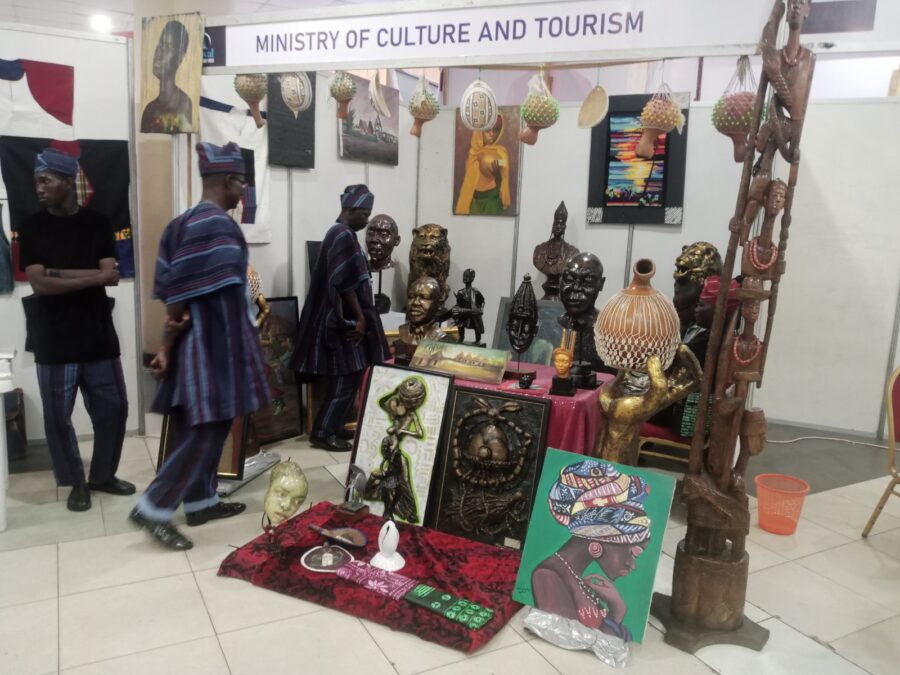
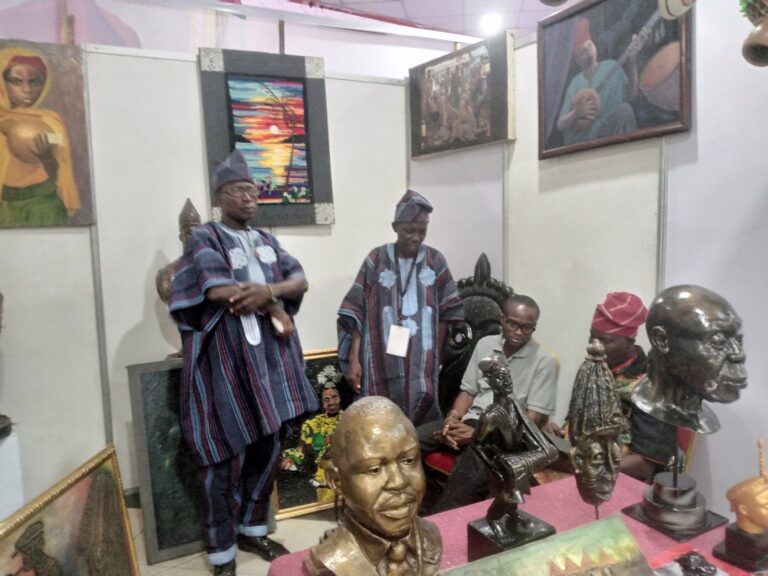
Inside the International Conference Centre in Ibadan this week were dignatries, stakeholders, investors and partners who had gathered for the 3rd International Tourism Summit in Oyo State.
The summit focused on building a tourism ecosystem that would endure beyond the current administration and deliver long-term value to the people of Oyo.
Abigail Anaba, the Secretary of the #ITSOyoState2026 Organising Committee disclosed that about three years ago when Seyi Makinde, the governor of Oyo State was returned for a second term in office, the Ministry of Culture and Tourism was created.
According to Anaba, tourism was identified as one of the core economic pillars to drive the governor’s second term in office.
She noted that before then, efforts had been made to harness the potential of tourism within the State and Oyo State has some really iconic and amazing attractions:
Bower’s Tower, Ibadan, Iyake Lake which is one of only two suspended lakes in the world; Festivals such as World Twins Festival Igbo- Ora, World Sango Festival Oyo and phenomenal palaces built on potentially immersive storytelling, such as the tales of Elemoso in Ogbomoso.
Anaba however stated that tourism economies are not built on attractions, adding that if all it took to build a tourism economy was having attractions, many places would already be thriving tourism zones.
“Attractions, on their own, do not create value. They do not generate sustained revenue. What creates value is structure.
What sustains value is governance.
And this is the shift that Oyo State has been making over the past three years,” Anaba said.
She recalled that back in 2024 when the first edition of the international tourism summit was held, the focus was alignment, “bringing stakeholders into the same conversation. Establishing that tourism is central to economic development, as encapsulated in Oyo State’s economic blueprint.
She however stated that in 2025, the focus shifted to structure which means
thinking in terms of frameworks.
“The question shifted from “what do we have?” to “How can what Oyo State has be organised, prioritised, and developed.”
She stressed that in 2026, the focus is governance.
“Putting in place the systems, the processes, and the institutional coordination required to ensure that tourism development is intentional.”
According to her, Oyo State is moving from showcasing assets to governing a tourism economy, adding that without coordination, structure, system to connect them, thepotential remains just that potential unrealised.
“So, what you are seeing in Oyo State is a deliberate move away from that model.
Starting from yesterday, all 33 LGAs were engaged, first in a one-hour workshop on how they can build tourism economies that will fit into the larger State framework.
“They were also taken round some state developments to help them see tourism in action.
“They toured the Oyo State Agricultural Transformation Centre, Fasola so they can see firsthand the potentials of agritourism, then they visited lyake Lake in Oke-Ogun where they saw how a heritage site could be turned into an economic driver and finally, they visited KAP Film Village, Igbojaiye to underscore the fact that there is no such thing as, “this place is too far from Ibadan” when it comes to tourism development. All that is needed is infrastructural connectivity.”
Anaba insisted that governments do not build tourism economies alone but create clarity of direction, structure and opportunity.
She said where there is clarity, there is confidence and where there is confidence, investment follows.
25-year Tourism Master Plan
The highlight of the event was during the launch of the ambitious 25-year Tourism Master Plan and the Eleyele Lake Development Framework.
The roadmap provides a long-term strategic blueprint designed to transform the state’s creative economy into a primary driver of sub-national GDP.
According to Kola Lawal, a member of the Tourism Master Plan Committee, the project is anchored on a Public-Private Partnership (PPP) model that offers significant incentives for investors.
The plan targets the development of at least 33 distinct tourism resources, with Ibadan designated as the central “creative economy hub” for film, music, fashion, and performing arts, amongst others.
To ensure the project outlives current political cycles, Lawal disclosed that the state is adopting a “Rapid Expansion Model” divided into three critical phases: a foundational pilot stage, a cluster development stage, and a final phase focused on global positioning.
This structured approach aims to build a sustainable and resilient ecosystem that thrives independently of administrative changes.
The results of this “groundwork” are already reflected in the data. Since the inception of Governor Seyi Makinde’s administration, visitor numbers have surged from a modest 1,600 to over 18,000. During the same period, the hospitality sector saw exponential growth, expanding from 1,320 businesses to more than 12,000 across the state.
From Groundwork to Governance
At the Summit, Governor Seyi Makinde laid out his vision arguing that for tourism to become a viable economic pillar, it must move beyond “sweet talk” and into institutionalized systems.
Governor Makinde cited the 110-kilometer Ibadan Circular Road—conceived in the early 2000s but stalled for two decades across five administrations—as a cautionary tale of “scuttled progress.”
“Progress driven solely by leadership is not enough because leadership changes,” Makinde told investors. “If I make a mistake, it’s a one-day event, but the impact lasts four years. We are building structures that ensure progress does not depend on individuals. This is institutionalization.”
To prove this isn’t just theory, the Governor highlighted the 25-year Tourism Master Plan and the recent signing of a 15-year concession agreement with SystemSpecs Ltd for the redevelopment of the iconic Bower’s Tower.
A key highlight of the administration’s “groundwork” is the 180-kilometer stretch of pothole-free state roads connecting Moniya, Iseyin, Ogbomoso, and Oyo. This connectivity is designed to shrink the travel time between heritage sites like the Iyake Suspended Lake and creative hubs like the KAP Film Village in Igbojaiye.
Turning Film Production into Infrastructure
For visionary filmmaker Kunle Afolayan, founder of the KAP Film Village and Resort, a search for a cinematic backdrop has evolved into a masterclass in infrastructure development and tourism scaling.
Afolayan who also spoke during the Summit in Ibadan, revealed that while the initial goal for the site was purely cinematographic—seeking an authentic “visual world” for his epic production, Anikulapo—the result was the birth of a permanent tourism asset that is now redefining the local economy.
By choosing Igbojaye for its mountains and cultural resonance, the production “exposed a larger opportunity” to move beyond a temporary movie set.
“Oyo can turn culture into a destination,” Afolayan asserted. “Film creates visibility, and culture gives meaning. Hospitality captures spend, while agriculture deepens the supply chain. The goal was cinematography, but the result was infrastructure.”
For investors, the KAP Village serves as a blueprint for how the creative arts can “unlock scale” and provide a sustainable return on investment when paired with the state’s burgeoning infrastructure.
Institutionalisung Tourism for Survival
Kayode Fayemi, former governor of Ekiti State while speaking as the Special Guest of Honor at the 3rd International Tourism Summit in Oyo State.
Reflecting on his tenure and the current strategic trajectory of the Governor Seyi Makinde administration, Fayemi argued that the critical difference between mere aspiration and true transformation lies in the creation of enforceable frameworks that survive political cycles.
Fayemi lauded Oyo State’s unveiling of a 25-year Master Plan, noting that success in tourism only occurs when ambition is codified into policy and policies are matured into resilient systems.
“Tourism succeeds when ambition becomes policy, when policy becomes systems, and when systems become institutions,” Fayemi stated. “The intention must be to build frameworks that survive political cycles, so future administrations do not need to reinvent the wheel.”
Drawing parallels from his experience in Ekiti, Fayemi recounted the “Herculean task” of taking over a state in 2010 with an internally generated revenue (IGR) of just N109 million a month—a figure that barely covered civil service salaries. At the time, he noted, “growth was a luxury.”
To unlock assets like the Ikogosi Warm Springs and the Arinta Waterfalls, Fayemi said his administration had to stop asking what the government could fund and start asking what the state could become. This shift reframed tourism not as a luxury project, but as a multi-sectoral activator for transportation, education, and infrastructure.
While natural assets like Oyo’s Iyake Lake or Ekiti’s Rolling Hills are “magnets of attraction,” Fayemi warned that they remain untapped economic opportunities without the necessary infrastructural enablers.
“Sites are the magnets, but sites will not help if you don’t provide the enablers for them to become attractive for the purpose in which they were envisioned,” he concluded, urging Oyo State to remain focused on the “Ecology Hub” strategy that integrates environment, infrastructure, and culture into a single investment-ready product.

Join BusinessDay whatsapp Channel, to stay up to date
Open In Whatsapp