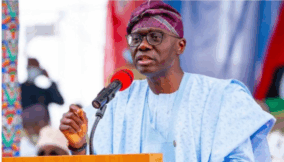
Alvin Kan, chief operating officer, Bitget Wallet, on crossing 100 million users and Nigeria’s shift from trading to payments Bitget Wallet, the self-custodial crypto wallet, recently announced it has surpassed 100 million users worldwide, with daily payment users outnumbering traders for the first time in the platform’s history. Africa features among its fastest-growing markets.
ROYAL IBEH puts the following questions to Alvin Kan, chief operating officer of Bitget Wallet, on what is driving that shift and what it means for Nigerian users.
Bitget Wallet just crossed 100 million users globally, and for the first time, payments have overtaken trading. What actually changed?
So, honestly, it didn’t feel like one single moment on our end. More than half of our 100 million users are in Southeast Asia, South Asia, Africa and Latin America, and somewhere over the last year and a half, what they were doing with the wallet stopped looking like trading and started looking like banking. Our message has been clear; we want crypto to function as a solution, and as part of the users’ daily lives: getting paid into it, holding a balance in dollars or spending it.
We built the cards, the QR payments, the direct bank links mostly because users kept asking for pieces of it, and then, the data team pulled the numbers and payments had just overtaken trading.
Africa, especially Nigeria, is named as one of Bitget Wallet’s fastest-growing markets. What is actually driving that on the ground?
Now, two things, and neither of them is really about crypto. The naira lost more than 40 percent of its value against the dollar in 2024. Remittance corridors into Nigeria still charge somewhere around 5 to 8 percent per transfer. That’s it, that’s the whole explanation. People didn’t need persuading.
Walk us through what a payment on Bitget Wallet looks like for a typical Nigerian user today, compared with two or three years ago?
Two or three years ago? Mostly trading. You held something, watched the price, moved in and out. Now, for a growing number of users, someone gets paid by a client abroad, it lands in dollars, and they spend it on a card, right, without it touching a bank the way we’d traditionally think about that. Globally, Bitget Wallet Card holders average around 10 payments a month, about $28 each. That’s debit card behaviour, not trading behaviour.
You have built direct bank integrations into Nigeria. What does that actually connect to, and why does it matter?
So it connects the balance in the wallet to the bank rails people already use to receive and spend money. Nigeria is one of the markets where we built that first, because the demand was clearest there. I won’t pretend it was a hard call to make.
Card spend in emerging markets grew 416 per cent in the first half of 2026, more than double the global growth rate. Why are markets like Nigeria moving faster than the rest of the world?
Right, because the alternative is worse. If the currency is stable and the banking system is fast and cheap, a crypto card is a nice-to-have. But when a currency loses value steadily or over a short period of time, it’s closer to a necessity. People increasingly hold their savings in stablecoins to preserve value, and crypto cards let them spend those digital dollars directly on everyday needs. I’m not sure that’s a flattering thing to say, but it’s the honest situation in the market.
Remittances into Nigeria remain expensive through conventional channels. How does Bitget Wallet change that cost equation for an ordinary user or small business?
So a conventional remittance into Nigeria usually passes through several intermediaries, and each one takes a cut, somewhere around 5 to 8 per cent of the transfer in total. Move the value onchain instead, right, and a lot of those intermediaries just aren’t in the transaction anymore. For a family, that’s money that stays in their pocket. For a business paying overseas suppliers, it’s the kind of saving that actually shows up on the books by the end of the year.
Self-custody is central to how Bitget Wallet describes itself. Why does that distinction matter to a Nigerian user choosing a wallet over, say, a centralised exchange?
Users in Nigeria have good reason to ask whose money it actually is. Now, with a self-custodial wallet, you hold the keys. We can’t freeze the balance, and it isn’t sitting on our books the way an exchange or a neobank holds customer funds. That matters more in a market that has watched exchanges and banks freeze withdrawals overnight.
We back it with a protection fund north of $300 million and outside audits, because I don’t think self-custody means much on its own if the security behind it is weak.
You came to Bitget Wallet from LinkedIn, then BNB Chain, then Sei Labs. How has that path shaped how you think about scaling a product like this in a market like Nigeria?
LinkedIn taught me that scaling internationally is as much an organisational challenge as a product one. Leading teams across Asia-Pacific showed me the importance of building local talent, creating clear operating structures and simplifying the product without assuming every market behaves the same way.
BNB Chain and Sei then taught me how onchain ecosystems grow and what infrastructure needs to support that growth. In Nigeria, those lessons come together: it is not a market you can localise as an afterthought. You need local teams, compliant partners and products built around real needs—access to digital dollars, reliable on- and off-ramps, and everyday payments.
What infrastructure sits behind these numbers, the Onchain Payments Matrix specifically, and how is it different from how crypto wallets worked when Bitget Wallet launched in 2018?
So, in 2018, Bitget Wallet began as one of the first multi-chain wallets, focused on self-custody and cross-chain connectivity. As user needs expanded, we added onchain trading and broader access to decentralised applications.
Since early 2025, we have built out a full crypto payment stack, including crypto cards, QR payments, bank transfers, an in-app shop, and cash-in and cash-out, so users can put their onchain assets to work beyond the crypto market. The Onchain Payments Matrix is the plumbing that enables it to function as a payment account: more than 80 payment rails, over 100 currencies, and nearly $177 billion in stablecoins settled to date. When someone in Lagos taps their card, there’s an entire routing and settlement system underneath that transaction that simply didn’t exist a few years ago.
Nigerian regulators have been moving toward clearer frameworks for digital assets. From where you sit, what does a constructive regulatory relationship with a market like Nigeria look like for Bitget Wallet?
Now, clarity, mostly, and regulators engaging with what people are actually using this for rather than a generic idea of what crypto is. Nigeria moving toward a structured framework under the Investments and Securities Act, with SEC oversight, is a constructive direction, because it separates the platforms taking custody risk seriously from the ones that aren’t.
We’d rather operate with clear rules than somewhere with none.
Looking ahead, what does success look like for Bitget Wallet in Nigeria and West Africa a year from now, beyond user numbers?
Right now, using a crypto wallet for everyday payments is still a deliberate choice. In a yea,r I’d like it to be really, really unremarkable, as unremarkable as tapping a debit card: more merchants taking it without friction, more direct bank links, a card that works the same whether someone is paying a supplier in Lagos or a subscription somewhere else.
The trading numbers are quite exceptional, but I also see them as signs of events to come. We might see a future where people have stopped thinking about this as just crypto.
You have written elsewhere about AI’s role in extending financial inclusion across Africa, using alternative data instead of formal credit history. Where do you see that intersecting with what Bitget Wallet is building in Nigeria?
That is really a data problem more than a crypto one. Traditional credit scoring shuts people out because they don’t have a formal financial record, not because they’re bad risks. AI can read signals that already exist, you know, how someone uses their phone, their transaction history, the kind of activity a wallet naturally generates, and use that instead.
In a market like Nigeria, where a lot of economically active people never had the paperwork banks ask for, that’s a real unlock. I’d measure it by fairly ordinary numbers in the end: tens of millions of people onboarded into formal financial systems, and I mean tens of millions, not a pilot program, default rates that stay low, fintech’s share of GDP in places like Nigeria and Kenya going up. Not flashy, just fewer people locked out.

Join BusinessDay whatsapp Channel, to stay up to date
Open In Whatsapp