…America’s $30 billion on digitalisation left students less cognitive
As parts of the developed world begin to question the learning gains, screen time impact, and long-term value of heavy classroom digitalisation, Nigeria seems to be moving in the opposite direction.
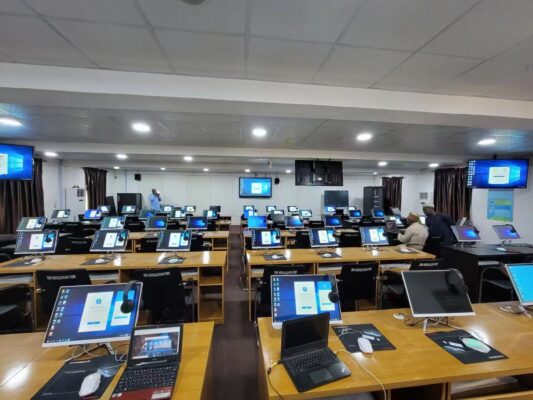
Across federal and state systems, policymakers are investing in smart classrooms, equipped with interactive boards, internet connectivity, learning tablets, and digital content platforms, framing them as a fast track to improving access, quality, and global competitiveness.
The contrast is striking, while education authorities in advanced economies debate scaling back devices and re-emphasising traditional teaching methods, Nigeria is doubling down on technology as a catalyst for reform.
The country’s push reflects both urgency and ambition: to close learning gaps, modernise instruction, and prepare a rapidly growing youth population for a digital future.
In Lagos, Edo, and Bayelsa States, there are EKOEXCEL, EDOBEST, and BayelsaPRIME models to upscale children’s digital skills. While in Anambra and Enugu States, the government established smart schools across the local government areas to aid digital teaching and learning.
However, the reverse seems to be the case in some developed countries, for instance, Denmark, once heralded as a trailblazer in adopting digital tools for education, is now rethinking its stance.
Danish schools are increasingly turning away from technology in the classroom, favouring a more traditional approach.
Norway, Netherland and Australia, among others, are also rethinking their positions concerning digitalisation in classrooms.
Earlier this year, in written testimony before the U.S. Senate Committee on Commerce, Science, and Transportation, neuroscientist Jared Cooney Horvath said that Gen Z is less cognitively capable than previous generations, despite its unprecedented access to technology. He said Gen Z is the first generation in modern history to score lower on standardized tests than the previous one.
While skills measured by these tests, like literacy and numeracy, aren’t always indicative of intelligence, they are a reflection of cognitive capability, which Horvath said has been on the decline over the last decade or so.
Citing Programme for International Student Assessment data taken from 15-year-olds across the world and other standardized tests, Horvath noted not only dipping test scores, but also a stark correlation in scores and time spent on computers in school, such that more screen time was related to worse scores.
He blamed students having unfettered access to technology that atrophied rather than bolstered learning capabilities. The introduction of the iPhone in 2007 also did not help.
“This is not a debate about rejecting technology,” Horvath wrote. “It is a question of aligning educational tools with how human learning actually works. Evidence indicates that indiscriminate digital expansion has weakened learning environments rather than strengthened them.”
This is coming after the U.S. has spent more than $30 billion putting laptops and tablets in schools. But more than a quarter century and numerous evolving models of technology later, psychologists and learning experts see a different outcome than the one intended. Rather than empowering the generation with access to more knowledge, the technology had the opposite effect.
Meanwhile, schools in England would be forced to ban mobile phones under government plans. Teachers have long voiced concerns that smartphones distract pupils and can add to problems such as bullying.
Paul Whiteman, NAHT general secretary said it would give clarity and remove any ambiguity or differences between how schools approach smartphone policies.
“Schools will only then need to decide how to implement and enforce a ban across their school community and the government must provide any support they require to do so effectively,” Whiteman said.
In choosing to double down on smart classrooms, Nigeria is not ignoring global caution, it is redefining it.
The focus is shifting from hype to impact, from access to actual learning gains. If sustained, this approach could position the country as a model for pragmatic, results-driven edtech adoption.

Join BusinessDay whatsapp Channel, to stay up to date
Open In Whatsapp