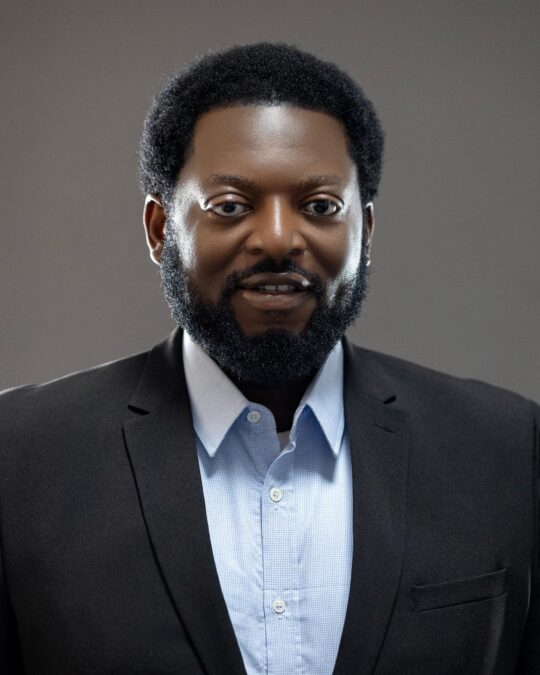
As Marketsquare marks its 10th anniversary, the indigenous retail chain stands as one of Nigeria’s notable business success stories, having grown from a single store in Yenagoa to a nationwide network serving millions of customers. In this interview with Joseph Olaoluwa, Founder and Chief Executive Officer of Sundry Markets Limited, Ebele Enunwa, reflects on the company’s growth journey, the evolving retail landscape, the opportunities and challenges facing the sector, and Marketsquare’s vision for the future.
Marketsquare recently marked its 10th anniversary. Looking back, what would you describe as the defining milestones that have shaped the company’s journey?
The first milestone was simply having the courage to begin.
When we opened our first Marketsquare store in Yenagoa in 2015, many questioned the decision. Some wondered why we would choose a city that was not considered one of Nigeria’s major commercial centres. But our belief was straightforward: every Nigerian community deserves access to a modern, clean, and reliable retail experience. The important thing was not where we started; it was that we started.
From that single store, we have grown into what is today Nigeria’s largest indigenous grocery retail chain, operating 41 stores across 19 cities in 15 states. That journey has been built on disciplined execution rather than rapid expansion for its own sake.
Another defining milestone has been the trust we have earned from customers. Retail is one of the few businesses where consumers decide on your brand almost every day. Sustaining that trust over ten years is something we are particularly proud of.
Equally significant has been our impact on the economy. Today, we directly employ more than 4,000 Nigerians, work with over 900 suppliers, many of them local businesses, and serve more than two million customers every month. Those numbers represent livelihoods, partnerships, and communities that have grown alongside us.
Nigeria’s retail landscape has evolved significantly over the past decade. How has Marketsquare adapted to changing consumer behaviour and market realities?
The Nigerian consumer has become more discerning, more value-conscious, and more demanding. They are looking for quality, convenience, and affordability simultaneously.
Our approach has always been to listen carefully to customers and adapt continuously. We have invested significantly in improving store layouts, expanding product offerings, strengthening our supply chain, and ensuring that customers enjoy a pleasant shopping environment regardless of location.
Economic realities have also required us to become extremely agile. Exchange rate volatility, inflation, energy costs, and logistics challenges have fundamentally changed the retail business.
Rather than seeing these as barriers, we have focused on improving operational efficiency, strengthening relationships with local suppliers and making better use of technology to optimise inventory and reduce waste.
Retail success today is less about size and more about resilience, efficiency, and customer trust.
Marketsquare has expanded from a relatively modest footprint to one of Nigeria’s leading indigenous retail chains. What strategic decisions have driven this growth?
Our growth has never been accidental. From the beginning, we made three deliberate strategic choices.
First, we focused on operational excellence before expansion. Every new store had to meet the same standards of customer experience, product quality, and operational discipline.
Second, we invested heavily in our people. Retail is ultimately a people business. Buildings do not serve customers – people do. We have therefore prioritised recruiting, training, and empowering employees who understand our culture of service.
Third, we believed strongly in Nigeria’s long-term potential. While many investors focus primarily on major cities, we recognised opportunities across different parts of the country. That philosophy has enabled us to expand sustainably while remaining close to the communities we serve.
Many Nigerians wonder about the origins of Marketsquare. How important is it to clarify that Marketsquare is a wholly Nigerian-owned retail business?
It is extremely important because facts matter. Marketsquare is proudly majority Nigerian-owned, Nigerian-led, and deeply invested in Nigeria’s future.
Our founder is Nigerian. We started business here in Nigeria and our management is almost entirely Nigerian. Our employees are overwhelmingly Nigerian. Our suppliers are largely Nigerian businesses. The value we create remains within the Nigerian economy.
Every store we operate supports Nigerian families through employment, local sourcing, tax contributions, and investments in communities. When customers shop at Marketsquare, they are supporting a homegrown business that is creating opportunities across the country. That message deserves to be understood clearly.
Indigenous retailers often face significant challenges ranging from infrastructure deficits to foreign exchange pressures. How has Marketsquare remained resilient despite these realities?
Resilience has become one of our greatest competitive advantages. We operate in an environment where businesses must contend with unreliable power, logistics challenges, fluctuating exchange rates, and inflationary pressures.
Rather than waiting for perfect conditions, we have focused on building systems that can adapt. We continue to invest in operational efficiency, energy management, supply chain optimisation and technology.
Equally important is our culture. Our people understand that challenges are part of doing business in Nigeria, but they also understand that innovation often emerges from adversity.
That mindset has enabled us to continue expanding despite one of the most challenging business environments in recent history.
What role do Nigerian manufacturers, farmers, and local suppliers play within Marketsquare’s business model?
They are central to our business. Our success is closely linked to the success of Nigerian producers.
Over the years, we have built relationships with hundreds of local suppliers because we believe modern retail should strengthen domestic value chains rather than depend excessively on imports.
When we support Nigerian manufacturers, farmers and SMEs, we are helping to create jobs, stimulate local production and improve economic resilience.
We also recently launched initiatives such as Retail Ready to help MSMEs become better prepared for growth, compliance, and market access because strengthening the retail ecosystem benefits everyone.
Technology is increasingly shaping retail globally. What investments is Marketsquare making in digital retail and operational efficiency?
Technology is no longer optional; it is fundamental to modern retail.
Our Vision 2030 strategy places strong emphasis on digital transformation, improved customer experience, operational intelligence, and data-driven decision-making. We are exploring AI-enabled retail solutions alongside investments in systems that improve inventory management, convenience and service quality.
For us, technology is not about replacing people; it is about empowering our teams to serve customers more efficiently and creating a more seamless shopping experience.
How do you see organised retail evolving in Nigeria over the next decade?
I believe we are only at the beginning. Nigeria has one of Africa’s largest consumer markets, yet organised retail still represents a relatively small share of total commerce.
As urbanisation increases, infrastructure improves, and consumer expectations continue to rise, organised retail will become increasingly important.
The businesses that will succeed are those that combine technology, operational excellence, local partnerships, and deep customer understanding.
The future belongs to retailers that are trusted by their communities and agile enough to respond to change.
Looking ahead, what does the next phase of Marketsquare’s growth look like?
Our ambition is not simply to become bigger; it is to become better.
The next decade will focus on expanding responsibly into underserved communities, deepening investments in technology, strengthening sustainability initiatives, developing our people, and continuously raising the standard of customer experience.
Ultimately, our vision is to build a Nigerian retail institution that will endure for generations. Ten years have given us confidence. The next ten years present an even greater opportunity to demonstrate what an indigenous Nigerian company can achieve through purpose, discipline, and innovation.

Join BusinessDay whatsapp Channel, to stay up to date
Open In Whatsapp