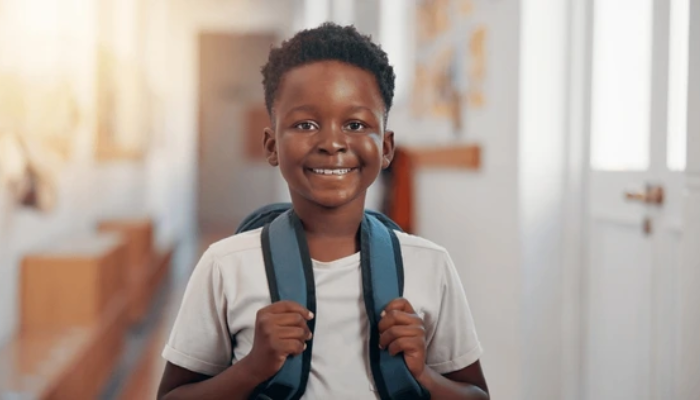
Observed on 16 May, the day calls on families, governments and communities to see the boy child, not just his silence
Every year on 16 May, the world observes the International Day of the Boy Child. The day was founded in 2018 by Dr Jerome Teelucksingh, a sociology and history lecturer at the University of the West Indies in Trinidad and Tobago. He did not create it to compete with girls’ rights. He created it because he saw boys slipping through the cracks quietly and without anyone noticing.
There are nearly one billion boys under the age of 15 on this planet. They enter life with vibrant curiosity and emotional openness, full of questions, full of wonder. Yet somewhere between childhood and adulthood, something shifts.
The questions stop. The wonder fades. And the boy who once spoke freely learns, instead, to go quiet. That silence is what this day exists to break.
A problem hidden in plain sight
When people speak of children at risk, the image that comes to mind is rarely a boy sitting alone at the back of a classroom, disengaged and falling behind. Yet the data tells a story that is difficult to ignore.
UNESCO reports that for every 100 women enrolled in tertiary education worldwide, only 88 men are enrolled. In 73 countries, fewer boys than girls are registered in upper-secondary schools. These are not small margins. They represent millions of boys who are leaving education early and taking their potential with them.
UNESCO data also showed that boys were more likely than girls to repeat primary grades in 130 out of 142 countries studied. Reading performance data from 57 countries showed 10-year-old boys consistently scoring below girls. The gap begins early, and without intervention, it widens.
Outside the classroom, the picture is no less sobering. Boys account for the majority of juvenile detention populations in most countries, face higher rates of school disciplinary action, and are significantly less likely to seek mental health support.
And when it comes to labour, the data is a cause for alarm. The ILO reported that in 2020, boys accounted for 97 million of the world’s 160 million child labourers. These are not numbers on a page. These are boys who should be in classrooms, not on construction sites or in the streets at dawn, carrying loads no child should carry.
The weight of “be a man”
One of the forces working hardest against the boy child is not poverty or conflict alone. It is an expectation. From the moment a boy is old enough to understand language, he is told directly or otherwise that strength means silence. That asking for help is a sign of weakness. That tears are something to be ashamed of.
The World Health Organisation identifies road traffic injuries as the leading cause of death among boys aged 15 to 19 globally. Adolescent boys are also less likely than girls to seek mental health support, a pattern linked to cultural norms around masculinity that discourage emotional vulnerability.
Traditional expectations that boys should be tough, stoic, and self-reliant can discourage them from expressing emotions or asking for help, which is linked in research to higher rates of risk-taking, substance use, and suicide among adolescent boys and young men.
This is what happens when a generation of boys is taught that their pain is inconvenient. They do not ask for help. They find other ways to cope, and not always safe ones.
What it actually takes
The question this day places before every society is simple but searching: what does it actually take for a boy to flourish? It takes schools that notice when he disengages. It takes fathers, or father figures, who show him that emotional honesty is not weakness but wisdom. It takes communities that stop treating boys as problems to be managed and start treating them as people to be invested in.
While some boys may have received the message that it is not acceptable to have feelings, they desperately need to know that they are loved and valued. That message has to come from somewhere. It has to come from someone. And it has to come before it is too late.
A day that says: We see you
The day recognises the importance of boys’ well-being and the challenges they face, while also celebrating the contributions they bring to their communities and families. In the United Kingdom, the day is marked by the annual Festival of the Boy, launched by psychologist Lee Chambers in 2026.
The boy child does not need pity. He does not need the world to lower its standards for him. He needs what every human being needs: to be seen, supported, and given the chance to grow into who he was always meant to be.
This 16 May, the world owes him at least that much.

Join BusinessDay whatsapp Channel, to stay up to date
Open In Whatsapp