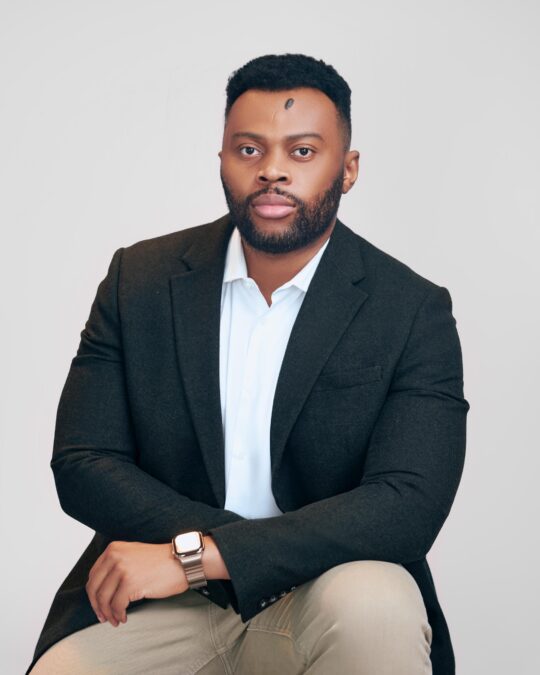
Obinna Chukwujioke is a Nigerian entrepreneur and fintech infrastructure builder known for founding and scaling innovative financial technology platforms across Africa. He co-founded Wirepay before transforming its infrastructure into Maplerad, a Banking-as-a-Service platform powering payments, virtual accounts, cards, and FX solutions for businesses across the continent. He also launched Capera and Roam, expanding access to global remittances and USD banking services for Africans worldwide. In this interview with BusinessDay, he discusses fintech infrastructure, cross-border payments, and Africa’s digital finance future.
You moved from oil and gas into fintech at a time when Africa’s digital payment space was still developing. What problem convinced you that financial infrastructure was worth building?
In Oil & Gas, you see massive scale but also massive silos. When I looked at the digital payment space, I saw a fundamental “plumbing” problem. The problem wasn’t a lack of ideas; it was that every new founder had to spend 18 months just building the pipes, banking integrations, compliance, and ledger systems, before they could even launch. I realized that if we didn’t build the infrastructure, the ecosystem would move at a glacial pace.
When you co-founded Wirepay in 2020, what gap in cross-border payments were Africans struggling with the most?
When we started Wirepay, the biggest struggle was fragmentation in the different payment methods across Africa. If you were in Lagos trying to pay a developer in Nairobi or a supplier in Senegal, you were looking at multiple steps, high exchange rates, and days of uncertainty. Africans were essentially “locked out” of the global economy by high-friction rails. We wanted to build a bridge that made a dollar in New York feel and work the same as a dollar in Lagos.
Maplerad grew from a payments product into a financial infrastructure platform. What informed that transition, and what did you learn from the process?
The move from a product (Wirepay) to a platform (Maplerad) was born out of necessity. We realized we had built such a robust internal engine for our own app that other companies started asking to use it. I learned that your greatest value often isn’t the storefront you build, but the engine you created to run it. Transitioning taught me that infrastructure requires a much higher level of reliability; you aren’t just responsible for your users, you’re responsible for their users too.
Many fintech founders focus on consumer products, but you focused on infrastructure. Why do you believe infrastructure matters in shaping Africa’s financial future?
Consumer products are the “cars,” but infrastructure is the “highway.” You can have the best car in the world, but if the road stops at the border, you aren’t going anywhere. By focusing on infrastructure, we empower thousands of developers to build specialized solutions. That’s how you scale a continent’s economy, not by building one app, but by enabling ten thousand.
Building payment systems across different African markets comes with regulatory and operational challenges. How do you approach trust and compliance while still moving quickly as a company?
In fintech, “move fast and break things” can get you shut down. We approach compliance as a feature, not a hurdle. By building regulatory requirements directly into our API logic, we allow our partners to be compliant by default. Trust is earned through transparency with regulators and 99.9% uptime. You move quickly by having such a solid foundation that you don’t have to look back to see if the pipes are leaking.
Through Capera and Roam, you are addressing remittances, digital banking and stablecoin adoption. How do you see the relationship between traditional finance and blockchain-based systems evolving in Africa?
I don’t see it as a “versus” battle. I see them merging. Blockchain, particularly stablecoins, offers a settlement layer that is faster and cheaper than the legacy SWIFT system. In Africa, we are “leapfrogging” traditional banking in the same way we skipped landlines for mobile phones. Stablecoins are becoming the liquidity backbone for cross-border trade, while traditional banks provide the necessary regulatory trust.
Roam offers Africans access to USD accounts and global transfers. What does financial access mean to you personally, especially for young Africans building careers and businesses across borders?
For a young African, financial access is sovereignty. It’s the ability to work for a company in San Francisco, get paid in a stable currency, and invest that money anywhere in the world without being penalised by your geography. It’s about removing the “location tax” on talent.
You mentor founders through organisations such as LSETF, JCI and Alchemist Accelerator. What common mistakes do early-stage African founders still make when building technology companies?
The biggest mistake is over-engineering before validation. I see founders building complex tech stacks for problems they haven’t confirmed people will pay for. Another is ignoring unit economics early on. In the current climate, growth is great, but a clear path to “default alive” (profitability) is what keeps the lights on.
African fintech is becoming increasingly competitive. In your view, what separates companies that scale sustainably from those that struggle after early success?
It’s operational discipline. Early success often comes from a great idea or good timing. Scaling sustainably comes from building a culture that values documentation, repeatable processes, and talent density. The companies that struggle are usually those that try to solve cultural or structural problems with more VC funding rather than building it into their internal processes.
Looking back at your journey so far, what moment has most shaped your thinking as a founder, and how has it influenced the way you build today?
The realisation that accuracy is everything in finance. Early on, you learn that a single decimal point error or a 30-second delay in price or rate updates isn’t just a bug, it’s a breach of trust. That shaped my “infrastructure-first” mindset. Today, I build with the philosophy that we must be the most reliable part of our customers’ day. If they don’t have to think about us, we’re doing our job right, which translates to little support interaction.

Join BusinessDay whatsapp Channel, to stay up to date
Open In Whatsapp