Governor Hope Uzodimma of Imo State has declared that the state is ready for local and foreign investments, citing Imo’s Plan to skill its youth, create jobs and win over investors.
Imo State proactively woos investors with the “Imo Is Ready. Invest In Imo” campaign. Officials behind the push say the state’s most durable asset for investors is not its gas reserves or its road network, but the tens of thousands of young people it has spent years training for a digital economy.
The campaign, visible across the state, represents one of the more structured sub-national investment pitches currently active in Nigeria. Speaking at the third edition of Invest Lagos 3.0, themed “Lagos: The Business Gateway to Africa,” held at Eko Hotel and Suites, Victoria Island, Lagos, on Monday, Uzodimma said Imo had repositioned itself as one of Nigeria’s emerging investment destinations.
The governor said his administration abandoned the old model of government-driven enterprises and embraced private sector-led growth by creating an enabling environment for businesses to thrive.
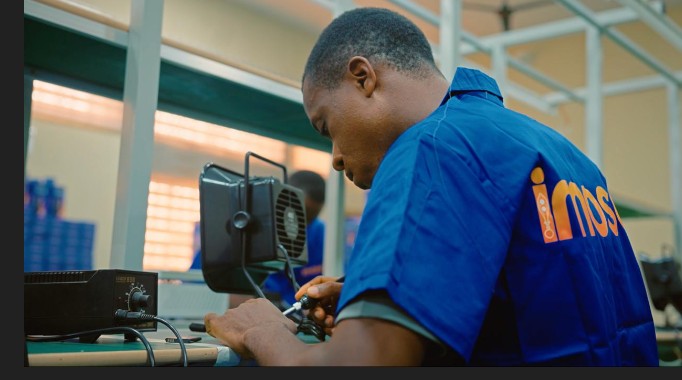
The clearest expression of the state’s human capital bet is a programme called Imo Digital City. The government says it has trained over 65,000 young people through the initiative, building a pool of digital and technical skills targeted at the technology and services sectors the state is actively courting. If that number is accurate and the skills are employer-ready, it represents a meaningful labour market intervention in a region where youth unemployment has historically been high and outward migration persistent.
The logic behind the sequencing is deliberate. A factory needs power. A services economy needs people to staff it. By attaching a specific number to its human capital pitch, Imo is attempting to answer a question labour-intensive investors routinely ask: whether a capable workforce exists before the business arrives, or has to be assembled after. For investors weighing greenfield opportunities across Nigeria, that answer matters.
The human capital story does not stand alone, and the state’s infrastructure investments are central to making it credible.
Imo has built its own electricity supply through the Orashi Electricity Company, operating within the Orashi Energy Free Trade Zone and drawing on the state’s gas reserves and hydropower from the Orashi River.
Governor Uzodimma has described the project as the state’s declaration of energy sovereignty. Nigeria’s Minister of Power, Adebayo Adelabu, has pointed to it as a replicable model for other states following the 2023 Electricity Act reforms.
The economic implications of that infrastructure are worth pausing on. Energy independence at the state level, if sustained, fundamentally changes the cost calculus for businesses operating in Imo. Manufacturers and logistics operators who currently factor generator costs into their overhead projections would be looking at a materially different operating environment. For a region historically bypassed by industrial investment in favour of Lagos and Kano, reliable power is not a minor upgrade. It is a structural shift in competitiveness.
“The connection between the power infrastructure and the workforce programme is what gives both some credibility. A trade zone with its own energy supply creates the conditions for factories, warehouses and supply chains, each of which represents employment for the workforce Imo says it has been building.
“If those two elements align in practice, the multiplier effect on the local economy could be significant. Jobs in a functional trade zone generate secondary employment across housing, food, transportation and services in surrounding communities.”
The broader implications for the South-East are also worth considering. The region has faced a difficult investment climate over the past several years, shaped by security concerns and infrastructure deficits. A credible, functioning investment destination in Imo would not only benefit the state directly. It would begin to shift the narrative around the South-East as a whole, giving other states in the region a reference point and potentially attracting investors who had written off the corridor entirely.
What distinguishes the Imo pitch, at least structurally, is the order in which the state says it is building. Power infrastructure first, then investor-facing facilities, then a workforce positioned to meet arriving businesses. That sequence reflects a more coherent theory of economic development than the vague incentive packages most Nigerian states default to when competing for capital.
Whether the investment follows is the question Imo’s next few years will answer. For now, the state has built an argument specific enough to be tested. In a country where sub-national investment pitches are often long on ambition and short on detail, that alone is worth noting.

Join BusinessDay whatsapp Channel, to stay up to date
Open In Whatsapp