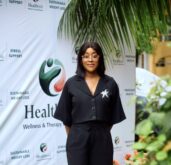
Long before he was the Creative Director of Twelve06, Gabby Ibeabuchi was the face of global giants like MTN, Huawei, and Unilever, carving out a reputation as one of Africa’s most successful fashion models. But unlike many who leave the runway for the design studio, Ibeabuchi took a detour through the high-pressure corridors of Nigerian corporate power. From managing “Special Projects” at Globacom under Mike Adenuga to navigating the disciplined world of corporate banking at UBA under the tutelage of Tony Elumelu, he spent years absorbing the mechanics of scale, structure, and sustainability.
Today, he is applying that ‘Corporate DNA’ to the world of Nigerian fashion. In an industry often dismissed as purely creative, Ibeabuchi is a vocal advocate for management over aesthetics. Yet, as he reveals in this candid conversation, building a global brand from Nigeria requires more than just financial discipline—it requires a thick skin to survive FX volatility, a shifting manufacturing landscape, and the often-unseen pressures of political interest.
In this interview with IFEOMA OKEKE-KORIEOCHA, Ibeabuchi opens up about the reality of “African Excellence,” why he refuses to trade his professional independence for partisan politics, and the structural sabotage that threatens the dreams of Nigerian entrepreneurs.
You spent years in the corporate banking department at UBA under Tony Elumelu. What specific ‘corporate DNA’ or financial discipline did you bring from the banking halls into the fashion studio?
Banking taught me important business values like financial discipline, risk management, cashflow management, structure, customer service, and consistency. I apply these principles to my fashion business by treating fashion not just as creativity, but as a well-structured and profitable business. Our goal is to build a fashion brand that is both unique and financially sustainable. Creativity may attract attention, but discipline and consistency build a lasting global brand.
You’ve emphasized your background in customer service at Globacom. How does high-level corporate service differ from the ‘bespoke experience,’ and how has it helped Twelve06 retain global clients?
Corporate service and bespoke fashion serve different purposes but work well together. Corporate service focuses on professionalism, efficiency, and consistency, while bespoke fashion focuses on creating personalized designs that reflect each client’s personality and lifestyle. By combining both, we give clients a reliable and premium experience alongside exclusive, personalized craftsmanship. This balance helps us maintain strong relationships with clients worldwide.
Many creative MSMEs struggle with structure. How did your experience in ‘Special Projects’ at Glo influence the way you manage Twelve06’s production timelines and logistics?
Working with Mike Adenuga at Globacom greatly influenced my career. He recognized my creativity and sales ability early on. My experience in Globacom’s special projects department taught me how to manage timelines, coordination, and logistics efficiently. Today at Twelve06, we apply those same structured systems to production, quality control, and deliveries both locally and internationally.
As an alumnus of the U.S. State Department’s IVLP, what did you learn about the economics of scale in the American fashion industry that we are currently missing in the Nigerian market?
Economies of scale mean reducing production costs as output increases. At Twelve06, we focus on controlled growth rather than mass production, while still benefiting from buying materials in bulk to reduce costs. In the USA, scaling is easier because of better infrastructure, funding, and systems. In Nigeria, businesses face challenges like poor infrastructure, unstable power supply, and expensive financing, so growth often depends on adaptability and creativity.

Twelve06 has a presence on every continent. Given the current FX volatility in Nigeria, how are you balancing your cost of production with the need to remain competitively priced for international enthusiasts?
Foreign exchange instability has seriously affected Nigeria’s fashion industry. Since many materials are imported, the falling value of the naira has increased production and shipping costs, making planning very difficult. Many brands have had to increase prices, reduce quality, or shut down. To survive, brands like Twelve06 have focused more on local fabrics such as adire and aso-oke. Today, successful brands compete through identity and quality, not low prices.
What are the biggest structural barriers you see preventing other Nigerian designers from successfully exporting ‘African Excellence’ to markets like New York and Paris?
The biggest challenges stopping Nigerian and African designers from exporting successfully are structural, not creative. These include poor production systems, foreign exchange instability, expensive logistics, lack of access to global retail markets, limited funding, and the perception that African brands are creative but not commercially reliable at scale.
Your mentorship group focuses on building profitable brands. What is the most common financial mistake you see emerging Nigerian designers making today?
Many young Nigerian designers focus too much on visibility and social media instead of building strong business systems. They often neglect areas like scalable production, pricing strategy, export readiness, and global partnerships. I personally invested years attending international fashion events, building relationships, learning global standards, and preparing my brand for international growth.
In an era of ‘fast fashion,’ Twelve06 focuses on bespoke quality. How are you teaching your mentees to build sustainable brands that prioritize longevity over trend-chasing?
Chasing trends may bring quick attention, but it does not build a lasting brand. Strong brands focus on identity, consistency, and long-term value rather than constantly following trends. Trends fade, but a clear identity builds trust and loyalty over time. I always advise young designers to focus on creating clothes people truly connect with and live in.
Do you believe the Nigerian fashion industry needs more creative designers, or more ‘creative managers’ who understand the corporate side of the business?
The Nigerian fashion industry needs both talented designers and strong managers, but management is the bigger gap. Many designers are creative, but brands often lack proper business planning, pricing systems, production management, export knowledge, and long-term structure. Strong management is necessary to turn creativity into sustainable businesses.
As a former ECOWAS Best Model who has walked over 100 shows, how does your experience on the runway influence the technical ‘cut’ and ‘fit’ of a Twelve06 garment?
Modeling locally and internationally sparked my passion for fashion. It exposed me to different designers, styles, and branding approaches, which improved my understanding of aesthetics, fit, and presentation. Modeling also gave me valuable industry connections and helped me discover my own creative talent and passion for fashion design.
You represented giants like MTN, Gulder, and Huawei. How did being the ‘face’ of these massive corporate entities shape your understanding of how to build the ‘personality’ of your own brand?
My modeling career brought major opportunities and changed my life. My first modeling job with MTN helped me buy my first premium car, rent a house, and pay for my MBA. It also brought visibility, travel opportunities, more ambassadorial roles, confidence, and valuable connections. These experiences contributed greatly to my success as a fashion designer today.
Twelve06 is poised to ‘revolutionize’ African fashion. Is this revolution about changing how the world looks at us, or about changing the balance sheet of the African fashion industry?
African fashion is improving Africa’s global image faster than it is improving the industry’s financial strength. While African designers are gaining global attention, many brands still struggle with high production costs, weak manufacturing systems, currency problems, and limited retail access. In Nigeria especially, designers often handle every aspect of the business themselves, making growth very difficult.
Having attended New York Fashion Week, what is the next global stage for Twelve06, and what does the brand need to get there?”
Building a global fashion brand from Africa has come with many challenges, especially in recent years. I have faced business, and political pressures while trying to grow my brand. My factory and showroom had been shut down several times by proxy. Despite pressure to join partisan politics, I have remained committed to supporting people based on competence and character rather than political affiliation. Business setbacks, including delayed payments from a real estate investment recently have also affected our international operations. However, I remain hopeful and committed to overcoming these challenges and continuing to grow. African entrepreneurs truly deserve awards.

Join BusinessDay whatsapp Channel, to stay up to date
Open In Whatsapp